
Cultural Evolution Over Time: How Societies Change and Adapt
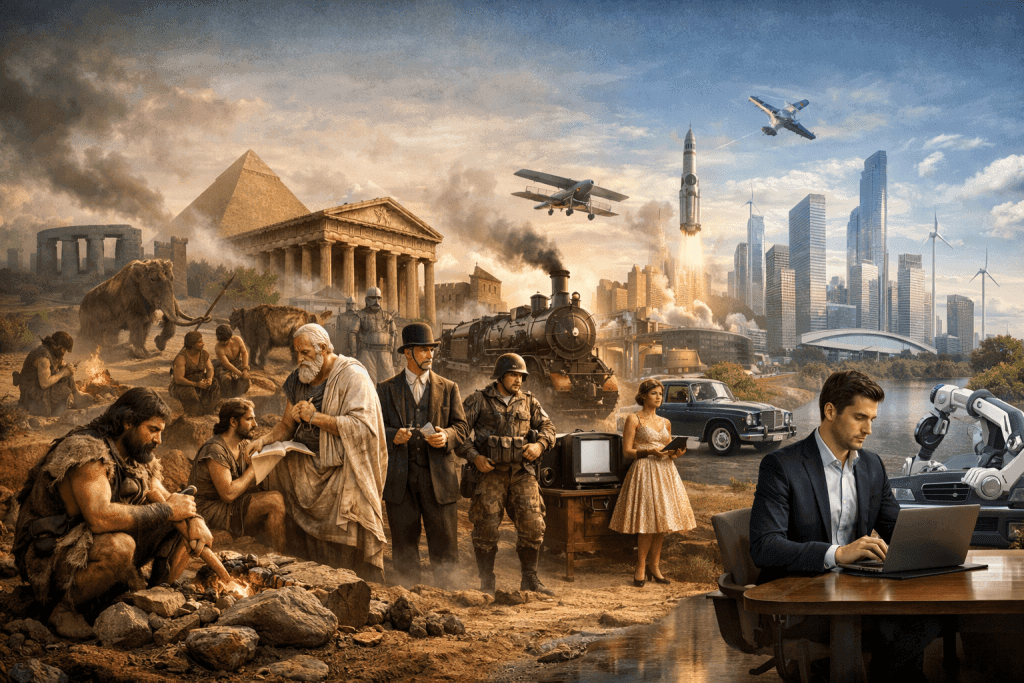
Cultural evolution over time explains how societies change, adapt, and reorganize their values, behaviors, and institutions in response to internal dynamics and external pressures. Humans do not inherit culture biologically, but transmit it through learning, imitation, and shared experience. This makes culture flexible, cumulative, and highly responsive to changing conditions. Understanding this process helps explain why societies differ, why traditions persist, and why transformation is unavoidable.
Across history, cultural evolution over time has shaped language, social norms, technology, belief systems, and political structures. These changes are not random but follow patterns driven by adaptation, selection, and innovation. Culture evolves as societies respond to environmental challenges, economic pressures, and interactions with other groups. The result is a continuous process of adjustment rather than a fixed endpoint.
Foundations of Cultural Evolution
At its core, cultural evolution refers to the gradual modification of shared meanings, practices, and knowledge across generations. Unlike biological evolution, cultural change can occur rapidly because ideas spread faster than genes. A single generation can introduce transformations that redefine social behavior and collective identity. This speed makes culture a powerful adaptive mechanism.
Transmission is central to cultural evolution over time. Cultural traits are passed through language, education, rituals, and media, allowing societies to preserve knowledge while modifying it. Successful practices tend to persist, while ineffective ones fade away. This selective process mirrors evolutionary principles but operates through social learning.
Variation also plays a critical role in cultural change. Different communities experiment with distinct solutions to similar problems, producing diverse outcomes. Over time, some approaches prove more sustainable or efficient and spread beyond their original context. Cultural diversity, therefore, is not accidental but a product of adaptive experimentation.
Drivers of Change in Societies
Environmental conditions are one of the strongest drivers of cultural evolution over time. Climate, geography, and resource availability shape how societies organize labor, build settlements, and define social roles. For example, agricultural cultures developed different traditions from nomadic ones due to differing survival strategies. These adaptations influenced social hierarchies and belief systems.
Economic systems also accelerate cultural change. The shift from agrarian economies to industrial and post-industrial systems transformed family structures, work ethics, and education models. As economic priorities shift, cultural values adjust to support new forms of productivity and social organization. This process often creates tension between tradition and innovation.
Contact between societies is another major catalyst. Trade, migration, and conflict introduce new ideas and practices that challenge existing norms. Cultural exchange can lead to hybrid traditions, where elements from different societies merge into new forms. Over time, these blended cultures become stable expressions of shared experience.
Technology and Cultural Adaptation
Technology is a primary engine of cultural evolution over time because it reshapes how people interact and perceive the world. Tools extend human capability, altering daily routines and social expectations. From writing systems to digital platforms, each technological shift changes how knowledge is stored and shared. These changes affect power structures and collective memory.
Communication technologies have especially profound cultural effects. Printing enabled mass literacy and standardized knowledge, while the internet enables instant global interaction. These tools reduce barriers between cultures, increasing exposure to diverse viewpoints. As a result, cultural boundaries become more fluid and contested.
Technological change also forces ethical and social adaptation. New capabilities raise questions about privacy, identity, and responsibility that older norms cannot fully address. Societies respond by developing new rules, values, and institutions. This adaptive process highlights the dynamic nature of culture rather than its permanence.
Social Institutions and Cultural Continuity
Social institutions play a stabilizing role in cultural evolution over time. Family structures, religious organizations, educational systems, and governments preserve cultural knowledge and regulate behavior. They act as frameworks that give continuity amid change. Without institutions, cultural transmission would be fragmented and unstable.
At the same time, institutions are not immune to transformation. As societal needs evolve, institutions adapt their functions and norms. Education systems, for example, shift curricula to reflect technological and economic demands. These changes ensure relevance while maintaining core cultural principles.
Tension often arises between institutional continuity and social innovation. Traditional institutions may resist rapid change to protect established values. However, sustained pressure from new realities eventually leads to reform or replacement. This balance between preservation and adaptation defines long-term cultural stability.
Globalization and Modern Cultural Dynamics
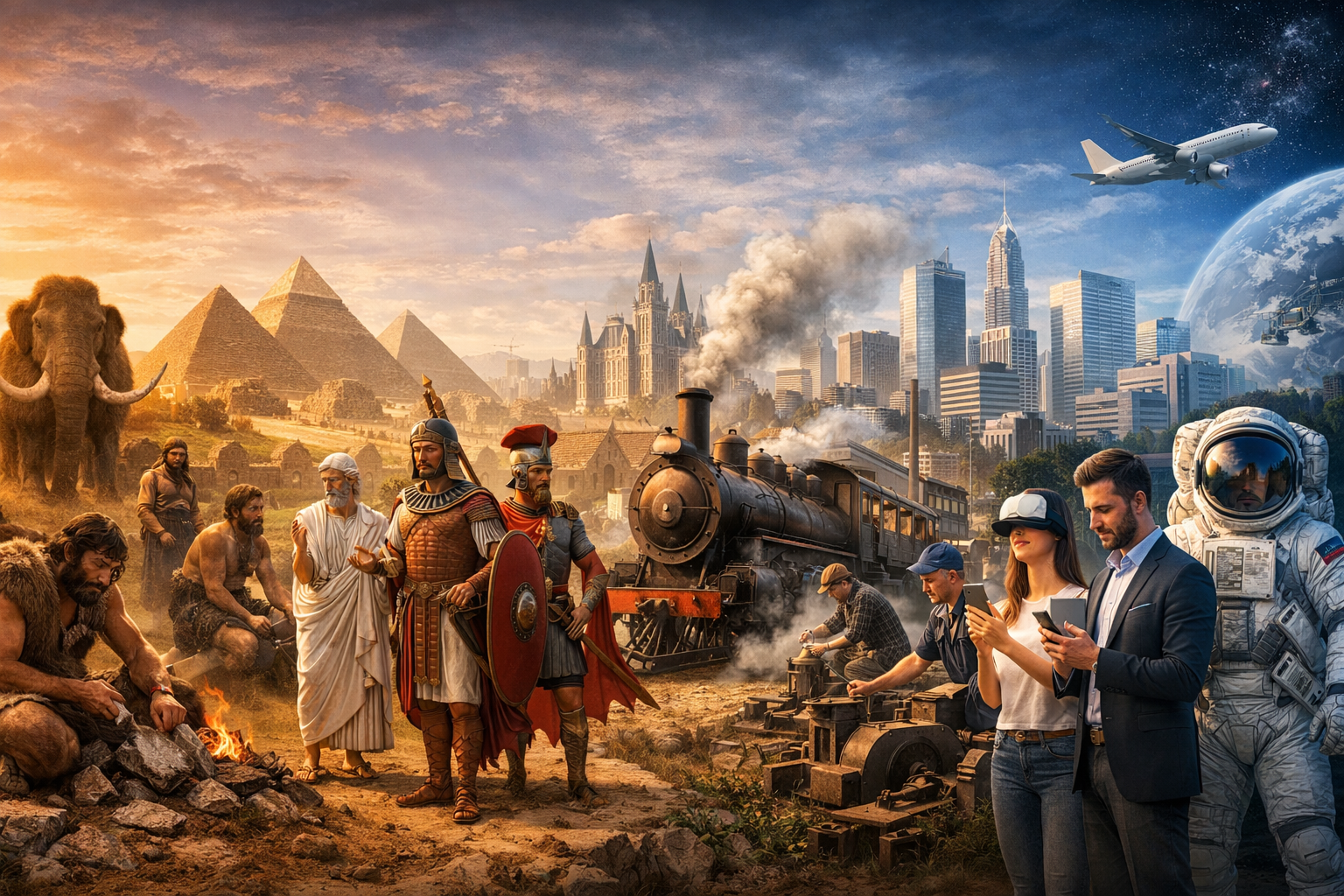
Globalization intensifies cultural evolution over time by increasing the scale and speed of interaction. Ideas, products, and lifestyles circulate across borders with unprecedented ease. This exposure influences consumption patterns, social aspirations, and identity formation. Local cultures adapt by integrating global elements into existing traditions.
While globalization promotes cultural exchange, it also raises concerns about cultural homogenization. Dominant cultures can overshadow local practices, reducing diversity. In response, many societies actively preserve heritage through language revitalization and cultural policy. This resistance is itself part of cultural evolution.
Modern societies experience accelerated cultural change due to constant connectivity. Social norms evolve rapidly as information spreads and public discourse shifts. Adaptation becomes an ongoing process rather than a generational one. This pace challenges individuals and institutions to continuously reassess values and practices.
Cultural Evolution in the Future
Looking ahead, cultural evolution over time will be shaped by technological innovation, environmental pressure, and demographic change. Artificial intelligence, climate adaptation, and global migration will redefine social interaction and governance. New cultural norms will emerge to address ethical and practical challenges. These norms will reflect collective attempts to maintain cohesion in complex systems.
Future cultural change is likely to be uneven across regions. Societies with flexible institutions may adapt more smoothly than those with rigid structures. Cultural resilience will depend on the ability to learn, integrate new knowledge, and preserve meaningful traditions. This adaptability has always been the foundation of cultural survival.
Understanding cultural evolution over time provides insight into how societies can navigate uncertainty. It highlights that change is neither inherently destructive nor inherently progressive. Instead, it is a process shaped by choices, constraints, and shared experience. Recognizing this process allows societies to adapt deliberately rather than reactively.
Conclusion
Cultural evolution over time is a continuous process through which societies respond to environmental, technological, and social forces. Culture changes through transmission, adaptation, and selective retention of practices that support collective survival. Institutions stabilize these changes while allowing gradual transformation. By understanding cultural evolution, societies gain the ability to adapt thoughtfully to an ever-changing world.
FAQ
Q: What does cultural evolution over time mean? A: It refers to the gradual change of shared values, practices, and knowledge within societies across generations through learning and adaptation.
Q: How is cultural evolution different from biological evolution? A: Cultural evolution occurs through social learning and can change rapidly, while biological evolution depends on genetic inheritance and is much slower.
Q: Why does technology accelerate cultural evolution over time? A: Technology changes how people communicate, work, and organize society, forcing cultural norms and institutions to adapt quickly.
Q: Does globalization reduce cultural diversity? A: Globalization can pressure local cultures, but it also encourages adaptation and hybridization rather than complete uniformity.
Q: Can cultural evolution be guided intentionally? A: Yes, societies influence cultural change through education, policy, and institutions that shape values and behavior.
