USPS ‘carefully reviewing’ whistleblower claim on plan for Trump’s mail in voting order

USPS ‘Carefully Reviewing’ Whistleblower Claim

Ecorescuezone.com – A newly disclosed report alleging that the Postal Service is rushing an untested digital system into the November midterm cycle has prompted the agency to say it is “carefully reviewing” the claim. The disclosure, tied to President Trump’s executive order restricting mail-in voting, lands at a moment when absentee ballot mailing is officially commencing — and when a federal court in Boston has already issued a temporary restraining order against the underlying rule. The timing has sharpened scrutiny of how far implementation has progressed despite that judicial block.

The Portal and Its Unfinished Testing

For months, the agency has been building an online portal designed to let state election officials upload absentee-voter names paired with barcode identifiers for ballot envelopes — data elements mandated by the now-blocked directive. According to the report, whose author’s identity is protected by the nonprofit Whistleblower Aid, testing of that system has fallen well short of what best practices demand before a live election cycle.

The disclosure was submitted to the Postal Service on Monday by Democratic Senator Richard Blumenthal of Connecticut, who characterized it as evidence of leadership that prioritized speed over reliability.

“USPS leadership, it appears, has discarded all best practices as they speed the project to be ready for a September 1 implementation — raising questions about whether catastrophic failure would be a feature rather than a bug.”

If courts ultimately permit the plan to move forward for the midterms, any malfunction in the portal could mean eligible voters never receive their ballots in time — or at all. Millions of Americans rely on mail-in ballots each cycle, and a breakdown in the verification pipeline could suppress votes at scale.

The “Zero-Percent Failure Policy” Problem

One specific design choice drew particular criticism. The agency has adopted what the report describes as a “zero-percent failure policy” for the step in which it verifies that ballots states intend to mail comply with the new rule’s requirements. In practice, any single mismatch triggers a full re-verification cycle rather than a targeted correction.

“As designed, the process is entirely unforgiving. It could delay ballots by the thousands in repeated verification cycles — and thus prevent states from mailing enormous numbers of ballots.”

Election administrators working under compressed timelines would face a system that, by its own architecture, multiplies delays rather than resolving them. A rule meant to tighten oversight could instead become a bottleneck stalling ballot delivery across multiple states simultaneously.

Agency Response and Political Pushback

In a statement issued Tuesday, a spokesperson said the agency is “carefully reviewing” the report’s concerns. The statement added that the Postal Service is “now finalizing the portal and will soon make it available to election officials who voluntarily wish to familiarize themselves with the platform,” and that it will supply “tools, presentations, and other resources to help election officials understand the platform and make informed decisions about whether and how they wish to use it.”

Senator Blumenthal was far less measured. In a letter addressed to Postmaster General David Steiner, he urged the agency to

“abandon this ill-conceived, unconscionable plan and ensure that all Americans can exercise their constitutional right to vote, including by mail, without interference by USPS.”

Speaking to reporters by phone, Blumenthal described the details as “mind-boggling” from the perspective of both an elected official and a citizen, adding that “what the disclosure reveals is that the Postal Service has designed a system that is intended to fail.”

On the House side, Democrats on the Oversight Committee, led by Representative Robert Garcia of California, issued their own letter to Steiner on Tuesday calling for the agency to halt its plan and requesting documents related to the portal’s development.

“The Postal Service’s reckless actions undermine the foundation of our nation’s democracy and violate the basic principle that all citizens have the right to have their vote counted.”

The Legal Landscape

The political fight is layered atop an active legal contest. Last week, a federal judge in Boston granted a temporary restraining order against the agency, finding that its implementation plan for the executive order is likely unlawful. Appeals are pending, and a question about whether the matter warrants Supreme Court review remains unresolved. Until the courts render a final ruling, the portal’s operational status — and the fate of millions of mail-in ballots — hangs in the balance.

Frequently Asked Questions

What exactly does the report allege? It alleges that the digital verification system being built for the mail-in voting rule has not undergone adequate testing and contains a design flaw — the so-called “zero-percent failure policy” — that could trigger cascading delays to ballot mailing during the midterm cycle.

Has the rule been blocked? A federal court in Boston issued a temporary restraining order last week, halting implementation while appeals proceed. The agency says it is finalizing the portal regardless, making it available to officials who choose to use it voluntarily.

What happens if the portal malfunctions

Why the Supreme Court’s ballroom ruling could matter beyond the ballroom

A Ballroom Ruling With Constitutional Echoes: How One Construction Project Reshaped Standing Law

Ecorescuezone.com – The White House ballroom project is still going up. Crews, according to the administration, are putting in twenty-hour days, seven days a week, hammering steel and glass into the South Lawn. But the story that matters far more than the architecture is what the Supreme Court did with the lawsuit meant to stop it. In a decision that legal scholars are already calling a turning point, the justices dismissed the challenge brought by the National Trust for Historic Preservation on standing grounds, effectively clearing the way for the project to proceed while leaving a deeper question unanswered: who, exactly, gets to police the boundary between congressional power to spend and presidential power to execute?

The Standing Barrier

The National Trust for Historic Preservation had argued that the ballroom’s scale and design would harm the historic character of the White House grounds. The majority of the Court, however, concluded that the organization had failed to demonstrate a concrete, particularized injury sufficient to confer standing under Article III. In plain terms, the justices decided the plaintiffs had not shown they were personally and specifically harmed in a way the Constitution permits them to litigate.

Georgetown University Law Center professor Stephen Vladeck, speaking on NPR’s Morning Edition, said the outcome itself was not what caught him off guard. What unsettled him was the reasoning behind it.

“I think, unfortunately, it sets a bigger precedent,” Vladeck said.

He explained that the administration has, on multiple occasions, directed expenditures that Congress never appropriated. The Court’s willingness to dismiss challenges to such spending, he argued, narrows the avenues through which citizens and organizations can test whether the executive is overstepping its constitutional lane.

The Two-Way Street of Separation of Powers

Vladeck framed the issue in terms that go well beyond one building. The separation of powers, he noted, operates as a reciprocal constraint. When a president commits federal funds that Congress has not authorized, the action does not merely enlarge executive authority; it simultaneously strips away one of Congress’s most fundamental constitutional powers — the power of the purse, enshrined in Article I, Section 9. Every dollar spent without appropriation is a dollar of legislative authority quietly transferred to the executive branch.

This dynamic has historical depth. Since the founding, the appropriations clause has been understood as Congress’s primary check on executive ambition. Presidents from Washington through the twentieth century generally treated unappropriated spending as a constitutional violation, even when they disagreed with congressional priorities. The current administration’s posture — spending first, seeking ratification later, or simply proceeding without either — represents a marked departure from that tradition.

Esthetic Injuries and the Scalia Precedent

A particularly consequential thread in the ruling concerns what Vladeck called “esthetic injuries.” In 1992, Justice Antonin Scalia, writing for the majority in a landmark case, recognized that a person’s aesthetic experience of a public landscape could constitute a cognizable injury for standing purposes. That opinion opened the door for environmental, historic-preservation, and community-design plaintiffs to bring suits challenging government projects that degrade shared visual and cultural resources.

The ballroom decision, Vladeck warned, makes it substantially harder for future plaintiffs to rely on that line of authority. If a group devoted to preserving historic landmarks cannot show a concrete injury from a structure that alters the character of a national monument, the practical effect is to close a category of litigation that has existed for over three decades.

Who Litigates an Appropriations Dispute?

Vladeck offered a blunt summary of where the case leaves the constitutional question:

“The case comes down to an appropriations dispute that only Congress can litigate.”

The implication is stark. If the only party with a clean institutional interest in challenging unauthorized executive spending is Congress itself, then the availability of judicial review depends entirely on whether the legislative branch is willing to bring the suit. Under the current configuration of Washington, where the same party controls both chambers and the White House, that willingness appears absent. In practical terms, Vladeck suggested, meaningful judicial scrutiny of executive spending overreach may become available only during periods of divided government — when a president of one party faces a Congress of another and has institutional incentive to sue.

The Emergency Docket Problem

Another dimension of the ruling that Vladeck flagged concerns the Court’s practice of deciding cases on an expedited, emergency basis. The justices typically characterize such rulings as provisional, to be revisited once the full merits are briefed and argued. Yet in practice, a temporary order issued in the summer can determine what physically happens on the ground for months or years before the underlying legal questions receive full consideration. A ballroom that is built, occupied, and integrated into the White House complex during the interim period may become a fait accompli that reshapes the legal landscape regardless of what the Court eventually says on the merits.

This creates a structural asymmetry: the party seeking to halt a project must win quickly, while the party benefiting from delay need only survive the interim. The result is that emergency docket practice can function as a de facto merits ruling without the procedural safeguards of full briefing and argument.

What Happens Next

For now, the construction continues. The administration has emphasized the pace of work — twenty-hour shifts, seven-day weeks — as evidence of momentum and commitment. The National Trust for Historic Preservation, meanwhile, faces the question of whether to seek further review or to pivot toward other legal theories of injury that might survive the Court’s new standing framework.

The broader constitutional question — whether a president may spend what Congress has not appropriated, and who may challenge that spending in court — remains open. Until Congress chooses to litigate, or until a future divided government creates the institutional conditions for a challenge, the ballroom stands as both a physical structure and a constitutional test case whose full implications have yet to be written.

Frequently Asked Questions

What is Why the Supreme Court s ballroom?

Why the Supreme Court s ballroom is the main topic of this guide. The article explains the context, practical details, and next steps readers should understand.

Why does Why the Supreme Court s ballroom matter?

Why the Supreme Court s ballroom matters because readers are looking for a useful answer, not just a short summary. Good content should match search intent and help them decide what to do next.

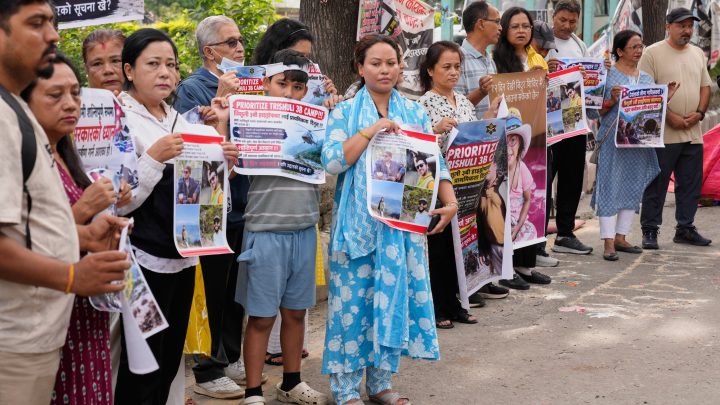
They live by a shrine to a saint. Why are their homes being demolished?

Islamabad’s Sacred Neighborhood Faces Erasure: 50,000 Displaced as Demolition Sweeps the Bari Imam Area

Ecorescuezone.com – For over three centuries, a community has grown organically around the marble shrine of Bari Imam, a revered Sufi saint whose tomb sits at the base of the Himalayan foothills. Pilgrims have flocked to the site daily since the Mughal era, and the people who settled nearby — cooks, vendors, lamp-lighters, caretakers — built an entire economy and social fabric around serving those visitors. That fabric is now unraveling at a pace that residents and housing-rights advocates describe as without precedent in the capital’s history.

Between December 2025 and April, municipal authorities tore down hundreds of dwellings and commercial stalls in a roughly one-mile radius surrounding the shrine. The rubble field where tightly packed homes once stood now stretches across what was once a dense, working-class neighborhood. Activists and local organizers estimate that approximately 50,000 people — roughly one-tenth of Islamabad’s estimated 500,000 informal-settlement residents — have lost their homes in the operation.

A Family’s Aftermath: Salvaging Bricks to Feed Eight Children

Wirasat Aly, 30, spent a recent day pulling usable bricks from the wreckage of his own home, stacking them for sale to construction firms. A single truckload fetches the equivalent of about $5.40. That meager income is what he is using to scrape together the $70 monthly rent needed to keep a roof over his family — which includes eight children under his care, among them the nieces and nephews of a disabled brother.

“We have to do something for the children,” Aly said. “I’m going crazy. Our stomachs are empty.”

Aly explained that he was forced to withdraw the children from school because he could no longer cover the monthly bus fare, lunch expenses, or textbook costs. The neighborhood’s former character — roadside stalls selling meditation beads and prayer carpets, tiny tent-like kitchens where cooks prepared cauldrons of rice for the shrine’s free cafeteria — has been replaced by open debris fields. That cafeteria, once crowded with pilgrims and families of day-laborers, drew its food from worshippers who paid for the rice as a devotional offering to the saint.

Political Ambitions Behind the Bulldozers

Residents and observers point to a single political figure as the catalyst: Interior Minister Mohsen Naqvi, widely regarded as close to Pakistan’s army chief — the country’s most powerful institutional actor. In April, Naqvi publicly articulated a plan to transform the stretch of land behind the prime minister’s official residence into what he called a “futuristic hybrid of Shanghai and Manhattan.” That stretch of land is, in fact, the Bari Imam shrine and its surrounding residential quarters.

“See how you can come and invest,” Naqvi told a gathering of businessmen, in remarks carried by the local outlet City21.

Naqvi’s office did not respond to a request for comment regarding his role in prompting the clearances.

Official Justifications and the Question of Compensation

An official at the Capital Development Authority, the body that administers Islamabad’s urban planning, told reporters on condition of anonymity that the majority of demolished structures fell within an informal settlement called Muslim Colony. She stated that affected households had exhausted every available legal challenge before the razing proceeded. Under the authority’s framework, residents who had occupied their plots before 2005 received compensation. Those who arrived later, or who had rented out structures built without permits, were expected to accept lesser sums to relocate.

“A perverse initiative was at play,” the official said, describing the compensation calculus.

Many of the post-2005 arrivals, residents and advocates noted, had themselves been displaced by earlier shocks: armed conflict along the Afghan border, a major earthquake in Pakistan-administered Kashmir, and successive cycles of flooding and drought. Most entered Islamabad’s labor market as security guards, domestic cleaners, tailors, and butchers serving the city’s wealthier districts. The CDA official, however, offered a blunt assessment: those unable to meet the capital’s high cost of living should simply not be there.

“It’s better to not move in a city if you cannot afford the price of living,” she said.

Nurpur Shahan and a 1957 Land Seizure

Local media reported that an additional roughly 200 homes were demolished in a neighborhood called Nurpur Shahan, which had once been a standalone village. The CDA official confirmed that authorities had compensated residents for their land in 1957, when the plot was expropriated to lay out the planned capital city of Islamabad. She stated that no further compensation would be paid to current occupants.

Some adjacent neighborhoods remain standing for now, though a large billboard erected near their entrances declares: “All structure and activities on this land are unauthorized and illegal.” Tanvir Hussain, a local resident and lawyer representing affected families, told reporters that the decades-old 1957 compensation was never properly disbursed to all entitled households. He further noted that other residents were still in the process of seeking legal recourse when the bulldozers arrived.

What Comes Next

The Bari Imam shrine itself remains intact, its marble minarets still visible above the rubble. But the human ecosystem that sustained it for three centuries — the lamp-lighters, the rice cooks, the bead sellers, the families who passed down devotional duties across generations — has been scattered across Islamabad’s periphery and beyond. Housing-rights scholar Aasim Sajjad Akhtar, who has tracked informal-settlement demolitions across Pakistan for years, characterized the operation’s scale and speed as unprecedented.

“I have never seen the intensity that I’ve seen,” Akhtar said. “Something that is far more brazen than I’ve seen before.”

Whether Naqvi’s Shanghai-Manhattan vision materializes, or whether the cleared land reverts to informal habitation within a few years, remains an open question. What is not open is the immediate reality facing tens of thousands of displaced families: empty stomachs, children out of school, and a city that, by its own officials’ account, was never meant to house them in the first place.

Frequently Asked Questions

What is They live by a shrine?

They live by a shrine is the main topic of this guide. The article explains the context, practical details, and next steps readers should understand.

Why does They live by a shrine matter?

They live by a shrine matters because readers are looking for a useful answer, not just a short summary. Good content should match search intent and help them decide what to do next.

North Carolina Rep. Chuck Edwards is formally censured over harassment allegations

House Censures Rep Chuck Edwards Over Harassment

Ecorescuezone.com – In a vote of 413 to 2, the House formally censured North Carolina Rep Chuck Edwards on Tuesday, marking one of the rarest disciplinary actions available short of expulsion. The sanction followed a months-long House Ethics Committee investigation into allegations that the outgoing representative sexually harassed two young women on his congressional staff.

A censure is the chamber’s most severe public rebuke that does not strip a member of seat or salary. Before this week’s tally, the measure had been invoked only 28 times in the institution’s entire history. The most recent prior use came in 2025, when Texas Democrat Al Green was censured for interrupting a joint congressional address by President Trump.

What the Ethics Committee Concluded

The bipartisan panel published its findings on August 3, determining that Edwards “engaged in persistent unprofessional and inappropriate conduct towards two young female staffers” and created a hostile work environment. The report cited “substantial evidence” that he “violated the spirit of the House’s prohibition on sexual harassment and unwanted advances.”

The committee catalogued a pattern of behavior far beyond routine workplace interaction: gifts including jewelry valued above $1,000, designer purses, firearms, shoes, flowers, a laptop, a cell phone, a KitchenAid stand mixer, paid vacations, and repeated private dinners. The report drew a sharp line about what congressional authority should look like in practice:

“A Member of Congress should not single out a staffer and isolate them from other staff, make frequent comments regarding that person’s appearance and weight, send messages in the middle of the night, text staff deeply personal and seemingly romantic thoughts, intrude on personal occasions without invitation, pay for personal vacations, and spend thousands of dollars on gifts for staffers. That Representative Edwards did all these things to two young staffers, repeatedly over a sustained period, was beyond inappropriate.”

The panel noted it found no evidence that Edwards propositioned either staffer or engaged in sexual activity with them. It observed, however, that the absence of such conduct did not insulate him from a sexual-harassment finding.

Edwards’ Response on the Floor

Before the vote, Edwards — who has consistently denied the allegations — addressed his colleagues and asked them to weigh the record carefully: “Judge me on the facts, not on the inference, insinuation or headlines.”

He offered an apology to the two staffers at the center of the investigation, acknowledging a gap in perspective: “I recognize now that my understanding of those relationships may not have always matched yours.”

Yet he drew a firm boundary around that apology, insisting that “regret is not an admission of sexual harassment.” On the question of the lavish gifts, he pushed back directly, declaring that “generosity is not sexual harassment.”

Edwards ended his reelection campaign after the committee’s findings went public last month, effectively conceding the seat before the November election.

A Broader Pattern of Ethics Inquiries

The Edwards investigation sat alongside several other House Ethics probes this Congress involving allegations of sexual misconduct, assault, or other improprieties — a cluster that has drawn sustained scrutiny of how the chamber polices its own members. Last month, the committee announced it was examining allegations of sexual misconduct against California Representative Jimmy Gomez, including “inappropriate sexual contact with a House staffer.” Gomez has denied the claims but acknowledged “personal mistakes” outside his marriage, which he characterized as “consensual in nature.” In April, California Democrat Eric Swalwell resigned his House seat and simultaneously ended a gubernatorial campaign amid allegations of sexual assault and misconduct that he denied. Texas Republican Tony Gonzales also stepped down from the House after admitting to an affair with a former staff member who later died by suicide.

Frequently Asked Questions

What does a House censure actually do? A censure is a formal, public rebuke recorded in the Congressional Record. It carries no automatic loss of seat, salary, or committee assignments, but it signals that the chamber has found a member’s conduct incompatible with its standards. It is the most severe sanction short of expulsion.

How many times has the House censured a member? As of this week’s vote, the measure has been invoked 29 times in the institution’s history. The prior most recent instance was in 2025.

Did the Ethics Committee find that Edwards committed sexual assault? No. The committee stated it did not find evidence that Edwards propositioned either staffer or engaged in sexual activity with them. Its finding centered on a pattern of conduct it deemed sexually harassing.

Will Edwards run again in November? No. He ended his reelection campaign after the committee’s findings were released last month, effectively conceding the seat.

Incumbent Sen. Ed Markey wins Massachusetts’ Democratic primary for US Senate

Ed Markey Wins Massachusetts Senate Primary

Ecorescuezone.com – Incumbent Sen Ed Markey wins the Massachusetts Democratic nomination for the U.S. Senate, fending off a sustained challenge from Rep. Seth Moulton. The 80-year-old senator, who has occupied a congressional seat since 1976, secured his party’s ticket after polling throughout the primary period consistently showed Bay State voters preferring the experienced incumbent over the younger insurgent. The Associated Press called the race Tuesday night, confirming what the numbers had already indicated.

The result lands as a win for the progressive flank of the party while simultaneously complicating the generational-turnover narrative that younger Democrats have pushed across the map this cycle. Challengers have framed their bids as contests between stale orthodoxy and fresh thinking; Markey’s survival in the race undercuts that framing at least in one high-profile state.

A Half-Century in Public Service

Markey first took his House seat in 1976, giving him a continuous elected-office record stretching back to the Carter administration. Moulton, by contrast, entered elected politics in 2014 — more than three decades after Markey’s first campaign — and built his challenge around the argument that Massachusetts deserved representation from a younger cohort of leaders. Markey has long cultivated the identity of a working-class New Englander, frequently introducing himself as the son of a milkman from Malden, a city on Boston’s eastern edge. That biographical framing anchors his policy positions, which include support for a single-payer “Medicare for All” system, opposition to President Trump’s defense spending plan, and advocacy for higher tax rates on top earners.

The Debate That Sharpened the Race

The contest intensified during an August debate, when Markey pressed Moulton on his record regarding transgender rights. The senator accused his opponent of failing to defend trans Americans after Trump’s reelection, delivering a pointed rebuke:

“You threw those trans kids under the bus.”

The remark referenced a 2024 statement in which Moulton said Democrats should retain the ability to discuss trans issues openly, adding that he did not want his daughters “getting run over on a playing field by a male or formerly male athlete.” During the debate itself, Moulton offered an apology for having hurt people with those remarks and affirmed his support for LGBTQ rights. Whether that concession was sufficient to repair the damage among progressive voters remained a live question through election night.

In a separate July debate hosted by WWLP, Markey sought to neutralize the age argument by emphasizing his current political urgency:

“This is the most energized I’ve ever been, fighting Donald Trump every single day, fighting his agenda to undermine families all across our country. And I lead that fight.”

He has consistently maintained that candidates’ debates should center on policy substance rather than the years on a ballot line.

Endorsements and the Progressive Calculus

Markey’s campaign drew heavyweight support from figures who occupy the progressive center of gravity. Senator Elizabeth Warren, his Massachusetts colleague, backed his bid, as did Senator Bernie Sanders of Vermont and Representative Alexandria Ocasio-Cortez of New York. Those endorsements signaled that the progressive establishment, for all its rhetoric about renewal, preferred continuity in a seat it considered ideologically aligned. It is worth noting that this was not Markey’s first brush with a younger challenger. In 2020, he defeated Representative Joe Kennedy III, who likewise argued that Massachusetts required younger representation in the Senate. The pattern of incumbent Sen Ed Markey wins over insurgent candidates from the next generation gives the result a structural logic, not merely an anomaly.

What Comes Next

With the Democratic ticket locked, Markey will face Republican attorney John Deaton in November for the Senate seat. In a state that voted overwhelmingly for Joe Biden in 2024 and where the Senate seat has been held by Democrats since 1993, the incumbent enjoys a substantial structural advantage. Polling through the primary period indicated that Markey’s supporters felt a strong sense of urgency heading into the general election, and his campaign has signaled an intention to run a full-length fall operation focused on national issues.

Frequently Asked Questions

How old is Ed Markey, and does his age factor into the race? Markey turned 80 in July 2026. He has addressed the age question directly in debates, arguing that voters should evaluate candidates on policy substance rather than years served. Primary voters in Massachusetts appeared to agree, returning him to the ballot for a November contest.

Who is Seth Moulton, and what was his platform? Moulton has represented Massachusetts’ 4th Congressional District since 2015. He framed his Senate bid around generational renewal, arguing that the state deserved representation from a younger cohort of leaders. His campaign also emphasized progressive economic and social-policy positions.

Can incumbent Sen Ed Markey wins be expected to translate into a November victory? The structural environment favors him: Massachusetts voted heavily for Biden in 2024, the Senate seat has been Democratic since 1993, and his opponent, John Deaton, is a lesser-known figure nationally. Whether that advantage holds depends on turnout, national conditions, and campaign execution over the coming months.

U.S. military strikes Iran, while Trump vows more for Tehran’s retaliation

Strikes Resume Across the Gulf as Six-Month U.S.–Iran Conflict Enters Its Most Volatile Phase Yet

Ecorescuezone.com – After a fragile month of silence, gunfire returned to the Persian Gulf corridor on Tuesday when American aircraft and missiles struck a series of Iranian military installations, prompting Tehran to answer with ballistic missiles and drone swarms aimed at multiple locations throughout the Middle East. The exchange marks the latest escalation in a grinding, on-and-off war that has now stretched past six months and continues to rattle energy markets and complicate the political landscape ahead of November’s congressional midterms.

A Wedding Turned Tragic

Among the most harrowing consequences of the American barrage was a strike that landed on a private residence in Kuhestak, a town in southern Iran’s Hormozgan Province, where a wedding ceremony was underway at the time. Five people were killed, including one child, and at least 68 others were wounded, according to Ahmad Nafisi, the deputy governor of Hormozgan Province, who spoke by telephone to Iranian state television. The incident underscored how the conflict’s geography—dense coastal settlements sitting alongside naval and air-force infrastructure—makes civilian risk nearly unavoidable in any sustained air campaign.

Washington’s Stated Objectives

U.S. Central Command confirmed in an evening statement that it had completed what it described as the latest wave of strikes against Iranian air-defense batteries, radar installations, and maritime assets. The command framed the operation as a direct response to Tehran’s ongoing attempts to interdict commercial shipping and threaten American forces stationed across the region. President Donald Trump offered a narrower, more personal explanation in a phone interview with Fox News earlier in the day, saying U.S. forces had specifically targeted radar systems that Iran was attempting to reconstruct.

“They tried to rebuild their radar because they can’t see anything. We waited until it was almost built and then we hit it.”

The strikes on Tuesday followed a separate American attack on Sunday that had abruptly shattered a full month without military action between the two sides. That brief lull had offered a narrow window of relief to oil traders and to Republican lawmakers who had been watching the conflict’s shadow lengthen over their midterm prospects.

Trump’s Hardline Posture

By late Tuesday, the president had moved decisively away from any suggestion of negotiated settlement. In a social-media post, he dismissed the prospect of forcing Tehran back to the negotiating table and instead celebrated what he characterized as America’s near-total command of the Strait of Hormuz—the narrow waterway through which roughly one-fifth of the world’s petroleum supply normally transits.

“I couldn’t care less if they sign a worthless, to them, agreement. I like our position now much better, with almost total control of the Hormuz Strait, and their economy totally collapsing. They are just playing out the inevitable. When are the Iranian people going to rise up and fight?”

Earlier in the day, Trump had signaled a pivot toward sustained economic pressure, warning that should Iran retaliate against the new strikes, American forces would respond at a “much harder and higher level.” The rhetoric pointed to a strategy of attrition through sanctions and selective kinetic action rather than a comprehensive ground campaign.

Tehran’s Retaliation Across the Region

Iran’s answer came quickly and broadly. Ballistic missiles were launched toward Jordan, with the Islamic Revolutionary Guard Corps claiming the targets included a U.S. military installation along the country’s Gulf of Aqaba coastline, per state television. Jordan’s armed forces announced that they intercepted ten of the incoming missiles; the remaining three fell in unpopulated terrain. Witnesses in Aqaba described a series of bright flashes consistent with air-defense interceptions overhead.

Drone attacks extended the reach of the retaliation. The Kuwaiti Army announced on X that its air-defense systems had downed incoming drones, describing the incursion as “criminal Iranian aggression.” Separately, Iran claimed a drone strike aimed at American forces in Bahrain, though Bahraini authorities stated that every projectile had been intercepted before reaching its intended target.

Iranian Military and Political Response

Iran’s Armed Forces General Staff and joint military command issued a statement vowing to deliver what they called “crushing and devastating blows” against the United States. The state-run IRNA news agency carried a separate Revolutionary Guard communiqué asserting that the American strikes had only hardened the Islamic Republic’s resolve and reinforced what Tehran described as its effective closure of the Strait of Hormuz—a claim that, if sustained, would carry enormous implications for global energy logistics and shipping insurance rates.

Ebrahim Azizi, chair of the Iranian parliament’s National Security and Foreign Policy Committee, posted on X that the civilian casualties would not go unanswered.

“Make no mistake: these crimes will not go unpunished.”

On the Southern Coast

Explosions were reported across several stretches of Iran’s southern coastline, including the port city of Bandar Abbas—home to major naval and air-force installations—and Qeshm Island, which sits directly inside the Strait of Hormuz. Witnesses in Bandar Abbas told The Associated Press that the blasts were noticeably more powerful than those experienced on Sunday and that plumes of smoke rose from the city’s eastern districts facing the strait.

Iranian state television identified additional targets struck by the American campaign: a fishmeal processing plant on Qeshm Island, a fishing pier in the coastal town of Sirik, and a tower belonging to the Ports and Maritime Organization. The broadcast also claimed that a civilian airport had been hit, though U.S. Central Command did not confirm that specific target.

Washington’s Response to Casualty Reports

Capt. Tim Hawkins, a spokesperson for U.S. Central Command, acknowledged that the command was aware of reports of civilian deaths and injuries but noted that the information “originated from Iranian state media.” He added a pointed distinction:

“The U.S. military never targets civilians, unlike the IRGC.”

Broader Implications

The renewed exchange lands at a particularly sensitive juncture. Global crude-oil benchmarks have already absorbed months of volatility tied to the conflict, and any further disruption to Hormuz transit—through which roughly 20 percent of the world’s oil flows—would likely trigger another sharp price spike with knock-on effects for inflation, transportation costs, and central-bank policy decisions worldwide. Domestically, the timing complicates the Republican congressional agenda heading into November, as voters weigh the party’s foreign-policy record against the economic aftershocks of prolonged hostilities. For now, both capitals appear locked into a cycle of strike and counter-strike, with no visible diplomatic off-ramp on either side.

Frequently Asked Questions

What is U S military strikes Iran while?

U S military strikes Iran while is the main topic of this guide. The article explains the context, practical details, and next steps readers should understand.

Why does U S military strikes Iran while matter?

U S military strikes Iran while matters because readers are looking for a useful answer, not just a short summary. Good content should match search intent and help them decide what to do next.

Attacks flare between the U.S. and Iran after a monthlong pause

U.S. and Iran Trade Strikes After Month of Relative Calm, Reigniting Tensions Across the Gulf

Ecorescuezone.com – After roughly thirty days of quiet following a ceasefire brokered through Gulf-state mediation, the United States and Iran exchanged their most significant military blows since late July. On Sunday, American forces hit what they described as two Iranian rocket launchers positioned on Larak Island in the Strait of Hormuz, units they said were preparing to deploy sea mines into the narrow waterway. Within hours, Tehran answered with ballistic missile salvos aimed at American installations in Jordan and the United Arab Emirates, marking the sharpest escalation since the two sides paused hostilities in early August.

The Sunday Exchange

The Pentagon confirmed the operation in a written statement, specifying that the targeted launchers on Larak Island were in the process of preparing sea mines for emplacement in the strait’s shipping channels. Iran’s armed forces pushed back on the characterization, asserting that the American strikes killed both military personnel and civilians at the island’s installations. Larak sits at the western mouth of the strait and commands a view over the approaches to Bandar Abbas, Iran’s principal deep-water port, making it a node of considerable strategic value for Tehran’s naval and coastal-defense planners.

In retaliation, Iran fired ballistic missiles at U.S. forces and helicopters stationed at an air base in the UAE and directed additional salvos toward bases in Jordan. Tehran justified the Jordanian targets by stating that those facilities had been used to launch and support the American attack on Larak Island.

Gulf States Respond

The UAE initially pushed back against Iranian state-media claims that its al-Minhad Air Base had been directly hit by missiles. The emirate confirmed, however, that it intercepted drones over its territorial waters which it attributed to Iranian launch sites. Jordan’s armed forces announced that it shot down eight missiles that crossed into its airspace, though the Jordanian military declined to say whether additional drones or projectiles had penetrated its air defenses and reached the bases on their ground.

Both Jordan and the UAE host substantial U.S. military presences, and Gulf states including Kuwait, Bahrain, and Saudi Arabia maintain similar installations. Iran has struck at those facilities repeatedly since the American-Israeli war against Iran opened in February, making the Sunday salvos part of a pattern that regional capitals have grown accustomed to monitoring.

The Tanker, the Mines, and the Navigation Dispute

The backdrop to Sunday’s exchange was already tense. U.S. Central Command commander Adm. Brad Cooper had announced the previous week that American forces had completed clearing sea mines from the strait’s international shipping routes. Iran disputed the picture of a fully cleared waterway, pointing to a supertanker that caught fire over the weekend after, Tehran claimed, it struck two naval mines in the strait and came to a halt.

Iranian state television quoted the paramilitary Revolutionary Guard as saying the tanker had been attempting to transit the waterway

“illegally”

and warned that it would apply the same treatment to any other vessel violating what Tehran calls its navigation restrictions. Under international maritime law, the strait — shared between Iran and Oman — guarantees freedom of navigation. Iran, however, has maintained that passage without its explicit authorization constitutes an infringement of its sovereign rights, a position that has complicated every commercial transit since the conflict began.

President Masoud Pezeshkian struck a tone of measured resolve, saying Iran would answer attacks but was not courting a wider war:

“We will never remain silent in the face of any aggression and will respond decisively to the aggressors.”

Sanctions, Social Media, and Kharg Island

Sunday’s strikes followed weeks of escalating rhetoric and a new tranche of economic sanctions on Iran that President Trump announced the prior week. Overnight, Trump also posted what appeared to be an artificial-intelligence-generated video showing a large oil facility under missile attack, captioned

“Kharg Island being blown to smithereens.”

Kharg Island, Iran’s principal oil-export terminal, sits roughly 410 miles west of Larak Island, the site of the most recent American strikes. No independent confirmation emerged that Kharg had actually been hit. Hamid Bovard, head of the state-run National Iranian Oil Company, dismissed the claim:

“Trump’s tweets are laughable and conditions in Kharg are calm.”

Bovard added that workers were continuing repair operations on damage sustained during earlier attacks on the island’s export infrastructure.

What the Escalation Means

The last time American forces struck Iranian territory before Sunday was July 29, just before Trump ordered a halt to operations following consultations with Gulf leaders. Since then, the administration’s stated priority has shifted from regime change — a goal senior U.S. and Israeli officials had articulated openly — to reopening the Strait of Hormuz to unrestricted commercial traffic. The strait carries roughly a fifth of global oil shipments, and its partial closure over the past six months has driven sustained spikes in energy prices, rattling markets from Tokyo to Frankfurt.

Iran’s leadership, despite sustained pressure, has retained control of the state apparatus. The question now facing Washington, Tehran, and the Gulf states that host American forces is whether the monthlong pause represented a durable de-escalation or merely the lull between rounds. Sunday’s exchange suggests the latter, and the coming days will test whether diplomatic channels can reassert themselves before the next salvo.

Frequently Asked Questions

What is Attacks flare between the U S?

Attacks flare between the U S is the main topic of this guide. The article explains the context, practical details, and next steps readers should understand.

Why does Attacks flare between the U S matter?

Attacks flare between the U S matters because readers are looking for a useful answer, not just a short summary. Good content should match search intent and help them decide what to do next.

Russia’s jet-powered drones bring empty Kyiv supermarket shelves and rattle Ukrainians

Russia’s Jet-Powered Drones Empty Kyiv Shelves

Ecorescuezone.com – By Monday morning, black smoke still clung to the skyline over Ukraine’s capital, and shoppers in several districts found nothing but bare wooden racks where packaged groceries should have been. The cause was not one spectacular blast but a grinding, repetitive pattern: Russia’s jet-powered drones had struck warehouses and distribution nodes across the Kyiv region for a fifth straight day, severing the thin supply lines that keep urban shelves stocked.

The escalation represents a sharp step-up in aerial bombardment more than four years after Moscow launched its full-scale invasion. Air-raid sirens have become a near-constant backdrop to life in and around the capital, fracturing sleep, commuting, and the rhythms of ordinary commerce. The human toll has been severe: two large-scale strikes in July claimed nearly 50 civilian lives, and a single Saturday attack killed at least 38 people.

Why Jet-Propelled Drones Are Harder to Stop

Ukrainian President Volodymyr Zelenskyy acknowledged publicly on social media late Sunday that his country is struggling to keep pace with the faster, harder-to-intercept jet-propelled drones Russia is deploying in growing numbers. Between Thursday and Sunday, Moscow launched almost 1,500 drones at Ukrainian territory; roughly 800 of those carried jet propulsion rather than the slower propeller or fixed-wing designs seen earlier in the war.

“Right now, Russia’s tactic is to wear down Ukraine and Ukrainians — first and foremost, our people,” Zelenskyy wrote.

Combat aircraft are currently tasked with intercepting the jet-powered variants while Ukrainian engineers race to field dedicated countermeasures. Zelenskyy disclosed that four domestic companies have developed interceptor drones aimed at the new threat, and that one of them has achieved the most promising results so far. He offered no further technical detail.

Food Logistics Under Fire

The repeated targeting of food distribution centers and retail logistics hubs has created visible gaps on supermarket shelves across the capital region, stoking public anxiety about whether winter staples will remain available. In Brovary and Boryspil, two cities in the Kyiv oblast, Monday’s strikes hit several warehouses and left four people wounded, according to Tymur Tkachenko, head of the regional military administration.

Ukrainian presidential adviser Serhii Beskrestnov moved quickly to counter the panic. Posting on social media Monday, he declared that Ukraine will not go hungry and urged citizens not to amplify rumors or disinformation. He explained that producers and retailers are actively restructuring their supply chains to route around damaged nodes, and that European partner countries stand ready to backfill any food-supply shortfall should domestic logistics remain disrupted for an extended period.

The concern is understandable in context: Kyiv’s metropolitan area depends on a dense web of cold-storage warehouses and last-mile distribution centers, many of which sit within range of short-range drones. When several are knocked out simultaneously, the effect cascades into retail within hours, even if total national production capacity remains intact.

Winter Grid Attacks and the Chernihiv Overnight Strike

Parallel to the food-supply pressure, Russia has sustained its campaign against Ukraine’s power grid, aiming to leave millions without heating or running water as temperatures drop. Moscow’s Defense Ministry announced Sunday that it is preparing what it called “massive strikes” on Ukrainian energy infrastructure.

That warning materialized overnight in the northern Chernihiv region, which shares a border with Russia. Officials described a large-scale drone assault that damaged an energy facility. Viacheslav Chaus, head of the Chernihiv regional military administration, confirmed the strike but declined to specify the extent of the damage.

Ukraine Strikes Back; Belgorod Pays the Price

Kyiv has not limited itself to defense. Ukrainian forces have deliberately targeted major Russian online retail operations and oil-processing facilities, seeking to transmit the economic friction of war to civilians on the other side of the front. Those strikes have produced shortages in Russian consumer markets, though they have not matched the civilian death tolls inflicted on Ukrainian cities.

Sunday evening brought a Ukrainian missile strike on the Russian border city of Belgorod, killing three people, acting regional governor Alexander Shuvayev confirmed. Meanwhile, Moscow’s Defense Ministry reported Monday that Russian air defenses shot down 239 Ukrainian drones over 14 Russian regions, occupied Crimea, and other territories under Russian control.

Frequently Asked Questions

Why are jet-powered drones harder to intercept than earlier types? Their higher speed and lower altitude profile give air-defense units less reaction time, and their jet engines produce a smaller radar cross-section at short range compared with larger propeller-driven platforms.

Will supermarket shortages in Kyiv last through winter? Adviser Beskrestnov said producers and retailers are rerouting supply chains around damaged nodes and that European partners have pledged to backfill any shortfall. Officials stressed that national production capacity remains intact; the disruption is logistical, not agricultural.

What is Ukraine doing to counter the new drone threat? Four domestic companies have built interceptor drones specifically designed to engage jet-propelled targets. Zelenskyy said one program has shown the most promising results to date, though he withheld technical specifics.

How many drones did Russia launch in the latest wave? Between Thursday and Sunday, almost 1,500 drones were fired at Ukrainian territory, of which roughly 800 used jet propulsion.

U.S., Venezuela strike oil deal. And, the staggering hidden toll of U.S. heat deaths

America’s New Oil Bet in Venezuela, and the Quiet Crisis of Heat Deaths No One Counts

Ecorescuezone.com – The Trump administration has formalized a sweeping energy partnership with Caracas, locking in American access to what officials estimate at roughly 65 billion barrels of Venezuelan crude. Under the arrangement, Washington will claim a 55 percent share of production from a joint venture structured around a private Venezuelan company. An administration official, speaking on condition of anonymity because public comment on the deal had not yet been cleared, confirmed the framework to reporters. President Trump framed the agreement as a direct lever on domestic gasoline prices, though several energy analysts have pushed back, noting that translating a production-share deal into lower pump prices depends on variables the administration has not addressed.

The timing is pointed. Venezuela has long operated under U.S. sanctions that constrained its ability to sell crude on open markets, and the prospect of those restrictions being reimposed looms over any new investment. For a country whose economy remains overwhelmingly dependent on petroleum exports, the deal represents both a lifeline and a dependency — one that concentrates enormous leverage in Washington’s hands over how, when, and to whom Venezuelan barrels flow.

Shots Across the Strait

Less than a week after U.S. Central Command declared the international shipping lanes through the Strait of Hormuz clear of Iranian sea mines, the two sides exchanged fire again — the first direct engagement in roughly a month. Iran’s Islamic Revolutionary Guard Corps announced that a U.S. drone strike killed several of its personnel stationed on Larak Island, a small outpost sitting at the strait’s narrowest chokepoint. Tehran answered by targeting American military installations in Jordan.

The Pentagon said it struck Iranian launch sites after intelligence indicated forces were preparing to deploy additional mines into the waterway. The episode underscores how fragile the strait’s reopening remains: a single miscalculation or unannounced deployment can reignite a standoff that threatens roughly one-fifth of global oil transit.

One Week to Keep the Lights On

The House of Representatives reconvenes today for a single session with one overriding objective: pass a funding measure before the current authorization expires at the end of September. The Senate has already approved the bill, making the chamber vote the final procedural step. If it passes, the stopgap keeps federal agencies operating through December — a window that spans the midterm elections, a period in which a shutdown would hand opponents a potent political narrative. Failure to act would mean furloughs, suspended services, and a government that, in practical terms, stops functioning for weeks.

Flash Floods in the Grand Canyon

At least 15 people remain missing after Saturday’s sudden, violent flooding carved through the Grand Canyon’s inner corridors. The Arizona Department of Public Safety and the National Park Service together evacuated no fewer than 62 visitors and staff from Phantom Ranch and the lower North Kaibab trail, moving them to the South Rim. The Black Bridge and Silver Bridge — both spanning the Colorado River — were destroyed, and nearly every footbridge crossing Bright Angel Creek was swept away. Multiple trail segments have been closed pending structural assessments.

The event is a reminder that canyon flash floods, driven by rain falling miles upstream, can arrive with minutes of warning and turn a dry wash into a wall of water carrying boulders and debris. Summer visitors who underestimate the speed of that water face a genuine survival risk.

The Hidden Arithmetic of Heat

Alejandra Borunda, a climate-and-health reporter on the national desk, spent two years building what she calls a “staggering” correction to the official record of American heat deaths. Before returning to journalism, Borunda trained as a climate scientist, and the question that kept surfacing from sources — no one actually knows the true scale of climate-driven mortality — became the spine of her investigation.

Working alongside researchers at Boston University, her team developed a statistical model estimating how many deaths across the United States each year are influenced by elevated temperatures. The result: heat kills nearly five times more people than official mortality statistics capture. The gap exists because heat deaths are rarely coded as such on death certificates; they surface instead as cardiac events, respiratory failures, or kidney complications in elderly or outdoor workers, and the heat link goes unrecorded.

To ground-truth the model, Borunda went into the field. She sat in stiflingly hot mobile homes in Arizona, searched for pockets of shade alongside unhoused residents in California, and listened to people describe dying slowly in temperatures that official advisories had not yet flagged. The work reframes a statistical question into a human one: millions of Americans are exposed to lethal heat each summer, and the infrastructure, policy, and counting systems have not caught up.

The implications extend beyond public-health bookkeeping. If the true death toll is fivefold, then the economic cost of inaction on heat-resilience measures — shaded transit stops, cooling centers, updated building codes, early-warning systems — looks dramatically different when the denominator is corrected. It also complicates any political argument that climate impacts are still hypothetical or distant; they are already embedded in hospital admissions and coroner’s offices, invisible to the metrics that guide budget decisions.

A Small Note on Fertility

For readers navigating the often-stressful path toward conception, a new comic-style guide outlines seven evidence-backed lifestyle adjustments that can support fertility in both partners. Factors from medical history and genetics to hormonal balance and sheer probability all intersect, and the guide aims to separate actionable steps from noise. A companion episode on NPR’s Life Kit podcast and a separate resource for expectant and new mothers round out the practical advice.

Frequently Asked Questions

What is U S Venezuela strike oil deal?

U S Venezuela strike oil deal is the main topic of this guide. The article explains the context, practical details, and next steps readers should understand.

Why does U S Venezuela strike oil deal matter?

U S Venezuela strike oil deal matters because readers are looking for a useful answer, not just a short summary. Good content should match search intent and help them decide what to do next.

Nepal’s hesitance to accept foreign help for flood relief comes under scrutiny

Nepal’s Flood Catastrophe: Rescue Delays Spark Fury Over Foreign Aid Hesitation

Ecorescuezone.com – More than 900 construction workers remain sealed inside hydropower tunnels across Nepal’s Rasuwa and Nuwakot districts as rescue crews battle through debris left by a massive ice-and-rock avalanche that triggered cascading floods and mudslides last week. The disaster has buried entire Himalayan villages along the Nepal-Tibet border, and the death toll has climbed sharply: Nepal’s disaster management department announced Monday morning that 903 people have been confirmed dead while 4,247 are still missing. The U.S. State Department confirmed on Sunday that at least 85 of the missing are American citizens.

Yet as the human toll mounts, a second crisis has emerged — one of politics and perception. Nepal’s private power industry has publicly faulted the government for what it describes as an initial reluctance to welcome rescue teams from abroad, arguing that the delay cost precious time and lives.

Industry Leaders Call for Foreign Rescue Capacity

Bhim Gautam, chief executive of the Independent Power Producers Association of Nepal, laid bare the operational gap facing domestic responders. In remarks made to journalists in Kathmandu, he stated plainly that the country lacks the specialized technology, heavy equipment, and technical expertise required to conduct effective extractions from collapsed hydropower infrastructure.

“Our expertise is only in dealing with small flooding. We have never faced a situation like this before,” Gautam said.

He explained that the avalanche debris did not merely seal tunnel entrances; it obscured their locations entirely, forcing rescue teams to search blindly through rubble. In several instances, crews spent three full days simply locating the tunnels before any extraction attempt could begin.

Gautam said industry executives had to push the government directly to authorize foreign rescue teams. Late last week, approvals finally came for teams from China, India, and Australia.

“But it is so late now,” he added.

Finance Minister Swarnim Wagle had earlier dismissed media reports — both domestic and international — claiming Nepal had turned away foreign assistance. He maintained that help was accepted strictly “according to the needs on the ground,” framing the sequencing as a matter of operational triage rather than political calculation.

Geopolitical Ghosts of the 2015 Earthquake

Political analyst Chandradev Bhatta, based in Kathmandu, offered a different reading. He argued that Prime Minister Balen Shah’s government appears to have resisted early foreign involvement for geopolitical reasons, drawing a direct line to the aftermath of the April 2015 earthquake that killed nearly 9,000 people and devastated much of the country’s mountainous interior.

“During the reconstruction phase, there was a huge competition, not only between our two neighbors China and India, but also the Western powers, who wanted to project their geopolitical power in Kathmandu,” Bhatta said. By the end, he noted, “China managed to gain a geopolitical foothold in the country.”

That memory, Bhatta explained, makes foreign interference a particularly charged subject for the Shah administration. The government rose to power after mass student-led protests in late 2025 toppled the previous leadership and traditional political parties, many of which had been perceived as aligned with India, China, or Western blocs. In that climate, accepting large-scale foreign rescue operations early in a disaster could be read as ceding narrative control to outside actors.

Bhatta contended that the hesitation ultimately backfired. Social media erupted with criticism as citizens watched rescue timelines slip day after day. One widely shared post from the Instagram account gen.znepal — created during last year’s anti-government protest movement — captured the mood:

“Please put your ultranationalism somewhere else and urge the government to accept whatever support we receive, from whichever country, right now.”

Bhatta summed up the cost of the delay in blunt terms: had foreign support been deployed from the outset, more lives might have been saved.

Rescue Operations Underway; China Defends Its Transparency

Prime Minister Shah posted a statement on Facebook on Sunday confirming that the Nepali army, police, and specialists from India, China, and South Korea are now conducting joint rescue operations across multiple tunnel sites. Footage released by the Nepali military shows crews operating rotary drills and excavator arms to bore through compacted rock and debris.

The Nepali government did not respond to requests for further comment on the criticism.

In Beijing, the Foreign Ministry moved quickly on Monday to counter reports that Chinese officials had ignored early warning indicators of the avalanche or minimized casualty details. The ministry insisted its information releases about the floods and mudslide near the shared border had been both transparent and timely. China’s most recent official update, carried by state news agency Xinhua on Saturday, placed confirmed deaths at 16 and missing persons at 546 — figures that had not been revised in more than 48 hours as of Monday.

What Comes Next

With thousands still unaccounted for and nine tunnels partially or fully blocked, the coming days will test whether the expanded international rescue capacity can overcome the time already lost. For Nepal’s hydropower sector — a pillar of the country’s energy independence strategy and a major employer of skilled labor from Nepal, South Korea, and China — the disaster also raises urgent questions about tunnel design standards, early-warning sensor networks, and evacuation protocols in high-altitude construction zones. The political fallout, meanwhile, may reshape how Kathmandu balances sovereignty concerns against the practical realities of a geography that makes domestic-only disaster response increasingly untenable.

Frequently Asked Questions

What is Nepal s hesitance to accept foreign?

Nepal s hesitance to accept foreign is the main topic of this guide. The article explains the context, practical details, and next steps readers should understand.

Why does Nepal s hesitance to accept foreign matter?

Nepal s hesitance to accept foreign matters because readers are looking for a useful answer, not just a short summary. Good content should match search intent and help them decide what to do next.