
Is all complex life on Earth related to a concept from Norse mythology? Kind of
Is all complex life on Earth related to a concept from Norse mythology? Kind of
New research has brought scientists closer to unraveling the origins of complex life on Earth, revealing intriguing clues about ancient microbial ancestors. The breakthrough centers on how early microbes adapted to the presence of oxygen, a critical factor in the development of eukaryotes—organisms with specialized cells containing a nucleus and organelles like mitochondria, which generate energy.
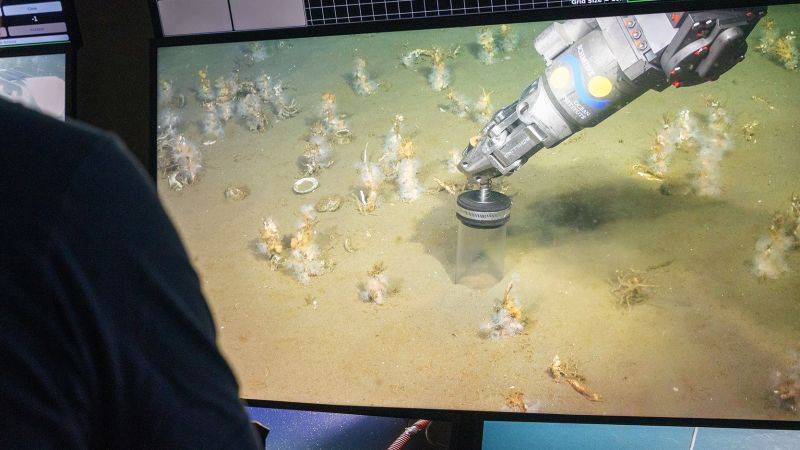
Approximately 2.4 to 2.1 billion years ago, Earth’s atmosphere underwent a dramatic shift, marked by a surge in oxygen levels called the Great Oxidation Event. Around this time, the first recognizable traces of eukaryotes emerged as microfossils, hinting that oxygen played a foundational role in the evolution of multicellular life. Yet, a lingering mystery persists: one of the microbes believed to be ancestral to eukaryotes, known as Asgard archaea, has been discovered predominantly in oxygen-poor environments, such as deep-sea hydrothermal vents.
Scientists have long puzzled over how Asgard archaea could interact with oxygen-dependent microbes to give rise to eukaryotes, given their distinct habitats. However, recent genomic analysis has uncovered previously unknown Asgard lineages in shallow coastal sediments, some of which exhibit oxygen tolerance and utilization. “The fact that certain Asgards, our ancestors, were capable of using oxygen aligns perfectly with this narrative,” said Brett Baker, a study coauthor and associate professor at the University of Texas at Austin, in a statement.
“Oxygen appeared in the environment, and Asgards adapted to that. They found an energetic advantage to using oxygen, and then they evolved into eukaryotes,” Baker added.
Understanding Asgard archaea’s role in this evolutionary leap could shed light on the broader question of how microbes transitioned into complex life forms. The term “Asgard archaea” itself nods to Norse mythology, referencing the celestial realm of gods like Odin and Thor. This superphylum, a group sharing a common ancestor, was first identified in 2015 near Loki’s Castle—a hydrothermal vent in the North Atlantic—due to its resemblance to the horned helmet of the Marvel character Loki, who is also a Norse deity.
Other Asgard groups have been named after Norse gods, reflecting their significance in the microbial puzzle. When compared to microbes in other superphyla, Asgards display genetic ties to eukaryotes, containing genes unique to complex life. “They were hailed as sort of the missing link in the evolution of life, from single-celled organisms to plants and animals,” Baker explained to CNN.
Further investigations, including DNA sequencing from diverse environments like deep-sea vents and coastal areas, have expanded the known varieties of Asgard microbes. These studies have uncovered hundreds of new genomes, enabling the construction of a phylogenetic tree for the superphylum. Researchers also identified previously unknown protein groups within these microbes, deepening insights into their metabolic capabilities.
By examining the energy-generating processes encoded in Asgard genomes, scientists aim to trace the evolutionary path that led to complex life. The findings from 2023, which linked eukaryotes to the Heimdall group of Asgard microbes—named after the guardian of Asgard—support the idea that oxygen availability directly influenced the emergence of energy-intensive life forms.
