
A free Iran is their shared dream. But the diaspora remains torn on the best path forward.
A Free Iran is Their Shared Dream. But the Diaspora Remains Torn on the Best Path Forward
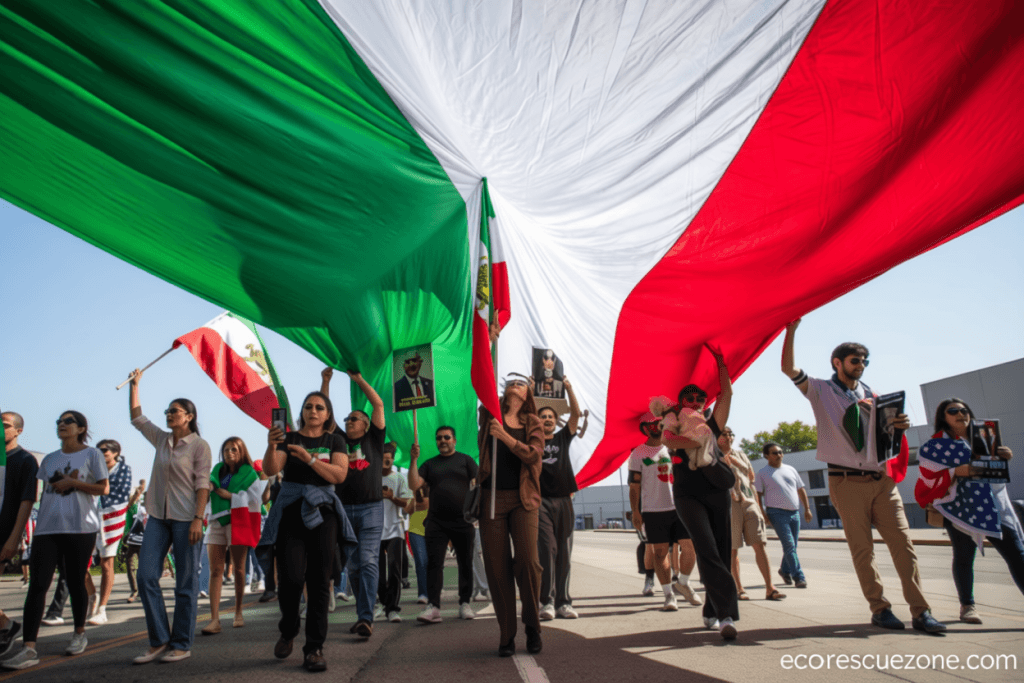
In Los Angeles, the Iranian diaspora has found itself split into opposing factions following recent events in the Middle East. Last Saturday, one group gathered near City Hall to protest the onset of an unsanctioned conflict, raising concerns about the war’s impact. They shouted slogans like “Stop the war in Iran” and “We the people don’t want war.” Meanwhile, on the Westside—home to the Tehrangeles neighborhood—another segment of the same community cheered the possibility of toppling the regime, displaying flags from the U.S., Israel, and Iran while dancing to upbeat music.
As violence intensifies in Iran, the emotional divide among diaspora members has deepened. Some families fled the theocratic government that emerged after the 1979 Islamic Revolution, and their reactions now reflect both anger and hope. Abbas Milani, an Iranian studies expert at Stanford University, noted that “Some people are so aggrieved at this regime that they say, ‘At any cost, come and destroy this regime even if it means destroying parts of the country.’” Others, however, advocate for regime change without sacrificing the country’s stability.
“The images of the destruction and the very joyous support that some give to the idea of war has become a source of more tension than we normally get in the diaspora,” Milani said. “It will get harder before it dissipates.”
Their disagreements have become more pronounced than earlier this year, when the diaspora was largely united in backing Iranians resisting the government’s harsh measures. Now, the debate centers on methods: whether to pursue war or seek alternative paths to freedom. Online discussions have grown heated since the attack on Iran, with critics of military action being labeled “Zionists” and opponents of war accused of supporting the regime.
Analysts also highlight the uncertainty surrounding Iran’s future leadership. While some hope for Reza Pahlavi, the son of the former shah, to step in, others question whether his ties to the monarchy might revive past tensions. The death of Ayatollah Ali Khamenei has sparked rumors that his son, Mojtaba Khamenei, could assume the role of supreme leader. The Islamic Revolutionary Guard Corps, a powerful force in the country, is positioned to consolidate influence if the current crisis persists.
Meanwhile, President Donald Trump has expressed interest in removing Iran’s leadership entirely, suggesting names for a “good leader” in a recent statement. However, a recent NBC News poll reveals that 54% of potential voters disapprove of his approach to the conflict, echoing the split within the Iranian diaspora. Earlier this year, a survey by the National Iranian American Council and YouGov found that 53% of Iranian Americans opposed U.S. military action against Iran, a figure that may shift with new data to be released next week.
Despite the turmoil, the Iranian community continues to find strength in its diversity. The Iranian Diaspora Collective, an Instagram account with over 81,000 followers, emphasized that “We are not a monolith” and that “Millions of people will never share the same ideology or identity.” This plurality, they argue, is essential to a free society.
For Los Angeles-based pastor Ara Torosian, a Christian who emigrated from Iran in 2010, the current conflict mirrors decades of oppression. He described the destruction of historic sites and the loss of innocent lives, particularly children, as a painful but necessary reckoning. Torosian, who was once jailed and beaten by the Revolutionary Guard for keeping Christian items in his Tehran home, expressed relief at the death of the supreme leader. Yet he also lamented the ongoing suffering, comparing it to the struggles of past dissidents.
As the death toll rises and an internet blackout limits communication, the Iranian diaspora faces a pivotal moment. Nowruz, the Persian New Year, looms on the horizon—a time traditionally marked by celebration and renewal. But for many, it now carries the weight of uncertainty about the future of their homeland.
