
American Indian Culture: History and Contemporary Practices
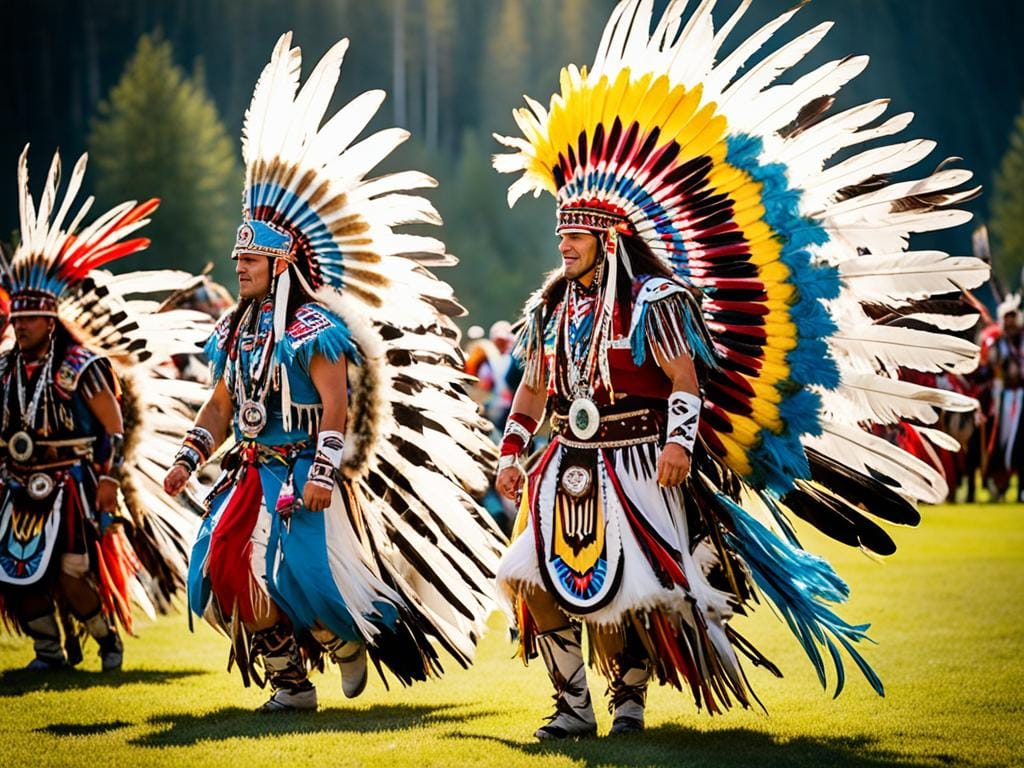
We are proud to explore the rich and diverse tapestry of American Indian culture, a legacy that has endured for millennia. The United States has over1 574 federally recognized tribes and villages. Each has its unique traditions, languages, and ways of life. This shows the resilience and adaptability of these indigenous peoples1.
The American Indian journey includes dark chapters like the Boarding School Era’s assimilation policies. But it’s also filled with victories for religious freedom and the return of cultural artifacts1. Today, tribes are revitalizing their traditions. They’re working to keep their languages alive, revive ceremonies, and connect with their ancestral lands1.
Exploring American Indian culture shows us their deep strength and adaptability. Their influence has shaped the Americas in profound ways. Their stories and traditions inspire us to value and understand the rich mix of our shared past1.
The Diversity of American Indian Cultures
American Indian cultures are not all the same. There are over 2,000 different tribal groups across the Americas. Each group has its own traditions, languages, and ways of life2. These indigenous peoples have been here for 15,000-20,000 years2. They took care of the land from the Arctic Circle to Tierra del Fuego long before Europe came2.
Key Concepts
Every American Indian community tells its own creation stories2. They’ve shown amazing strength and ability to change, moving to new places over time2. But, European colonizers’ arrival brought very bad outcomes. This included huge loss of life, broken traditions, and losing a lot of their lands2.
About 4.5 million Native Americans and Alaska Natives live in the U.S. now. They make up about 1.5% of the population3. American Indian groups keep working to keep their cultures strong. Many are trying to bring back their languages and traditions2.
There are more than 200 different languages used in North America’s history4. The Navajo code talkers used their language in World War II. They sent secret messages that the enemy couldn’t understand4.
Tribes have many ways of life and traditions. Some moved often to follow buffalo. Others built homes like wigwams and hogans and stayed in one place4. How tribes make decisions and run matters like a country also varies a lot across American Indian groups2.
The array of American Indian cultures shows the incredible strength and variety of their people2. Their special identities continue to influence the U.S. and all of North America. They are key parts of the region’s social, political, historical, and cultural landscape2.
american indian culture: A Timeline of Continuity and Change
American Indian cultures have shown how to adapt and keep their traditions strong. For over 15,000-20,000 years5, they built complex societies. These groups shared stories that showed their deep connections with the land5.
When Europeans came, life changed for many American Indians. They faced diseases like smallpox that killed a lot of people5. By the early 1600s, an epidemic in New England caused many Native American villages to be abandoned5. Furthermore, laws like the Indian Removal Act of 1830 uprooted tribes, forcing them to move west6.
Despite these hardships, American Indian traditions have stood the test of time. Practices like using wampum and translating important texts show their cultural continuity5. Tribal governments and cultural events have kept going, even through tough policies5.
Today, American Indian tribes continue to push forward. They work on economic and political projects and aim for federal recognition5. This shows their lasting strength and ability to influence the Americas’ culture.
Connections to Land and Environment
American Indians have lived for thousands of years on their ancestral lands. They have always been deeply connected to these places through their stories and cultures7. Over time, they developed ways of living with the land, based on careful observation8. They knew the importance of respecting and preserving the natural world around them8.
Before Europeans arrived, tribes all over the Americas took great care of their lands. They had intricate systems of paths, trade, and using resources7.
Indigenous Land Management Practices
When borders were put up and tribes moved, these deep ties were broken for many. But, American Indian groups still hold on to strong connections with their homelands7. Now, there’s a growing agreement that their way of looking after land fits well with today’s efforts to protect nature7. They see their role as guardians of the land, with a spiritual duty to care for it8.
In some places like California, there have been arrangements to share or give back land to tribes7. President Biden is promising to work with these tribes to safeguard more public land. This is part of a big national plan to save 30% of all U.S. land by 20307. Now that Deb Haaland is the Secretary of the Interior, we expect to see more of these land arrangements7.
The West’s focus on pulling resources from the land has led to a big gap with nature. This has hurt the land and its living things8. People who make movies and tell stories can help. They can change the way we see our use of land to talk about our bond with it. This shift in thinking highlights the need for a caring connection to the land879.
Identity Formation in American Indian Cultures
American Indian identity development is rooted in unique cultural settings of tribal communities10. Traditions like rites of passage, roles, and family practices have shaped individual identities across the societies10. Yet, contact with European and American influences caused a break in these identity building processes10. In response, many American Indian groups are now working to restore their languages, cultures, and identity building methods against external pressure10.
The make-up of American Indian identity is rich and varied10. With more than 580 recognized tribes, the AI/AN community is incredibly diverse, each with their own history and practices10. Events such as the Federal Indian Boarding School Movement and the Dawes Act have left a lasting impact, leading to various challenges faced by many AI/AN individuals today10. Due to colonization and relocation, this community carries diverse ethnic and racial identities10.
It’s essential to revive American Indian cultures to build strong, resilient identities10. In urban areas, AI/AN individuals often face discrimination, isolation from their communities, and economic hardships, along with challenges in preserving their cultural identity10. Yet, they must navigate this while adapting to mainstream influences and managing multiple identities10. In non-urban areas, they have more opportunity to connect with their traditional cultures but often face barriers to education, employment, and technology10.
For American Indian emerging adults, forming their identity is key to feeling a sense of belonging, safety, and growing personally10. They face discrimination, disconnection from their culture, and health issues but also draw strength from cultural heritage and community support10. Understanding how they express their identity and how it shapes their experiences is critical for their health and well-being10. It’s important to focus on key developmental stages like emerging adulthood to tackle health disparities and promote overall health10.
American Indian identity is complex, rooted in the unique traditions of each tribes11. Michael Garrett outlined four acculturation levels, from purely traditional to fully assimilated11. Perry G. Horse points out the importance of language, culture, genealogy, and a strong Native self-identity11.
In 2014, Joshua E. Maudrie’s study looked at American Indian identity through Anishinaabe culture12. The study identified a misconception of traditional indigenous cultures and highlighted the role of traditional culture in forming identity12. The research found that factors like race and physical appearance are less significant in traditional culture, emphasizing the need to understand traditional culture for Native American identity and cultural preservation12.
Social Structures and Institutions
American Indian cultures have unique social structures and institutions. These include societies, organizations, and more, each serving distinct functions13. Kinship systems are key, shaping relationships and responsibilities. Outside pressures from European and American institutions have influenced American Indian structures. Yet, they’ve adapted, preserving their cultural practices and well-being13.
Key Concepts
In the Northwest Coast, there was a ruling elite. House societies formed flexible groups. They ranged from a few dozen to over 100 people14. The communities had different status levels. There were chiefly elites, commoners, and those in bondage, with status inherited. Traditionally, high-status infants had their heads flattened. At potlatch events, each member’s role was recognized14.
In other areas, societies were organized by tribes and clans. Tribes were big groups united by culture and language, while clans were more intimate, sharing ancestors. Chiefs helped lead these groups. Family and village units were crucial within this system. The roles of women and men were distinct. Men were often chiefs. Misdeeds were punished by shaming or exile, not violence13. Clan membership sometimes followed the lineage of the mother or father. In some places, a “clan mother” held a revered position. Religious figures like medicine men were also vital13.
External institutions, from European to American influences, heavily impacted American Indian social systems1413. Yet, these communities have shown immense adaptability. They’ve persisted in maintaining their traditions and cultures1413.
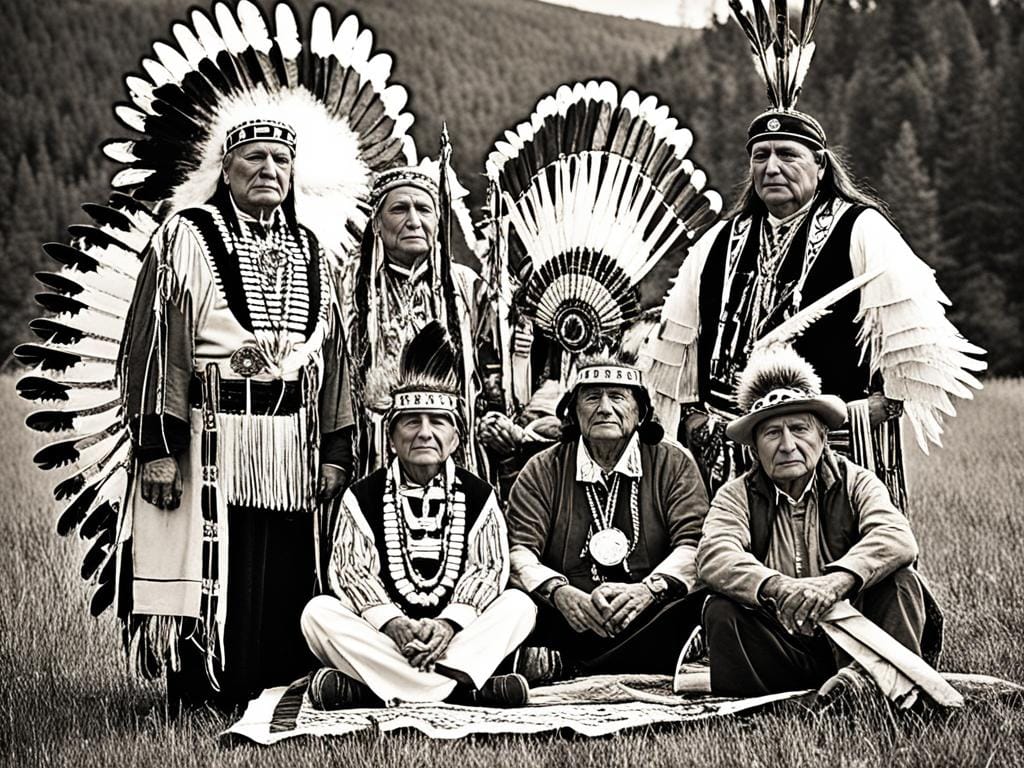
The varied social systems in American Indian cultures show their rich history and ongoing resilience1413. By exploring these systems, we can understand the enduring importance of American Indian cultures1413.
Governance and Sovereignty
American Indians have used various governance systems for many years. They included both traditional and modern models. Before Europeans arrived, they had complex governments. These were based on treaties and peaceful interactions between tribes15. But, the arrival of Europeans brought diseases and forced changes to their way of life. This made it hard for tribes to keep their original governing systems15.
Today, unlike local or state governments, tribal governments have their own power within the U.S. They make their own laws and run their own courts. They also work closely with the federal and state governments in the country15. For instance, the Navaho Nation has about 400,000 members with a big budget. Meanwhile, The Augustine Band of Cahuilla Indians is much smaller, with only 12 members15.
Key Concepts:
- There are 574 federally-recognized American Indian and Alaska Native nations in the U.S15.
- 368 treaties were negotiated and signed by U.S. commissioners and tribal leaders between 1777 and 186815.
- Public Law 280 enacted in 1953 allowed certain states to prosecute most crimes occurring on tribal land15.
- Tribes have the right to establish their own form of government, determine membership requirements, enact legislation, and establish law enforcement and court systems15.
- Tribal enrollment criteria vary across tribes and may include evidence of tribal lineage and blood quantum15.
- States have no authority over tribes unless Congress grants it to them15.
- Historic court cases like Worcester v. Georgia have affirmed tribal sovereignty and the uniqueness of tribal communities15.
In 2007, the UN General Assembly approved a declaration on indigenous rights. It guaranteed the right to self-governance within existing nations16. The U.S. backed this in 2010, leading to its global adoption. The Fifth Circuit Court of Appeals also supported the Indian Child Welfare Act. This was a big win for tribes under U.S. law16.
Despite success, some have fought against the Indian Child Welfare Act, claiming it’s unfair. They’ve argued it’s not in the U.S. government’s power, and it’s about race. In one case, a district court in Texas said it was race-based16. However, the Supreme Court has ruled that such laws are for political, not racial, reasons16.
Indigenous groups have always produced and cared for their data. This is known as Indigenous data sovereignty. It’s their right to control their data. They’re now pushing for control over areas like the internet, food, energy, and information17. The movement to recognize and support their data rights has grown a lot in the last five years, worldwide17.
| Tribe | Population | Budget |
|---|---|---|
| Navajo Nation | Nearly 400,000 | $1.25 billion (FY 2021) |
| Augustine Band of Cahuilla Indians | 12 members (late 2019) | N/A |
Regional Diversity: The Arctic and Subarctic
The Arctic and Subarctic regions in North America hosted many diverse cultures. These cultures found unique ways to live in their environments. The Arctic people, like the Inuit and Aleut, survived by hunting and gathering. They lived in small groups that moved around to follow the animals they depended on. Their homes were made of snow or wood and were covered in earth against the cold18.
On the other hand, the Subarctic area held Athabaskan and Algonquian-speaking peoples19. They also were on the move, using canoes and movable houses to hunt caribou. These groups were smart about preserving food, making pemmican by drying and mixing meat with fat and berries. This kind of food was full of important nutrients19.
| Characteristic | Arctic Indigenous Cultures | Subarctic Indigenous Cultures |
|---|---|---|
| Primary Subsistence | Hunting and Gathering18 | Hunting and Gathering19 |
| Social Organization | Small Mobile Bands18 | Small Kin-Based Bands19 |
| Dwellings | Dome-Shaped Houses18 | Soil-Dug Shelters19 |
| Key Tribes | Inuit, Aleut | Innu, Cree, Ojibwa, Athabaskan19 |
Both Arctic and Subarctic areas saw big changes and fewer people after meeting Europeans. The challenges of their lands, their need to move, and their way of life made them more likely to be affected by these changes. Even with these hardships, the cultures of these regions are still very important to people from Alaska and other places today.
Regional Diversity: The Northeast and Southeast
American Indian cultures shine brightly in the Northeast and Southeast. The people here spoke Iroquoian and Algonquian languages. They had their own unique traditions, languages, and ways of living20.
In the Northeast, the Iroquois Confederation stood out. It included the Mohawk, Oneida, Onondaga, Cayuga, and Seneca. Known for their political skills and strong societies, the Iroquoian groups were powerful. On the other hand, the Algonquian tribes like the Lenape and Wampanoag focused more on farming and fishing20.
When Europeans settled, things changed for these cultures. They faced being uprooted from their lands. This led to the sorrowful Trail of Tears, affecting tribes in the Southeast. These included the Cherokee, Chickasaw, Choctaw, Creek, and Seminole who were moved to present-day Oklahoma21.
However, the spirit of the native people of the Northeast and Southeast lives on. Their rich heritage is seen throughout their art and language. Efforts to protect their ways continue, showing their lasting impact21.
Diving into American Indian cultures shows us the strength of the Northeast and Southeast regions222021. They are a powerful symbol of perseverance and adaptation21.
Regional Diversity: The Plains and Southwest
The American Plains and Southwest are vast and diverse. They’ve always been rich in Native American cultures. From the nomadic tribes of the Great Plains to the farming communities of the Southwest, these regions highlight the adaptability of indigenous peoples23.
The Plains area stretches from Canada to Mexico. It saw a big change after horses were introduced by Spanish colonists. Tribes like the Crow and Blackfeet are known for hunting buffalo and living in teepees24.
On the other hand, the Southwest had both farming and nomadic groups. The Hopi and Pueblo farmed, while the Navajo and Apache roamed. All groups made their mark through their unique cultures and beliefs232425.
Key Concepts
- The Plains Indians led a nomadic lifestyle and hunted buffalo, known for their horse culture24.
- The Southwest was home to both farmers and nomads, adapting to its landscape uniquely2324.
- Southwest tribes combined farming with hunting, surviving the arid environment with their practices23.
- Puebloans built cliff dwellings and advanced irrigation systems, showing their innovative approach to survival24.
- The Navajo were skilled in making jewelry and practiced unique traditions in their hogans25.
| Native American Cultures | Key Characteristics |
|---|---|
| Plains Indian Cultures | Nomadic, horse-based lifestyle, pursuit of buffalo herds, teepees |
| Southwest Sedentary Farming Cultures | Hopi, Zuni, Pueblo, permanent settlements, irrigation, agriculture |
| Southwest Nomadic Cultures | Navajo, Apache, hunting, gathering, raiding |
| Puebloan Cultures | Cliff dwellings, advanced irrigation, Mogollon, Hohokam, Anasazi |
| Dinè (Navajo) Culture | Jewelry, textiles, traditional hogans, ceremonial practices |
The Plains and Southwest are home to many Native American cultures. They each have their own traditions and ways of life. From nomadic societies to farming, these regions are a testament to indigenous peoples’ resilience and creativity232425.
Regional Diversity: The Great Basin and California
A journey through American Indian cultures shows us the unique faces of the Great Basin and California regions. This includes Nevada, California, Oregon, and more. The Great Basin area was home to groups like the Bannock and Paiute26. They adapted to the harsh desert by foraging and hunting. These tribes, with Numic languages, used smart ways to use their land26.
California, on the other hand, was rich in diversity. It had around 100 tribes and 200 dialects26. These tribes often came together in small family groups for hunting and gathering. This made for a lot of peaceful trade and sharing26. In California, you could find people speaking about 20 different language families. This made it more varied than all of Europe according to Edward Sapir26.
European arrival brought changes to both regions. The Great Basin, by the late 1700s, welcomed horses via trade. This was followed by white settlers in 1840, and later, relocations to reservations27. In California, Spanish colonization brought its own challenges26. The Native tribes lost much of their lands. Yet, both regions’ indigenous people have kept their cultures strong. They show incredible spirit and resilience in the face of change.
Source Links
- https://indianyouth.org/mission-history/traditions-culture/
- https://americanindian.si.edu/nk360/about/understandings
- https://www.history.com/topics/native-american-history/native-american-cultures
- https://www.ushistory.org/us/1a.asp
- https://www.britannica.com/topic/Northeast-Indian/Cultural-continuity-and-change
- https://www.history.com/topics/native-american-history/native-american-timeline
- https://e360.yale.edu/features/how-returning-lands-to-native-tribes-is-helping-protect-nature
- https://www.yesmagazine.org/opinion/2022/10/14/land-conservation-indigenous-biodiversity
- https://link.springer.com/chapter/10.1007/978-94-017-0149-5_17
- https://www.ncbi.nlm.nih.gov/pmc/articles/PMC11064810/
- https://theinclusionsolution.me/who-am-i-part-4-native-american-identity-development/
- https://cornerstone.lib.mnsu.edu/cgi/viewcontent.cgi?article=1304&context=etds
- https://www.ducksters.com/history/native_americans/social_structure.php
- https://www.britannica.com/topic/Northwest-Coast-Indian/Stratification-and-social-structure
- https://journalistsresource.org/politics-and-government/tribal-sovereignty-native-americans/
- https://indianlaw.org/issue/native-sovereignty-and-self-governance
- https://nni.arizona.edu/our-work/research-policy-analysis/indigenous-data-sovereignty-governance
- https://www.britannica.com/topic/Native-American/The-Arctic
- https://kids.britannica.com/students/article/American-Subarctic-peoples/480462
- https://www.tomrichey.net/blog/native-american-cultures-apush-notes
- https://en.wikipedia.org/wiki/Native_American_cultures_in_the_United_States
- https://www.britannica.com/topic/Southeast-Indian
- https://www.britannica.com/topic/Southwest-Indian
- https://courses.lumenlearning.com/wm-ushistory1/chapter/native-americans/
- https://edsitement.neh.gov/lesson-plans/native-american-cultures-across-us
- https://www.britannica.com/topic/Native-American/The-Great-Basin
- https://study.com/academy/lesson/great-basin-people-overview-facts-culture.html
