
What Does an Owl Mean in Native American Culture? Symbolism and Significance

Owls have always fascinated people globally. In Native American culture, they have a special, mysterious meaning. These birds of prey have special features and hunt at night. They are both highly respected and scary to different tribes1.
Some tribes think owls bring bad luck and symbolize death. Yet, others believe they carry old wisdom and connect us to the spiritual world2. So, the meaning of owls in Native American traditions is deep and rich with varied beliefs.
Owls in Native American Culture: An Enigmatic Presence
Owls are fascinating to Native Americans with their unique traits. These include flat faces, forward-looking eyes, and silent flight. They have an enigmatic nature, especially their night association3.
The Mystical Allure of Owls
Some Native American tribes see owls as bringers of bad luck. Yet, others find them bearers of ancient wisdom and links to the spiritual world3. They serve as protectors against harm. They symbolize intuition and knowing oneself4. This range of views highlights the rich and varied beliefs within Native American societies.
Varying Cultural Interpretations
Owls can symbolize good fortune or death, depending on the culture4. In Native American lore, owls often represent death or misfortune. But some tribes honor them for their protective and wise aspects5. The Apache, for instance, see owls as guides to deeper truths5.
In Native American views, owls are linked to the moon and its cycles4. They signify the never-ending changes in life. Owls encourage seeking wisdom within and connecting with the spiritual world3.
Conversely, in Judaism, owls are considered unclean and linked to desolation3. Again, this shows how owl meanings vary greatly across cultures and beliefs.
Owls’ roles as messengers or wisdom bearers remain intriguing in Native American traditions345. Whether they signal bad omens or invite deeper wisdom, owls’ mystical charm endures.
Owl Symbolism: Bearers of Bad Omens or Ancient Wisdom?
Owls have a complex role in Native American culture, symbolizing both good and bad6. Some tribes link owls with death and bad luck6. They see the sighting of an owl in daylight as a sign of something tragic ahead6. Yet, other groups see owls as carriers of deep wisdom, able to move between our world and the spiritual one6. This mix of views shows how varied and rich Native American beliefs are.
The importance of owls goes beyond Native American groups7. The US has many places with “owl” in their names, like Owlshead Canyon and Owl Creek7. Also, Canada has several places with owl-related names, showing owls’ strong link to North American culture7.
Owl views differ worldwide7. In Malawi, most people see owls as unlucky birds7. In West Africa, they call owls the “witchbird,” suggesting they bring evil7. Yet, in ancient times, many cultures believed owls stood for wisdom and had ties to the divine6. These different beliefs highlight how owls have influenced human ideas over time.
Owls are intriguing to people globally because of their features and actions8. There are over 200 owl species, grouped into true owls and barn owls families8. They range from the tiny elf owl to large species like the Eurasian eagle-owl8. Owls’ unique qualities and role between the worlds have made them important in cultures worldwide.
The owl’s meaning in Native American beliefs is rich and varied6. They are seen as bringers of warnings or as symbols of ancient knowledge6. Owls still interest and inspire us today, showing their incredible impact6. Understanding the different views on owls helps us respect the spiritual traditions of Native peoples everywhere.
The Duality of Owls in Navajo Culture
The owl symbolism in Navajo culture is rich and intricate, embodying a duality in belief. Owls are seen as messengers of death, marking the end of life’s journey9. Yet, the Navajo also view owls as protectors. They guard the medicine men, offering wisdom during their spiritual quests9.
In this view, owls symbolize wisdom. They connect to unseen forces in the Navajo world. This mix of death’s shadow and ancient wisdom’s light shows the deep Navajo beliefs about owls as messengers of death and protectors.
Messengers of Death and Protectors of Medicine Men
The Navajo’s respect for owls comes from their spiritual beliefs. Owls bring messages of death9 but are also protectors. They look after the Navajo medicine men, providing wisdom and guidance9. This mix captures the Navajo’s detailed understanding of nature’s profound meanings.
Owls have a special place in the lives of the Navajo medicine men. These leaders seek advice from owls. They use the birds’ protective powers for their spiritual practices9. It shows the deep respect the Navajo have for owls as both death’s omens and wisdom’s guardians.
The Navajo’s deep understanding of owls showcases the wealth of their cultural beliefs. Owls as messengers of death and protectors are a sign of the Navajo’s ability to understand the world’s dual nature. This quality has kept their traditions alive for many generations9.
Great Horned Owl and Screech Owl: The Most Feared Owls
In many Native American tribes, the Great Horned Owl and the Screech Owl are seen as the most dangerous owls10. They have feather tufts that look like horns. This makes them symbols of power and spirituality in different tribal cultures too10.
Their night-time habits, eerie calls, and silent flight have also made them mysterious and scary11. Some believed they were not real birds but witches or spirits of the dead11. The fear and respect for these owls show the complicated views Native Americans have about owls.
Horns as Signs of Power
The feather tufts of the Great Horned Owl and Screech Owl look like horns. They stand for power and spirituality in many Native American cultures10. The great horned owl’s huge wingspan and big eyes make it even more impressive10.
These owls are fierce and can hunt prey bigger than themselves10. This makes them powerful and feared creatures in their environment.
Nocturnal Nature and Eerie Calls
Both owls are active at night and have calls that sound scary11. Some tribes thought their sounds meant death or the presence of spirits11. The owls’ quiet flight makes them even more mysterious and spooky.
The Great Horned Owl and Screech Owl are the most feared in native traditions10. Their features, habits, and sounds are why they are so respected and seen as powerful. They are key in the beliefs and stories of these cultures111210.
Owls as Spirits of the Dead or Shape-Shifting Witches
In Native American cultures, owls mean more than meets the eye. Many tribes see owls as linked to death and afterlife spirits13. They think spotting an owl at night means someone who passed is trying to say something14.
The Cherokee also believe owls are tied to dark forces, like witches14. This makes people afraid of them, thinking they bring messages of death or carry evil spirits13. A Cherokee story tells of an owl that fell in love and gained a spotted coat, adding to their mystical nature14.
Throughout the Americas, owls have been both respected and feared for their connection to the afterlife13. Ancient Romans saw owl sounds as a bad omen, while the Sioux thought owls watched over the gates to the next world. This lasting symbol draws people who ponder life, death, and what’s between14.
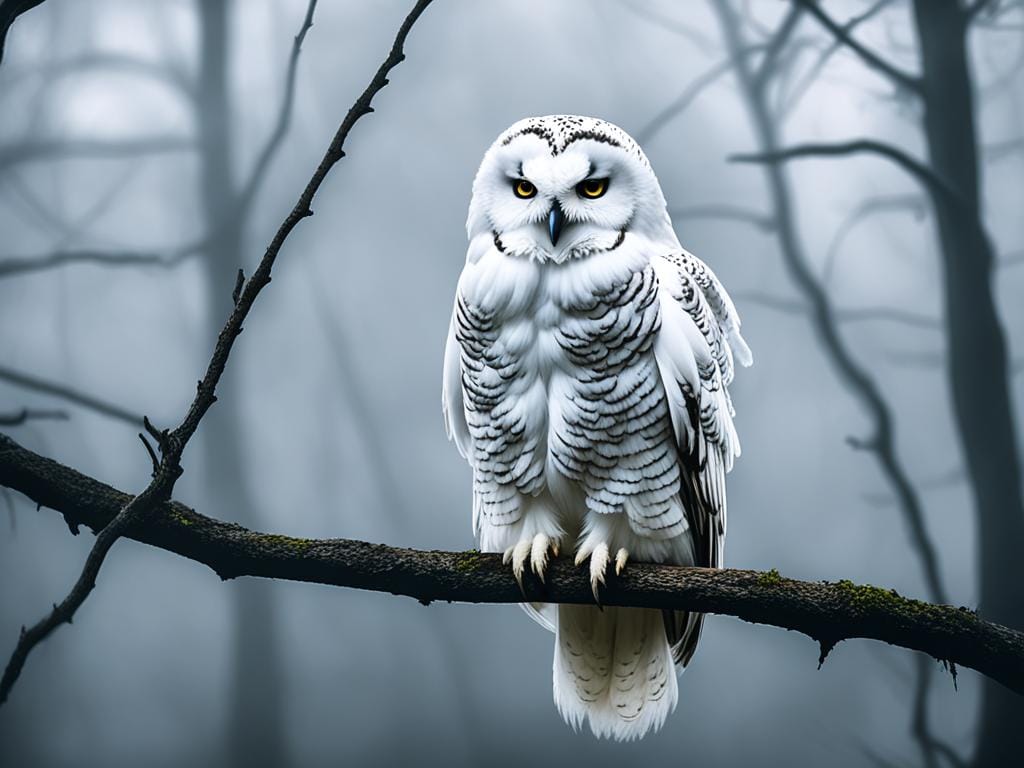
Exploring Native American wisdom shows us how owls connect to the spirit world and shape-shifting legends14. For centuries, stories and traditions have woven owls into the spiritual fabric of these cultures, providing a unique view13. Understanding these beliefs lets us see the deep symbolism around owls in Native American stories141315.
Warriors and Hunters Drawing Power from Owls
In Native American culture, owls were more than spiritual symbols. They were key for warriors and hunters. Tribes like the Dakota, Hidatsas, and Cheyenne used owl feathers. They believed this would give them special abilities like being better at moving quietly, seeing in the dark, and hunting16.
Owl Feathers for Stealth and Night Vision
Warriors added owl feathers to their gear. Owls are known for moving without a sound and seeing well at night. This was thought to help the warriors be better in fights16.
Sacred Owl Bundles and Hunting Powers
Other tribes, like the Pawnee and Hidatsa, thought owls could help hunters. The hunters carried special owl bundles. This was believed to make the hunters quicker, with sharper senses, and better at finding their prey16.
Owls were very important in Native American life. They were not just spiritual. They influenced how warriors and hunters prepared. Owls’ powers were seen as part of everyday life and ceremonies16.
what does an owl mean in native american culture
In Native American culture, the meaning of owls varies a lot between tribes and traditions17. Some see owls as bringers of bad luck and death18. Others see them as wise beings that connect us to the spiritual world18. These different views show how rich and diverse Native American beliefs are18.
Many tribes in the Southwest tell stories about owls, showing their rich culture17. These stories are often told in winter, marking a special time to share them17. The skill of owls in hunting at night has led to both fear and respect among tribes17.
- The Southwestern region has 13 owl species, showing its importance for owl biodiversity17.
- Tribes like the Alabama and Cherokee thought Great Horned Owls and Screech Owls were the most dangerous1.
- Many tribes link owls to death and the afterlife, such as the Lakota and Creek tribes1.
Indigenous peoples use owls’ amazing skills in many ways17. They use owl feathers for silent arrows and value owl medicine for protection17. Owl meanings differ among tribes, from protectors to symbols of darkness17.
Understanding owls in Native American traditions means appreciating many perspectives17. The owl’s symbolism in these cultures shows their deep connection with nature and spirit17.
The Cheyenne say only the Short-eared Owl is a bird, while others are night spirits1. The Dakota and Lenape believe owls protect warriors and are guardians in dreams1. Cherokee and Caddo see owls bringing news to medicine men1.
Most tribes see owls as symbols of death and bad luck18. Some connect owls to ghosts and believe their eyes are made of ghost fingernails18. Wtih Owl Clans, like in the Hopi tribe, owls hold a special place18. The Creeks have dances honored by Screech and Horned Owls18.
The meanings of owls in Native American culture show deep respect for nature and spirit18. Learning about owl symbolism reveals the wisdom and beliefs of these rich cultures18.
Owls and Medicine Men: Healers and Prophets
In Native American tribes, owls are key in the spiritual world. Some see owls as bad omens, yet others see them as having great powers of healing and knowing the future19. Shamans often use owl feathers in their ceremonies, looking to owls for guidance and protection19.
Owl Feathers and Healing Ceremonies
The Lakota, Ponca, and Ojibwa tribes think owls share news of the future. Their medicine men can understand what owls are saying19. This strong link shows the important role owls have in Native American spirituality and healing19.
Owls as Bringers of Prophetic Knowledge
Owls aren’t just healers; they’re also wise in seeing the future in many Native American beliefs19. Some tribes think owls tell their medicine men about what’s to come. These birds are seen as messengers from the spiritual world, helping to reveal the unknown19.
| Owl Species | Symbolic Meaning |
|---|---|
| Barn Owl | Intuition and Clairvoyance |
| Great Horned Owl | Identifying Goals and Manifesting Them Boldly |
| Various Owl Species | Wisdom, Intuition, Vision, Mystery, and Magic |
For many Native American groups, owls are tied to healing and predicting the future19. They hold a sacred place among the spiritual practices of these cultures. This makes them deeply valued for their powers and wisdom19.
The Cheyenne and the Short-Eared Owl
The Cheyenne people had special beliefs about owls, especially the Short-Eared Owl. They saw this owl as a true bird but thought of all other owls as night spirits17. Cheyenne warriors put Short-Eared Owl feathers in their headdresses. They believed it gave them special powers. But, they avoided using feathers from the Great Horned Owl or Screech Owl17. This shows how Cheyenne beliefs were very detailed when it came to owls.
The Cheyenne culture saw the Short-Eared Owl as a real bird. On the other hand, they viewed the Great Horned Owl and Screech Owl as spiritual beings17. This viewpoint shows the Cheyenne deeply understood the natural and supernatural worlds. They felt a strong connection with the Short-Eared Owl. They believed its feathers could give them special abilities17.
The Cheyenne saw owls in two groups: as real birds or spiritual entities17. This idea affected how they lived and what they believed. It also showed their deep knowledge of nature and owls’ importance17. By valuing the Short-Eared Owl, the Cheyenne demonstrated their deep respect for life’s variety. They linked physical and spiritual life closely17.
The Cheyenne’s owl beliefs are part of their rich culture and close ties to nature17. Their specific view of owls shows a fascinating understanding. It highlights the owl’s special place in their society17. Learning about this adds to our knowledge of Native American beliefs. It shows the value of different cultures worldwide17.
Death, the Afterlife, and Rebirth: Owls as Powerful Forces
In several Native American cultures, owls have a strong connection to death, the afterlife, and the cycle of life. Tribes like the Lakota, Omaha, Cheyenne, and more see owls as linked to the spirit world or the dead20. Owls often appear at night, which many interpret as a warning of death or a signal from the deceased20.
Owls can enter both the physical and spiritual world. This makes them symbols of deep wisdom and insight21. So, they’re known for leading to both death and the afterlife. This shows how complex owls are in Native American beliefs.
The Lakota and Cheyenne shared stories of an Owl Woman guarding the afterlife20. The Ojibway spoke of an Owl Bridge for the deceased, protected by an owl-like being20. The Fox tribe believed an owl-guided soul bridge exists, illustrating owls as key in the journey from death to the afterlife20.
Owls being creatures of the night and unseen worlds have deeper meanings. They’re linked to spiritual rebirth and the journey through life and death21. Many Native tribes view owls as stewards of spiritual growth. They lead individuals on a path of learning and personal change21.
Source Links
- https://centerofthewest.org/2018/08/06/owls-native-american-culture/
- https://blog.kachinahouse.com/owl-symbolism-in-native-american-culture/
- https://enlightenedmeanings.com/what-is-the-spiritual-meaning-of-an-owl/
- https://articles.friendsofirony.com/post/owl-symbolism-unveiled-illuminating-hidden-meanings-enigmatic-insights
- https://selfawareness.blog/what-does-an-owl-represent-spiritually/
- https://wildbirdsonline.com/blogs/news/owl-myths-and-legends
- https://www.owlpages.com/owls/articles.php?a=64
- https://en.wikipedia.org/wiki/Owl
- https://www.colorwithleo.com/what-animal-represents-death-in-native-american-culture/
- https://www.wildgratitude.com/great-horned-owl-symbolism/
- https://www.owlpages.com/owls/articles.php?a=62
- https://www.internationalowlcenter.org/mythsandfaq.html
- https://www.birdsandblooms.com/birding/birding-basics/owl-meaning/
- https://www.theclassroom.com/cherokee-beliefs-owls-5634.html
- https://www.litres.ru/book/judika-illes/the-element-encyclopedia-of-witchcraft-the-complete-a-z-for-t-39797177/chitat-onlayn/page-11/
- https://www.triplemoonpsychotherapy.com/archetypes-and-symbolism-myth-and-psyche/owl-symbolism-dreams-amp-meanings
- https://carinabissett.com/2017/03/24/a-parliment-of-owls-myths-of-the-southwest/
- https://www.native-languages.org/legends-owl.htm
- https://truespiritanimal.com/owl-spirit-animal/
- https://hinhanla.livejournal.com/367.html
- https://happylifelogic.com/spiritual-meaning-of-an-owl/
