Trump declares economic warfare on Iran. And, SCOTUS to rule on White House ballroom

Daftar Isi
Washington Escalates Economic Pressure on Tehran While Courts and Markets React
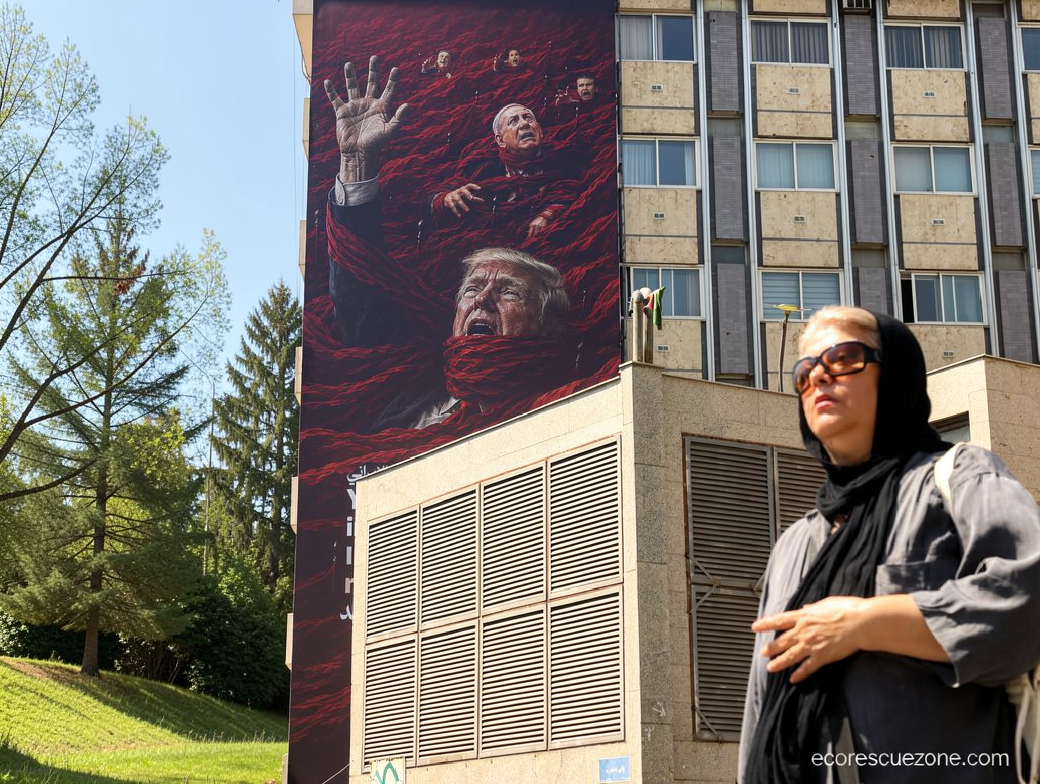
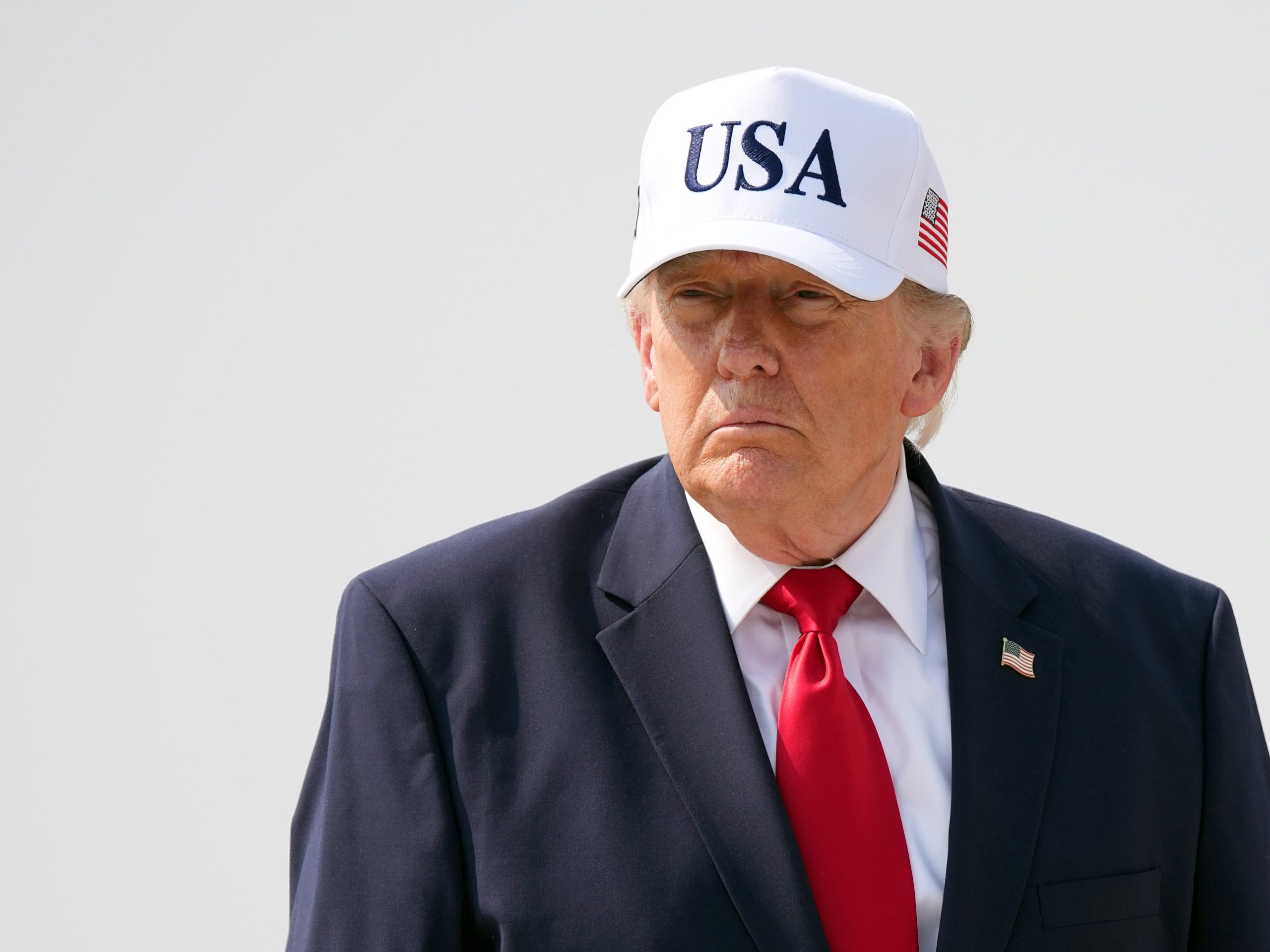
Ecorescuezone.com – The White House has framed its latest round of sanctions and trade restrictions against Iran as a full-scale economic offensive, with President Trump labeling the campaign an “economic D-Day.” Treasury Secretary Scott Bessent is scheduled to detail the new measures on Monday, signaling that the administration intends to tighten financial chokepoints around Tehran’s ability to move oil, settle transactions, and maintain currency stability. The stated objective is to force Iran back to the negotiating table over control of the Strait of Hormuz, the narrow waterway through which roughly one-fifth of the world’s daily oil supply transits. For shipping insurers, energy traders, and governments dependent on Gulf crude, any prolonged standoff in that corridor carries consequences far beyond the two parties involved.
“Economic D-Day.”
The choice of military metaphor is deliberate. By invoking the 1944 Normandy landings, the administration positions the sanctions package not as incremental pressure but as a decisive operational phase. Analysts note that the timing coincides with a period of elevated volatility in global energy markets, meaning that even the announcement of new measures can move crude prices before a single barrel is affected. Whether the strategy succeeds in reopening diplomatic channels remains uncertain, but the rhetoric leaves little room for a quiet de-escalation.
Supreme Court Weighs Fate of White House Ballroom
In a separate legal battle that has drawn sharp lines between executive authority and congressional power, the Supreme Court is set to rule on whether President Trump may continue construction of a massive ballroom on the White House grounds. The case arrived at the high court after the National Trust for Historic Preservation, a nonprofit dedicated to preserving America’s built heritage, filed suit arguing that the project requires explicit congressional authorization. An appeals court had sided with the nonprofit, issuing an order to halt work, but paused enforcement of that order until the justices could weigh in.
The administration’s defense rests on a functional argument: the ballroom, it contends, is not a standalone ceremonial space but a component of what officials describe as an “integrated military complex” that also houses medical facilities, a drone port, and bomb shelters. Under that framing, the structure falls within the president’s existing authority over executive-branch facilities. The nonprofit counters that the scale and public-facing nature of the ballroom place it squarely within Congress’s purview over federal construction and spending. The ruling will carry implications well beyond the White House lawn, potentially clarifying how broadly the executive can repurpose or expand federal real estate without legislative sign-off.
Bond Yields Spike; Markets Shake
Earlier this week, yields on U.S. government debt climbed to their highest level in nearly two decades, triggering a sharp selloff in both equities and fixed-income markets. Investors who had been pricing in gradual fiscal expansion suddenly confronted the arithmetic of a debt burden growing faster than GDP, and the repricing was swift. The administration attempted to steady sentiment through public statements, but the moves in Treasury futures and equity indices suggested that official reassurance had limited traction.
For ordinary readers, the bond market’s reaction matters because long-term yields feed directly into mortgage rates, corporate borrowing costs, and the discount rate used to value everything from infrastructure projects to pension obligations. A sustained elevation in the 10-year or 30-year yield can compress housing demand, raise the cost of state and municipal bonds, and pressure the valuations of growth stocks that depend on cheap capital. The episode underscores how quickly fiscal policy decisions made in Washington translate into price signals felt in local housing markets and retirement portfolios.
Federal Helicopters Lift Colorado’s Wild Horses
Across ten Western states, the Bureau of Land Management oversees a population of free-roaming horses that has grown well beyond what the rangeland can sustainably support. The standard management tool is periodic removal: when numbers exceed carrying capacity, crews round up surplus animals and relocate them. In rural Colorado this season, the operation has taken on an aerial dimension, with helicopters deployed to capture approximately 1,000 horses in a single campaign.
Many of the captured animals will be transferred to long-term holding facilities, a practice that has drawn criticism from animal-welfare advocates and local ranchers who argue that separation from the herd and from open range causes lasting behavioral and psychological harm. Once divided, the horses are unlikely ever to be reunited with their former groups. The photographs documenting the operation show the scale of the task: vast stretches of high-desert terrain, small helicopters skimming low over the ground, and lines of horses moving in tight formation toward staging areas. For the agency, the calculus is ecological; for the animals and the communities watching, it is a question of how much freedom a managed landscape can afford.
Weekend Cultural Picks
Screen
Pop Culture Happy Hour singles out Teenage Sex and Death at Camp Miasma, a slasher that layers queer storytelling over a deliberately over-the-top gore palette. The verdict: “gore-filled fun you won’t want to miss.” The film leans into camp sensibility while keeping its characters emotionally grounded, a combination that has made it a word-of-mouth favorite at recent festival screenings.
Television
In Shrinking, Jason Segel portrays a psychotherapist who, after his wife’s death, suffers a nervous breakdown and begins dispensing blunt, unorthodox advice to patients whose complaints loop endlessly. Segel discussed the show’s tone and his own process on Fresh Air, describing the character’s descent into candor as both a coping mechanism and a slow unraveling.
Books
Paul Yoon’s novel Etna follows a dog conscripted into an unnamed war in an unspecified country. Maureen Corrigan, writing for NPR’s book coverage, observes that from the opening pages the narrative voice settles into a register that is “somber and poetic in its simplicity,” letting the animal’s limited perspective become a lens on the absurdity and horror of organized violence.
Music
Taja Cheek’s album fata morgana threads the alien and the familiar through a series of tracks that treat experimentation not as a gimmick but as part of an ongoing evolutionary cycle. The record pulls the listener toward a pop center while refusing to let any single song resolve into easy repetition.
Kitchen
Jollof, one of West Africa’s most widely recognized dishes, builds its identity around richly spiced rice cooked with tomatoes, scotch bonnet peppers, and meat until the grains take on a deep amber hue and a fragrance that fills the room. A home-kitchen version is achievable with patience and a few key aromatics, and the result rewards the cook with a dish that carries centuries of regional variation in every spoonful.
Related Reading
Frequently Asked Questions
What is Trump declares economic warfare on Iran?
Trump declares economic warfare on Iran is the main topic of this guide. The article explains the context, practical details, and next steps readers should understand.
Why does Trump declares economic warfare on Iran matter?
Trump declares economic warfare on Iran matters because readers are looking for a useful answer, not just a short summary. Good content should match search intent and help them decide what to do next.