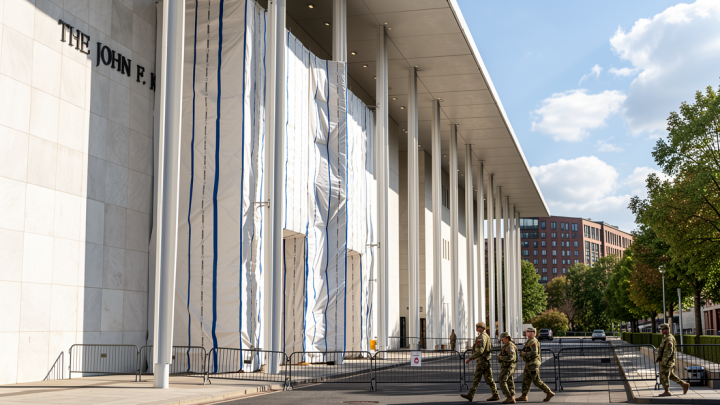
Paperwork, lines, hours on hold: There’s a ‘Time Tax’ on Americans who need help most

Daftar Isi
The Hidden Cost of Asking Government for What You’re Entitled To
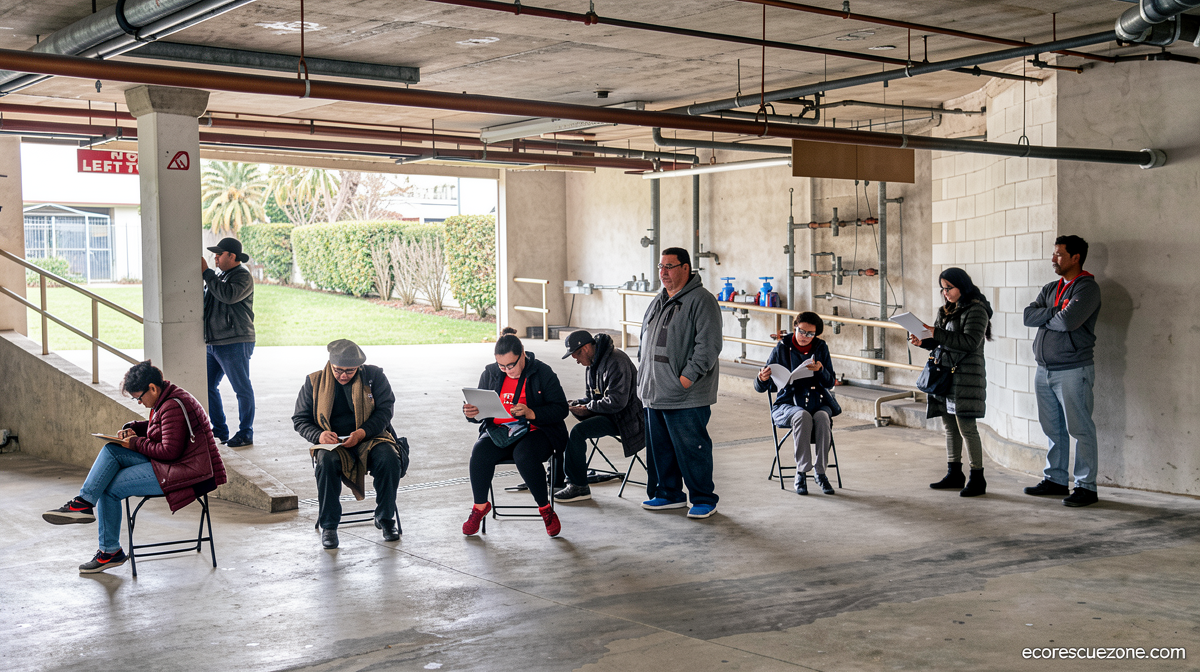
Ecorescuezone.com – Every hour spent standing in a benefits office lobby, every minute of hold music on a government hotline, every form that demands a document you don’t have — these add up to what journalist Annie Lowrey calls a “time tax.” In her new book, The Time Tax: How the Government Wastes Our Time — and How to Fix It, Lowrey, a writer at The Atlantic, argues that bureaucratic friction functions as an invisible levy, collected disproportionately from the Americans who depend most heavily on public assistance programs.
The concept reframes a familiar frustration into a structural critique. Lowrey does not single out every agency; she acknowledges that some government functions run smoothly. But in the corridors of unemployment insurance, disability benefits, and nutrition assistance, she finds a pattern: layers of paperwork, eligibility screens, and processing delays that effectively ration access to benefits people have already earned or qualify for.
Unemployment Insurance: A Benefit You Paid For, But Can’t Collect
Lowrey points to the unemployment insurance system as a particularly stark illustration. Unlike means-tested welfare, unemployment compensation is contributory — workers fund a trust fund through payroll deductions throughout their careers. The benefit is, in principle, something they have already purchased.
“Unemployment insurance is a contributory benefit. You have to be paying into a trust fund in order to get it,” Lowrey explains. But, she adds, some people don’t collect unemployment, either because they can’t figure out how to complete the paperwork or “the state, frankly, can’t figure out how to deal with all of the paperwork that it’s receiving.”
The result is a two-sided failure: applicants who lack the time, literacy, or digital access to navigate the process, and state agencies overwhelmed by the volume of claims they must adjudicate. Both sides lose, and the trust fund’s purpose goes unfulfilled.
Food Assistance and the Paperwork Filter
Lowrey notes that recent expansions of documentation requirements and work mandates have already pushed millions of Americans out of food assistance programs, and that the numbers continue to climb. She frames the issue in moral terms rather than purely administrative ones.
“Food assistance should not be a program for low-income, at-risk Americans who might not be able to eat enough, who are also good at paperwork. That’s not what that program should be, right?”
She extends the point to digital access: a growing share of benefit applications now assumes a smartphone, a stable internet connection, and the ability to upload scanned documents. For households without those resources, the application process becomes a second eligibility test — one that screens out not by income or need, but by connectivity and technical fluency.
The Programs That Carry the Heaviest Burden
Lowrey singles out three programs aimed at the most vulnerable populations and describes the administrative weight each carries:
Supplemental Security Income (SSI) serves very low-income seniors with disabilities. Recipients must pass an asset test that probes exact bank balances and even small savings stashed in drawers or envelopes. For people managing chronic illness, poverty, or homelessness, that level of financial scrutiny compounds their existing fragility.
Temporary Assistance to Needy Families (TANF), the cash-welfare program, primarily reaches very low-income mothers of young children. Its time demands — recurring in-person reports, work-activity documentation, and periodic recertification — land on parents who are already stretched thin.
Women, Infants & Children (WIC) provides nutrition support to low-income mothers and their children. Even here, Lowrey observes, the compliance requirements are substantial relative to the modest benefit delivered.
“And I think that everything that we know about being very sick, very at risk, very poor, homeless, vulnerable in some fashion, those programs should be easier, not harder.”
A “Low-Trust Society” and the Broader Democratic Cost
Lowrey’s argument extends beyond individual inconvenience. She contends that repeated encounters with obstructive bureaucracy erode public confidence in government institutions, producing what she terms a “low-trust society.”
“When the government treats us like this, we don’t trust it. And if we don’t trust it, we’re not going to trust it to do more and better things for our life. And I think that it leads us not to trust each other, too.”
The implication is that administrative friction does not merely waste hours; it corrodes the social contract. Citizens who feel the state is designed to make them jump through hoops rather than deliver services grow reluctant to engage with it on any other front — from public health campaigns to disaster response.
The Tuesday Problem: How Arbitrary Scheduling Shapes Participation
Lowrey draws a parallel between bureaucratic timing and voting logistics. She traces the choice of Tuesday as Election Day to an agrarian-era compromise: in the early republic, voters often traveled on foot or by horse to polling places, needed to avoid market days, and observed Sunday for church. Congress settled on Tuesday, she believes, in the 1840s. That date has never been updated to reflect a modern workforce.
“We do not have high voter participation rates. And so that means that the voting public is not representative of the actual American public. That’s not good for (small d) democratic reasons.”
She credits mail voting with beginning to offset the scheduling disadvantage, but warns that ongoing political attacks on mail-ballot systems threaten to reverse that progress. The underlying logic mirrors her broader thesis: when the state makes participation costly in time and effort, it selects for a narrower, less representative slice of the population.
What a Fix Would Look Like
Lowrey’s prescription, woven throughout the book, centers on simplification: fewer forms, clearer language, digital options that do not assume broadband, and agency staffing calibrated to actual claim volumes rather than legacy budgets. She frames the reform not as a cost to government but as a return on investment — fewer lost benefits, fewer appeals, fewer citizens who simply stop trying. The time tax, in her telling, is not an unavoidable byproduct of running a large state. It is a design choice, and design choices can be changed.
Related Reading
Frequently Asked Questions
What is Paperwork lines hours on hold?
Paperwork lines hours on hold is the main topic of this guide. The article explains the context, practical details, and next steps readers should understand.
Why does Paperwork lines hours on hold matter?
Paperwork lines hours on hold matters because readers are looking for a useful answer, not just a short summary. Good content should match search intent and help them decide what to do next.