
‘Super Revolutionaries’: The radical Iranian hardliners bent on sabotaging a deal with the US
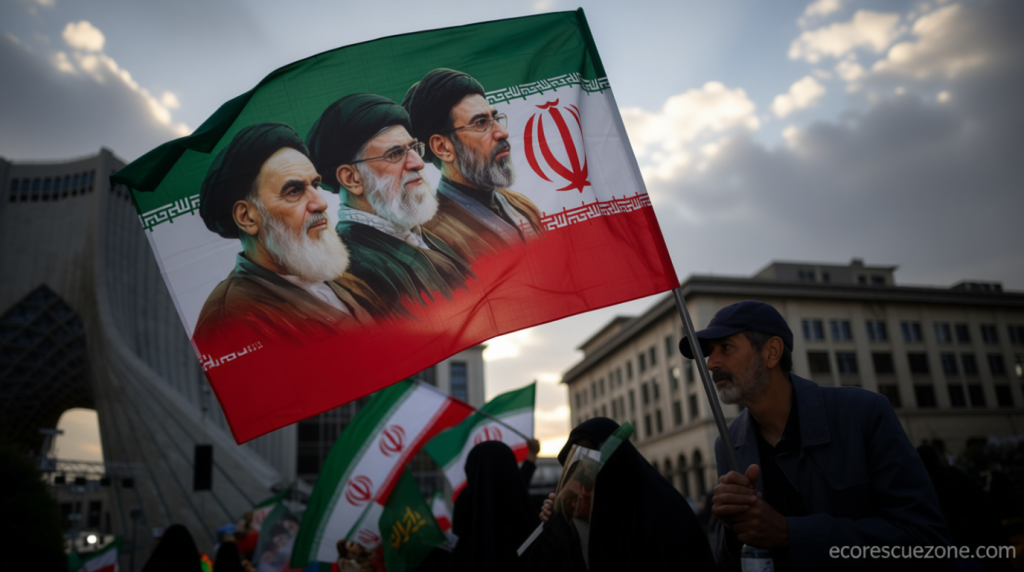
‘Super Revolutionaries’: The radical Iranian hardliners bent on sabotaging a deal with the US
The Growing Influence of the Endurance Front
Super Revolutionaries – With U.S.-Iran peace talks nearing a decisive phase, a faction within Iran’s political landscape has emerged as a formidable obstacle to diplomatic progress. Known as Jebhe-ye Paydari—the Endurance Front—this ultra-conservative group has intensified its campaign against any agreement with Washington, amplifying President Donald Trump’s assertion that Iran’s leadership is riddled with internal discord. Though smaller in numbers than other factions, their impact is profound, as they challenge the current administration’s efforts to secure a deal that could reshape the region’s power dynamics.
Members of the Endurance Front are united by their belief that the 2015 nuclear agreement, which Iran signed with world powers, was a critical error. While they share Trump’s view, their rationale diverges. They argue that the deal not only undermines Iran’s sovereignty but also weakens its ideological foundations. This faction’s stance is so vehemently opposed to Western interests that even hardened conservatives within Iran’s establishment find it extreme. Yet, their presence in key political and media institutions ensures they remain a significant force despite their radical nature.
The Ideological Roots of Resistance
The group’s ideology is deeply rooted in the revolutionary values of 1979, when Iran’s pro-Western Shah was overthrown and replaced by an Islamic republic. They see themselves as the vanguard of this transformation, committed to preserving the Shia Islamist identity that defines the regime. “For them, resistance against the United States and Israel is an unending mission,” said Hamidreza Azizi, a visiting fellow at the German Institute for International and Security Affairs. “They are fanatical about the idea of an eternal Shia state, and they view any compromise as a betrayal of their revolutionary principles.”
“They (the US) realized that killing our leaders, commanders, and loved ones costs them nothing,” an article in Raja News, affiliated with the Endurance Front, stated. “They understood that even if they martyr our Imam (Ali Khamenei), there are still groups here willing to negotiate, shake hands with (Steve) Witkoff, (JD) Vance, and (Jared) Kushner, and smile at the killers of our martyred Imam.”
This fanaticism extends to their approach in negotiations. They believe that only through total victory over the U.S. can Iran achieve a favorable deal, viewing any concession as a sign of weakness. Their critics, however, accuse them of leaking incomplete information about the agreement to the media, which they claim is a deliberate strategy to create chaos and pressure the current leadership.
Power Struggles in the Wake of Khamenei’s Death
The Endurance Front’s heightened activity coincides with a period of political upheaval in Iran. Following the assassination of former Supreme Leader Ali Khamenei in late February 2026, the nation’s leaders have grappled with maintaining stability while engaging in high-stakes talks with the U.S. The group has seized this moment to push their agenda, arguing that the new leadership is too accommodating to American demands.
Tehran’s efforts to project unity have been tested by the faction’s relentless opposition. Despite attempts to include them in discussions, the group has grown increasingly vocal, criticizing negotiators for prioritizing diplomacy over defiance. This has led to a perception of fracture within Iran’s leadership, with Trump describing the regime as “divided” and “in disarray.” Yet, the new Supreme Leader, Mojtaba Khamenei, has sought to counter this narrative by issuing statements emphasizing solidarity. However, the Endurance Front continues to undermine these efforts, accusing negotiators of disloyalty to the Islamic Republic’s core principles.
Leadership and Legacy in the Endurance Front
Though the Endurance Front is seen as a fringe group by some, its members hold influential positions across Iran’s political and religious institutions. Saeed Jalili, the group’s most prominent figure, previously served as national security chief and now commands a vast following. His second-place finish in the 2024 elections, securing 13 million votes, highlights the faction’s reach. His brother, Vahid Jalili, occupies a senior role in the state-run IRIB, further entrenching their influence in the media.
Members of the Endurance Front view negotiations with the U.S. as a form of surrender. They argue that even discussing a deal with Washington is a capitulation to imperialist pressures, which they believe have eroded Iran’s national pride. This perspective has fueled their attacks on the current government, which they label as “cowardly” for engaging in talks that, they claim, will inflict “immense damage on the Iranian nation.” Their opposition has also targeted the nuclear program, insisting that any concessions on this issue are unacceptable.
The Battle for the Islamic Republic’s Future
As the U.S. and Iran continue their talks, the Endurance Front’s actions could determine which faction shapes the country’s trajectory in the coming years. Their ability to mobilize public opinion through media campaigns and street protests underscores their strategic importance. While the government has tried to balance negotiations with domestic support, the faction’s relentless criticism has kept the debate alive.
The Endurance Front’s influence is not limited to rhetoric. Their presence in parliament and their connections to religious authorities mean they can sway policy decisions. Their supporters argue that the deal being discussed will weaken Iran’s position, allowing the U.S. to dominate the region. Opponents, meanwhile, warn that their uncompromising stance could derail the entire process, leaving the country in a state of prolonged conflict.
Despite their ideological fervor, the Endurance Front’s ability to secure long-term support remains uncertain. While they have strong backing among certain segments of the population, their radicalism may alienate moderates who favor pragmatic approaches. However, their recent electoral success suggests they are not a marginal group but a serious contender for shaping Iran’s future.
Their strategy of using media to amplify their message has been particularly effective. By framing the negotiations as a threat to the Islamic Republic’s identity, they have galvanized public sentiment against the deal. This has created a dilemma for the current leadership: how to pursue diplomacy without appearing to betray the revolutionary ideals that the Endurance Front holds sacred.
As the talks progress, the Endurance Front’s role will be crucial. Their continued resistance could force the U.S. to adjust its demands or push Iran to adopt a harder line. Either way, their influence ensures that the path to a deal remains fraught with challenges, reflecting the deep ideological divides within the Islamic Republic.
