
DNA reveals identities of 4 sailors from doomed 1845 Franklin expedition
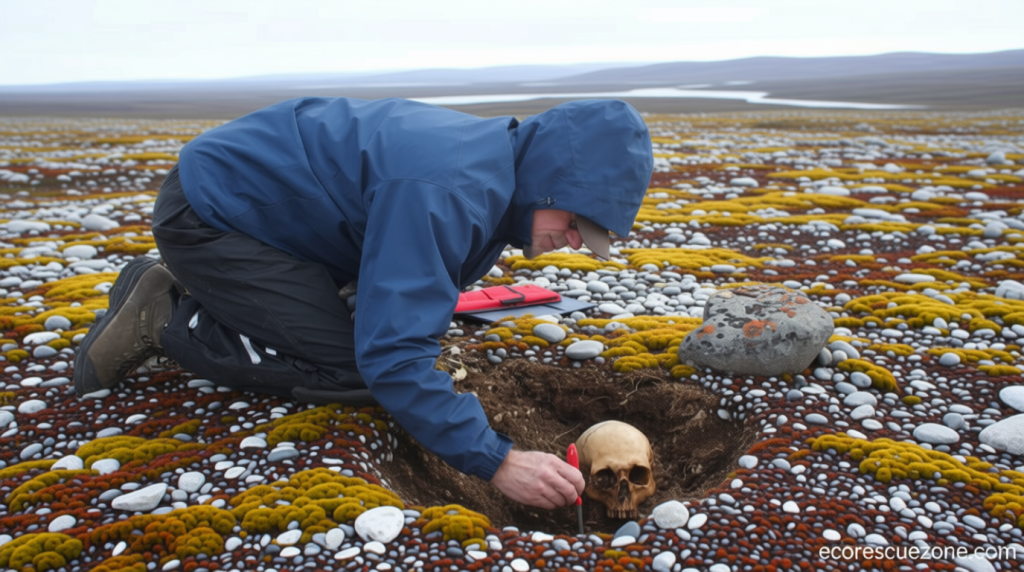
DNA Reveals Identities of 4 Sailors from Doomed 1845 Franklin Expedition
DNA reveals identities of 4 sailors – A breakthrough in genetic research has finally unraveled the identities of four sailors from the ill-fated 1845 Franklin expedition, offering fresh insights into the tragedy that claimed 129 lives. By comparing DNA from the remains with genetic material from living descendants, scientists have successfully matched three additional crew members from the HMS Erebus and one from the HMS Terror, shedding light on the shipwrecked explorers’ fates. This development not only corrects previous misidentifications but also highlights the power of modern technology in solving historical mysteries.
The Franklin Expedition: A Quest for the Northwest Passage
In 1845, Sir John Franklin led a British expedition to chart the Northwest Passage, a treacherous sea route stretching across the Arctic. This path, if navigable, would have shortened trade between Europe and Asia, making it a prized goal for naval officers, merchants, and polar explorers. The mission involved two ships, the HMS Erebus and the HMS Terror, which set sail with 129 crew members. However, the expedition quickly faced insurmountable challenges. After becoming stranded in Arctic ice for nearly two years, the crew deserted the vessels in April 1848, leaving 105 men to trek across the frozen west coast of King William Island in present-day Nunavut. Despite their efforts, none of the survivors made it back to civilization.
Only three men were buried on the island with engraved headstones, marking their deaths during the first year of the expedition. The remaining sailors perished during the harsh winter of 1847-1848, their bodies left to the elements. Over the years, explorers and rescue teams have uncovered artifacts and skeletal remains scattered across the island and the Adelaide Peninsula. Yet, linking these fragments to specific individuals proved elusive, with many bones left unassigned to their original owners.
Breaking the Silence: DNA and the Genetic Clues
Recent advancements in DNA analysis have transformed the search for answers. A team of researchers from Ontario’s University of Waterloo and Lakehead University has utilized genetic profiling to connect remains with their descendants, creating a bridge between the past and present. This method allowed them to identify John Gregory, the engineer aboard the Erebus, and James Fitzjames, the ship’s captain, whose bones bore evidence of cannibalism. Now, the same team has matched the remains of three more Erebus crew members and one Terror sailor, completing a vital piece of the puzzle.
The process was complex. For 166 years, the artifacts and bones found with the sailor’s remains puzzled historians, as they lacked clear identifiers. The genetic breakthrough provided the missing link, confirming the identities of these individuals. As more family members contribute their DNA, researchers believe they are closer to understanding the causes of the crew’s desertion and the factors that led to their demise.
“We are trying to add more pieces to the puzzle, the genetic side of it, since it hadn’t been done before,” said Dr. Douglas Stenton, lead author of the study and an adjunct assistant professor at the University of Waterloo. “It’s opening up a new chapter in the story of the Franklin expedition, and something that I like about this is that chapter is helping to be written by the families of the men who never made it home.”
Stenton’s journey into this mystery began in 2008, when he served as the director of heritage for Nunavut’s government. At that time, Parks Canada was organizing a multidisciplinary search for the wreck sites of the Erebus and Terror. The discovery relied on a combination of sonar technology and oral traditions shared by the Inuit community, who had long preserved stories of the lost expedition. These efforts led to the identification of the Erebus in 2014 and the Terror in 2016, marking a significant milestone in the search.
The research team spent years investigating the sites on land, using photography and lidar to map the areas where the ships had been grounded. These tools helped uncover hidden structures and track the movement of artifacts across the terrain. During their fieldwork, which spanned six years, the team collected over 100 items, many of which had been overlooked for decades. These objects, from tools to clothing, were preserved for conservation, analysis, and display.
The genetic analysis was a key component of the study. While traditional methods focused on determining age, sex, and health conditions from bone fragments, DNA offered a more precise way to link remains to specific individuals. By selecting the best candidates for testing, the researchers were able to create a genetic profile that matched the sailors’ living relatives. This process required meticulous coordination, as the team needed to locate individuals with an uninterrupted genetic lineage to the lost explorers.
A Legacy of Discovery and Collaboration
The success of the DNA analysis underscores the importance of collaboration between scientists and local communities. The Inuit’s oral histories played a crucial role in guiding the search, while the descendants of the sailors provided vital genetic data. Stenton emphasized the value of this partnership, noting that it allowed the team to build on the work of previous researchers. “We wanted to think about how we might be able to contribute to work that others had done before us,” he said. “Something that hadn’t been done was genetic analysis to see if we could identify who these men were. We know who was on the ships, but these are not complete skeletons. These are scattered bones.”
The findings also highlight the enduring mystery of the Franklin expedition. While the team has identified several crew members, the full story of what caused the crews to abandon the ships and the factors that led to their deaths remains unclear. Researchers suspect a combination of extreme weather, dwindling food supplies, and the psychological toll of isolation played a role in the tragedy. The DNA revelations, however, offer hope that more answers will emerge as the study continues.
Stenton’s dedication to the project is evident in his repeated visits to the Arctic sites. “Once you get hooked by the Franklin expedition, you want to keep going back to try and find as many more pieces of the puzzle as possible that you can,” he explained. The expedition’s legacy lives on through the remains and artifacts that continue to be discovered, each one adding a new layer to the historical narrative. With the help of genetic research, the past is no longer just a distant memory but a tangible story that can be pieced together.
As the search for the Franklin expedition’s secrets progresses, the DNA analysis stands as a testament to the intersection of science and history. What began as a quest for a new trade route has evolved into a multidisciplinary effort to uncover the lives and deaths of those who perished. The identification of these sailors not only honors their memory but also deepens our understanding of one of the most enigmatic disasters in Arctic exploration history.
