
Scientists find clues that a new tectonic plate boundary is forming
Scientists Find Clues That a New Tectonic Plate Boundary Is Forming
Sub-Saharan Africa’s Geological Transformation
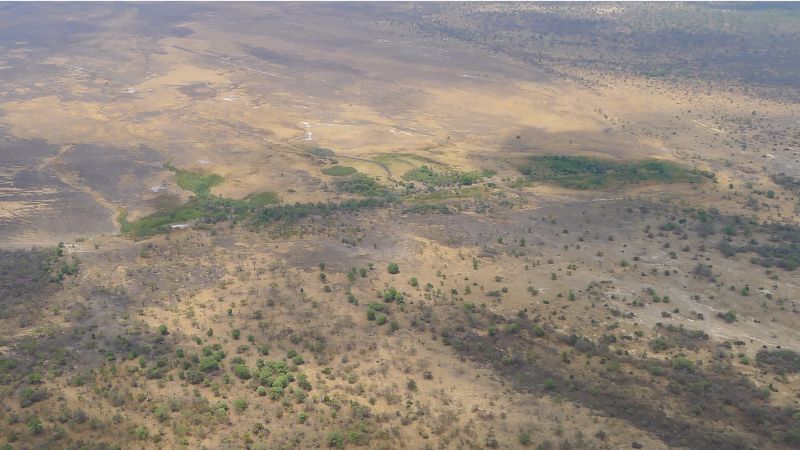
Scientists find clues that a new tectonic – Sub-Saharan Africa may be on the brink of a significant geological shift, with experts suggesting that a new tectonic plate boundary could emerge in the region within a few million years. This potential development is linked to the Kafue Rift, a geological feature situated along a vast rift system stretching from Tanzania to Namibia. The entire network spans approximately 1,500 miles (2,500 kilometers), and its current activity could signal the start of a process that might eventually divide the continent into distinct landmasses.
Rifts, which are fractures in Earth’s crust, have long been associated with tectonic movements. While many such features remain dormant, they can occasionally become active, leading to seismic activity or changes in the landscape. Previously, the Kafue Rift was considered a relic of the past, with geologists assuming it had ceased to influence the area’s geology. However, recent observations have sparked new theories about its potential reactivation.
Geochemical Data Reinforces Rift Activity
A groundbreaking study published in the journal *Frontiers in Earth Science* has provided fresh evidence of the Kafue Rift’s activity. Rūta Karolytė, the lead researcher at the University of Oxford, explained that the study introduced a novel angle: “We have the first geochemical data from this area. That’s quite a different line of evidence that really strengthens the idea that we have rift activity in the region.”
The research focused on analyzing natural hot springs and geothermal wells in Zambia, where the suspected rift lies beneath the surface. By examining the gases emitted from these sites, the team aimed to uncover signs of deeper geological processes. Their primary interest was the ratio of helium-3 to helium-4, elements that can reveal whether the water originates from the Earth’s mantle—a layer deep within the planet that is crucial to tectonic activity.
Researchers discovered a notable surplus of helium-3 in the samples, indicating a possible connection to the mantle. “We found more helium-3 than you’d normally find in the crust, which is generally a signal of mantle fluids coming up into the water,” Karolytė noted. This finding suggests that the area may be experiencing tectonic forces strong enough to alter the region’s geological dynamics. However, the data is still preliminary, as the samples were collected from only six locations within a limited area. To validate their hypothesis, the team also tested two hot springs located 60 miles (95 kilometers) away from the rift, where no similar helium-3 increase was observed.
Implications for Tectonic Studies
For geologists, the Kafue Rift’s potential reactivation could offer a rare opportunity to observe the formation of a new plate boundary in its earliest stages. “Mature plate boundaries are easy to recognize,” said Estella Atekwana, an Earth and planetary sciences professor at the University of California, Davis. “But the earliest stages are much more subtle.” If the rift is indeed part of an evolving plate boundary, it could provide critical insights into how continents break apart and how new geological structures emerge.
Such knowledge is essential for understanding the broader mechanisms of tectonic plate movement. These massive rock slabs, some stretching thousands of miles across, have been shifting over Earth’s history, shaping the planet’s surface through processes like mountain building, earthquakes, and volcanic eruptions. The study of the Kafue Rift might help clarify how these boundaries originate, particularly in regions where the initial signs of activity are difficult to detect.
Historical Context of Tectonic Plates
Tectonic plates have been in constant motion since Earth’s early formation, driven by the convection currents in the planet’s mantle. This movement, though gradual—comparable to the rate at which fingernails grow—has led to the separation of vast landmasses over millions of years. One of the most notable examples is the breakup of the supercontinent Pangea around 200 million years ago, which eventually gave rise to the continents we recognize today.
Plate boundaries, the zones where these massive slabs interact, are primarily found beneath the oceans. There, they can either slide past each other, collide, or move apart, generating the majority of the planet’s seismic and volcanic activity. While some rifts, like the one in Sub-Saharan Africa, may remain inactive for long periods, others can become active and evolve into new plate boundaries. However, this transformation is not guaranteed; many rifts begin and end without progressing to full-scale tectonic division.
The Kafue Rift’s current behavior, as indicated by the recent geochemical data, raises intriguing questions about its future. If it continues to show signs of activity, it could eventually create a new sea between the emerging landmasses, much like the Atlantic Ocean formed as Pangea split. This possibility underscores the importance of ongoing research, as the early stages of tectonic processes are often overlooked until they become more pronounced.
Future Research and Geodynamic Potential
Although the study provides compelling evidence, further research is needed to confirm the Kafue Rift’s role in the development of a new plate boundary. Karolytė and her team are now analyzing additional data to determine whether the helium-3 findings are consistent with long-term tectonic shifts or merely a temporary anomaly. Their work highlights the value of geochemical analysis in complementing traditional geological methods, offering a more comprehensive view of Earth’s dynamic processes.
Geologists remain cautious but intrigued by the implications of this discovery. “This could be a critical moment in the history of the region,” said Karolytė. “If we can confirm the presence of mantle-derived materials in the rift zone, it will help us understand how new boundaries form and how they interact with the surrounding crust.” The findings also suggest that Sub-Saharan Africa might be entering a new phase of geological activity, potentially leading to changes in the region’s landscape and ecosystems over time.
As tectonic forces continue to shape Earth’s surface, the Kafue Rift serves as a reminder of the planet’s ever-changing nature. While the timeline for its transformation remains uncertain, the research underscores the importance of monitoring such features to predict future geological events. Whether the rift becomes a full-fledged plate boundary or remains a minor geological feature, its activity could provide valuable insights into the mechanisms that drive the planet’s tectonic evolution.
Ultimately, the study of the Kafue Rift is not just about understanding Africa’s future. It also contributes to the broader field of geodynamics, helping scientists unravel the complex interplay of forces that have sculpted Earth’s continents and oceans over billions of years. As new data emerges, the possibility of a tectonic renaissance in this region continues to captivate researchers, offering a glimpse into the planet’s ongoing transformation.
