
Leading challenger to UK Prime Minister Keir Starmer quits government
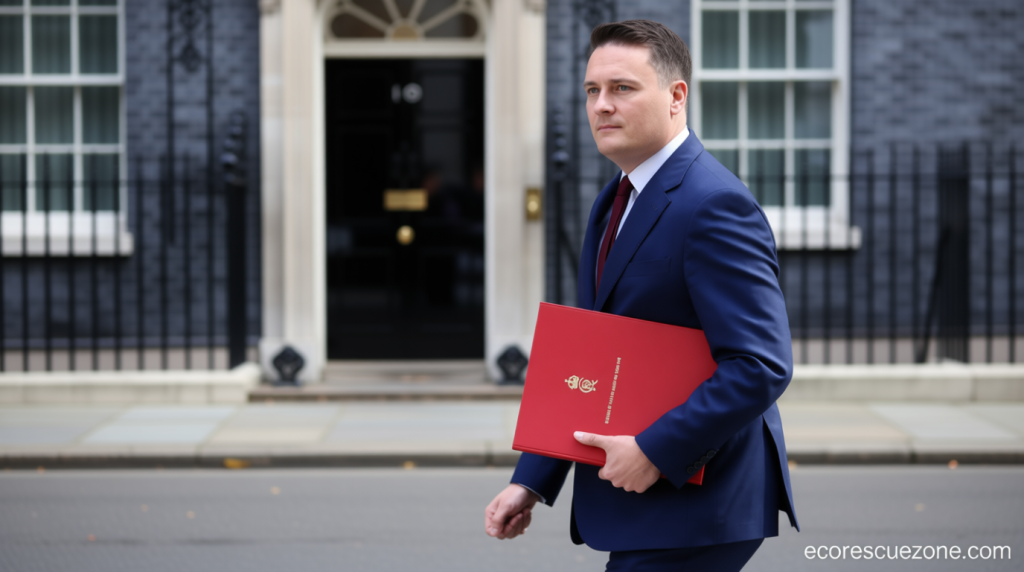
Leading Challenger to UK Prime Minister Keir Starmer Quits Government
Leading challenger to UK Prime Minister – Wes Streeting, the UK’s health secretary, has stepped down from his post, declaring Thursday that he has “lost confidence” in Prime Minister Keir Starmer’s leadership. According to Streeting, it would be “dishonourable and unprincipled” to continue serving in Starmer’s administration. His departure follows a week of growing uncertainty within the Labour Party, as speculation mounted about whether he would formally contest the leadership. However, in his letter of resignation, Streeting clarified that he has not yet announced his intention to challenge Starmer directly, though his exit signals a shift in the party’s internal dynamics.
Rebellion Within the Labour Party
Starmer has faced mounting pressure since the recent local elections in England, as well as parliamentary contests in Scotland and Wales, which delivered a significant blow to Labour’s fortunes. These results have fueled a wave of dissent, with nearly 90 of the party’s lawmakers publicly urging Starmer to resign. Streeting, who is the first member of Starmer’s cabinet to leave since the rebellion began, has positioned himself as a vocal critic of the current leadership, arguing that the party’s direction under Starmer is unclear and lacks vision.
In his resignation message, Streeting highlighted concerns about the party’s ability to maintain its progressive identity. He claimed that the recent elections had “placed nationalists in power across every region,” a development he warned could jeopardize the United Kingdom’s unity. “Progressive voters are losing faith in Labour,” he stated, pointing to Starmer’s decisions as evidence of the party’s drift. He emphasized that the current leadership has created a “vacuum” where clear direction is missing, leaving the country “not knowing who we are or what we really stand for.”
NHS Reforms and Mixed Results
Despite his resignation, Streeting’s tenure as health secretary has seen notable achievements. Government data released Thursday revealed that NHS waiting lists had decreased by 110,000 in March, marking the largest monthly decline since 2008, excluding the pandemic era. In a statement, he said the figures demonstrated that the government is “on track to achieve the fastest improvement in NHS waiting times in history.” This success, however, has not quelled the debate over his decision to leave the administration.
As health secretary, Streeting was tasked with overhauling the National Health Service, a role that has long been a cornerstone of Labour’s political platform. His focus on reducing waiting times and improving patient care has drawn praise from some quarters, but critics argue that the reforms have not yet fully addressed systemic challenges. The timing of his resignation, coinciding with the release of positive NHS data, has sparked discussions about whether his departure is driven by policy disagreements or personal ambitions.
Rivals in the Leadership Race
Streeting’s exit may serve as a catalyst for the leadership contest within Labour. While he has not officially launched a bid, his move has positioned him as a potential rival to Starmer. Earlier this week, Angela Rayner, the former deputy prime minister, also announced her resolution of a dispute over unpaid property tax—a scandal that had led to her resignation in September. Although both Streeting and Rayner have not yet triggered a formal leadership race, their departures have intensified the competition for Starmer’s position.
Rayner, who remains a prominent figure in the party, represents a more centrist faction, while Streeting is associated with the party’s right wing. His political career has been marked by a focus on pragmatism and communication, qualities that have made him a key figure in Starmer’s government. However, some within the party view his departure as a sign of naked ambition, with critics questioning whether his loyalty to Starmer has wavered due to personal gain or ideological differences.
Streeting’s background in politics dates back to his time as president of the National Union of Students, where he honed his skills in public engagement. He later served as a local councillor before entering Parliament, representing a borough in East London close to the public housing estate where he was raised. His career has been intertwined with the Labour Party’s evolution, including his brief departure from the party during Tony Blair’s tenure as prime minister. Although he once criticized Blair’s support for the Iraq War, he has since embraced elements of Blairism in his efforts to modernize the NHS.
Potential Challenges and Political Alliances
Streeting’s leadership bid could be influenced by his relationship with Peter Mandelson, a veteran Labour politician known for his strategic acumen. Mandelson, who was recently ousted as Britain’s ambassador to Washington due to his ties to Jeffrey Epstein, may play a role in Streeting’s campaign. Some analysts suggest that Mandelson’s connections could provide a network of support for a potential challenge, though others argue that his association with Epstein might overshadow Streeting’s credibility.
Starmer, meanwhile, has defended his leadership, insisting that a change in power would lead to “chaos” reminiscent of the Conservative Party’s era. During a Monday speech, he claimed that the recent election results were a wake-up call for Labour, but that his leadership was essential to steer the party toward stability. He also criticized the notion that the party has strayed from its core values, arguing that the current government is better positioned to secure a strong mandate in the upcoming 2029 general election.
Streeting’s decision to resign has also drawn attention to the broader implications for Labour’s future. As a former MP who narrowly retained his seat by 528 votes in the last election, his departure highlights the growing division within the party. While some see him as a unifying force, others view him as a divisive figure, eager to push for a new direction. His ability to communicate effectively has been noted as a strength, with allies praising his clarity and appeal to both MPs and the public.
With the resignation of two high-profile figures, the Labour Party is entering a new phase of internal debate. The focus now shifts to whether Starmer can hold onto his position or if the momentum for change will continue. As the party grapples with its identity and strategy, the road to the next general election looks increasingly uncertain. Streeting’s exit may not only redefine Labour’s leadership landscape but also shape the political narrative for the years ahead.
Downing Street has remained silent on Streeting’s resignation, with officials insisting that Starmer’s leadership is secure. However, the growing support for a leadership challenge suggests that the pressure on him may be mounting. The upcoming weeks will be critical in determining whether the rebellion within Labour will escalate or if Starmer can rally his base to maintain unity. As the party faces a pivotal moment, the stakes have never been higher for its future direction.
Legacy and Future Outlook
Streeting’s resignation marks a turning point in Labour’s post-2024 era. His efforts to reform the NHS, despite the challenges of a strained budget, have left a lasting impact on the party’s reputation. Yet, his departure raises questions about the long-term viability of Starmer’s government. Analysts suggest that the next few months will be crucial in deciding whether the party can mend its internal fractures or if a leadership contest is inevitable.
As the political landscape evolves, Streeting’s role as a potential rival to Starmer will be closely watched. His ability to articulate Labour’s vision, combined with his experience in public service, positions him as a formidable candidate. The party’s left and right wings may find themselves at odds, with Streeting representing a more reformist approach. Meanwhile, Rayner’s return to the political spotlight adds another layer of complexity to the leadership race.
Ultimately, Streeting’s resignation underscores the shifting tides within Labour. While his focus on the NHS has earned him respect, his criticism of Starmer’s leadership has ignited a broader conversation about the party’s direction. Whether this marks the beginning of a leadership crisis or a new phase of ideological clarity remains to be seen. For now, the UK watches as the Labour Party navigates its most turbulent period since Starmer’s landslide victory in 2024.
