
Somali piracy on the rise as Iran war forces ships into high-risk detours
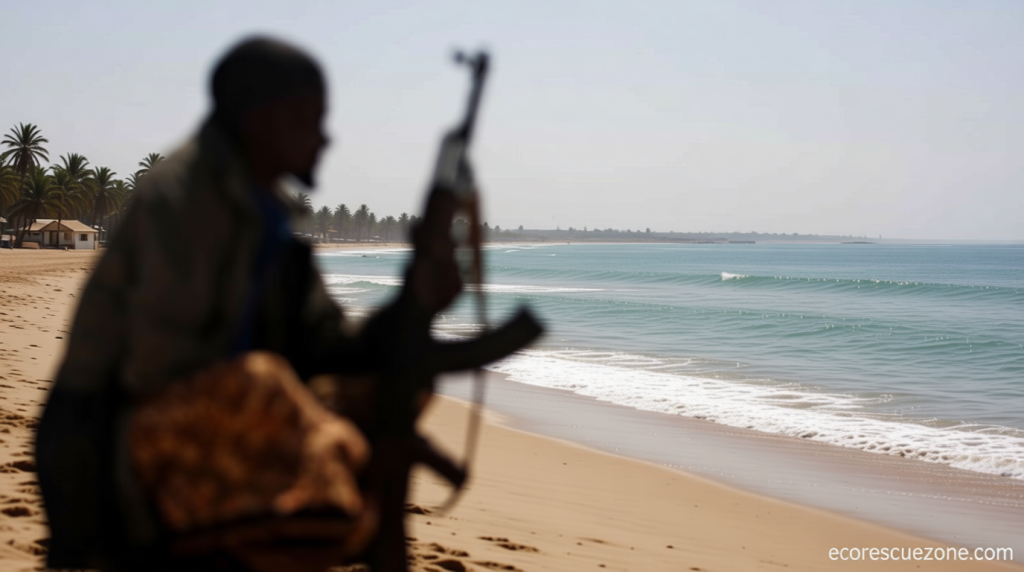
Somali Piracy on the Rise as Iran War Forces Ships into High-Risk Detours
Somali piracy on the rise as Iran – The war in Iran has inadvertently created a surge in Somali piracy, as commercial vessels reroute to bypass conflict zones in the Middle East. With the Strait of Hormuz—critical for 20% of global oil, natural gas, and essential raw materials—becoming a bottleneck due to escalating tensions, ship operators are now taking longer paths around Africa’s southern tip. This shift, while necessary to avoid direct confrontation, has exposed the Somali coast to renewed threats, reigniting activity that had seen a significant decline in recent years.
Shipping Routes Shift, Piracy Gains Momentum
The disruption of key maritime corridors has forced carriers to adopt detours that increase travel times by weeks. These extended journeys, though costly, have inadvertently funneled ships into the volatile waters off Somalia, where pirate networks have capitalized on the increased traffic. According to a May 12 advisory from the United Kingdom Maritime Trade Operations (UKMTO), the current situation has led to at least three vessels being held captive, including two oil tankers and a general cargo ship carrying cement. The report highlights the severity of the threat, noting that these ships were taken between April 21 and May 2, with one incident occurring off Yemen’s coast and redirected to Somalia.
“Recent piracy incidents stem from opportunism, with shifting international maritime shipping routes driven by geopolitical crises,” said Somali lawmaker Mohamed Dini. He further emphasized that the ongoing conflict in the Middle East provides pirates with a pretext to reorganize their operations, while also drawing attention to the growing collaboration between pirate groups and Yemen’s Houthi forces.
The rerouting has not only extended fuel and operational costs but also introduced new vulnerabilities. Experts warn that the financial strain on shipping companies, which now face $1 million in additional expenses per vessel, has created an environment where pirates can exploit weaknesses. The UKMTO’s warning underscores that the “piracy threat level remains severe” in the Somali basin, a region that once gained notoriety as a primary hotspot for maritime hijacking during the late 2000s.
A History of Resilient Piracy
Since the early 1990s, Somalia has operated without a stable central government, allowing piracy to flourish. The crisis reached its peak in 2011, when a record 237 incidents were reported, costing the global economy $7 billion. During that year, over 3,800 mariners were targeted using assault rifles and rocket-propelled grenades, marking a troubling era of maritime insecurity. However, by 2025, the International Maritime Bureau noted a sharp decline, attributing it to the sustained presence of naval forces and the effectiveness of counter-piracy measures.
Despite this lull, the current resurgence signals a return to the challenges of the past. The European Union’s naval operation, Operation Atalanta, acknowledged the uptick in piracy activity in a recent update. The force reported successfully “liberating” an Iranian-flagged vessel after forcing pirates to abandon it. This incident highlights the interconnectedness of regional conflicts, as Somalia’s coastal waters remain a strategic point for hijackings that now span international borders.
Domestic and External Factors Fuel the Threat
While the Iran war has forced ships into risky paths, Somalia’s internal instability has also played a pivotal role. Dini pointed out that the country’s weak institutions and persistent political fragmentation have left its coastline vulnerable. “Long-term domestic instability has weakened local defenses, making it easier for pirate networks to operate,” he stated. This vulnerability is compounded by the growing alliance between Somali pirates and Houthi rebels in Yemen, who have targeted vessels in the Red Sea as part of their broader support for Hamas in the Israel-Gaza conflict.
Manu Lekunze, an international relations lecturer at the University of Aberdeen in Scotland, explained that the war in Iran has created a security vacuum, redirecting naval resources from Somalia to the Strait of Hormuz. “Previously, fleets were focused on suppressing pirate attacks, but now they are tasked with protecting cargo ships in a different region,” Lekunze told CNN. This reallocation of forces, he argued, has emboldened pirate groups to reassert their presence.
Strategies and Tactics of Modern Piracy
The resurgence is not just a result of external factors but also reflects evolving tactics by pirate networks. Many of the recent captors are believed to be young Somalis from underprivileged communities, often linked to armed extremists connected to global terror organizations. These groups have adapted to the new routes, using speed, stealth, and coordinated attacks to seize vessels. The UKMTO’s report notes that the current wave of hijackings is “back-to-back,” suggesting a level of organization that was previously rare.
Operation Atalanta, which has patrolled the region for nearly two decades, now urges ships to maintain heightened vigilance. The force has observed that the piracy threat is no longer confined to Somalia’s immediate waters but is spreading into areas previously considered secure. “Transiting vessels should report any suspicious activity,” the EU force emphasized, signaling a shift in the approach to maritime security.
The situation raises concerns about the potential for a full-scale revival of Somali piracy. With international shipping routes stretched thin and security measures stretched further, the region is once again becoming a focal point for maritime attacks. The combination of geopolitical instability and local governance challenges has created a perfect storm, threatening to reverse years of progress in combating piracy. As the war in Iran continues to reshape global trade dynamics, the long-term implications for Somalia’s coastal regions remain a critical issue for international stakeholders.
