
Native American Cultural Regions – Explore Our Heritage

Our heritage covers the various native american cultural regions of our great land. It includes the Arctic and Subarctic indigenous territories, where the Inuit, Aleut, Athabaskan, and Algonquian people lived. These areas have their own first nations cultures and ancestral homelands.
In the Arctic, the Inuit and Aleut built dome-shaped homes. They made clothes and means of travel from seals and otters. The Subarctic groups, like the Athabaskan and Algonquian, used hunting and gathering for their food. This way of life changed when the fur trade started in the 17th and 18th centuries.
Exploring the indian nation regions and indigenous geographic zones uncovers our shared history. The native ethnic regions have deeply influenced our cultural identity. Join us in learning more about these foundational stories.
The Arctic Cultural Region
The Arctic is a cold, flat, treeless region near the Arctic Circle. It was home to the Inuit and Aleut peoples. Both groups used dome-shaped houses made from sod, timber, or ice blocks. They also made clothes from seal and otter skins. These were warm and good for the weather. They used dogsleds and kayaks for moving around.
Inuit and Aleut Peoples
Some people in the Arctic, like the Inuit, were nomads. They moved following the seals and polar bears. They crossed the tundra as the animals did. The Aleut were more settled, living in villages by the sea in the south.
Nomadic Lifestyles
The Inuit and others who moved around adapted well to the cold, treeless land. They hunted animals that also moved. With their homes and clothing made from animal skins, they could survive. These people were very resourceful.
Architectural Styles
The homes were perfect for the cold weather. They were dome-shaped and made from local materials like sod and timber. These homes kept them warm. They protected the Inuit and Aleut from the wind and snow.
The Subarctic Cultural Region
The Subarctic covers large areas of boreal forests in the north. It was a tough but strong landscape. Here, two main language groups lived: the Athabaskan in the west and the Algonquian in the east. This region had vast swamps, pine forests, and tundra. These features made it hard for people to travel and live here.
Athabaskan and Algonquian Language Groups
In the Subarctic, the Athabaskan and Algonquian languages were most common. People here were skilled at moving around. They used things like toboggans, snowshoes, and canoes to adapt to the harsh environment. These communities were nomadic, changing their locations as needed.
Hunting and Gathering Societies
Unlike some regions, the Subarctic’s people didn’t settle in one place. They lived in small family groups. These groups followed caribou and other animals for food. Their homes were easy to move, like tents and lean-tos, since they moved often.
Impact of the Fur Trade
By the 17th and 18th centuries, the fur trade grew in the Subarctic. This changed life in big ways. People started focusing on trapping for furs to sell. This disrupted their traditional ways of life, leading to very hard times for many. The trade also brought diseases that were new and harmful.
The Northeast Cultural Region
The Northeast culture area was among the first to meet Europeans. It was home to two main groups. The Iroquoian speakers and the more numerous Algonquian speakers lived here.
The Iroquoian tribes, like the Mohawk and Seneca, were known for their strength in war. They often fought against the Algonquian tribes, such as the Wampanoag. These tribes lived in small villages by the sea.
Iroquoian and Algonquian Tribes
The Iroquoian and Algonquian tribes had very different ways of life. The Iroquois formed a strong confederacy. They were skilled in politics and war, often winning against the Algonquians.
On the other hand, the Algonquian tribes lived in scattered communities. They focused on farming, fishing, and hunting to survive.
Colonial Conflicts and Displacement
When Europeans came, conflict started in the Northeast. The native people were caught between sides in the colonial wars. Friends became enemies. This led to a lot of fighting and many tribes moving to the west.
Whole tribes had to leave their homelands. They lost their traditional way of life.
The Southeast Cultural Region
The Southeast was a fruitful area where many Native American communities thrived. Here, skilled farmers grew crops like maize, beans, and squash. They also farmed tobacco and sunflower. The Cherokee, Chickasaw, Choctaw, Creek, and Seminole were among the important tribes. They were known as the Five Civilized Tribes and shared a similar language.
Five Civilized Tribes
After the U.S. won its freedom, the Southeast was already facing problems. Diseases and forced movement had significantly reduced its native population. Then, in 1830, the Indian Removal Act ordered the Five Civilized Tribes to move. This was so white settlers could take over their lands.
Agricultural Practices
The Southeast’s fertile soil allowed its people to be great farmers. They grew maize, beans, squash, and more. This showed how skilled they were in working the land. It also showed how deeply connected they were to their home.
The Trail of Tears
In the early 1830s, nearly 100,000 indigenous people were forced to leave their homes. They were moved west of the Mississippi River, into what is now Oklahoma. This sad event is known as the Trail of Tears. It was a dark time for the Southeast, as many were torn from their homelands.
The Plains Cultural Region
The Plains culture area is a huge prairie between the Mississippi and Rocky Mountains. Before Europeans came, it was home to settled hunters and farmers. European arrival changed everything. In the 18th century, Spanish colonists introduced horses. This made the Great Plains people more nomadic.
Nomadic Equestrian Cultures
The Crow, Blackfeet, Cheyenne, Comanche, and Arapaho tribes mastered horseback riding. They used horses to chase buffalo across the Plains. With horses, they traveled far and left their old, settled lives behind.
Buffalo Hunting and Teepees
These tribes lived in teepees, which were portable bison-skin tents. They could be easily moved. The buffalo were essential, providing food, shelter material, and clothing.
Westward Expansion and Reservations
White traders and settlers moved west, changing life on the Plains. They brought goods, guns, and diseases. This brought near extinction to the buffalo. The Plains people had to move to reservations, losing their traditional way of life.
The Southwest Cultural Region
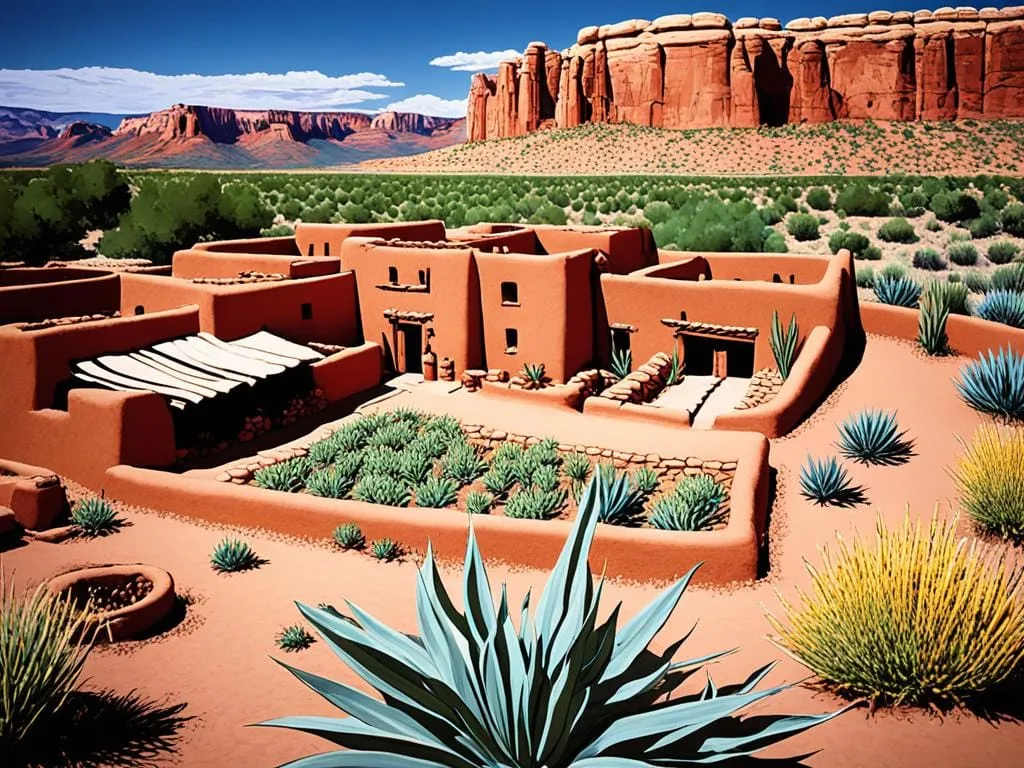
The Southwest culture area is a desert place covering parts of Arizona and New Mexico today. The people here lived in two main ways. Some, like the Hopi, Zuni, Yaqui, and Yuma, were farmers. They grew corn, beans, and squash. They lived in permanent settlements called “pueblos,” which were made of stone and adobe.
Others, like the Navajo and Apache, were not settled. They moved around, hunting or raiding for food.
Pueblo and Nomadic Tribes
In the Southwest, many tribes existed, each with their unique traditions. The Pueblo people, including the Hopi, Zuni, Yaqui, and Yuma, were famous for their adobe houses. They were also good at farming, growing crops like corn, beans, and squash.
On the other hand, the Navajo and Apache lived a more moving life. They hunted, gathered, and sometimes raided their farming neighbors. This was how they survived.
Spanish Colonization and Oppression
The Southwest became part of the U.S. after the Mexican War. By then, Spanish colonization had already hurt the local tribes. The Spanish forced many to work for them or pay them tribute, often with harsh results.
Later, the U.S. government made things even harder. They moved the remaining natives to reservations in the late 1800s. This was a difficult time for the native people.
native american cultural regions
The Native American cultural regions in North America tell us about varied traditions and homelands. They show us rich histories and diverse ways of life. Each area, from the Arctic’s nomads to the Southeast’s farmers, has its unique story. These make up our national identity today.
The Great Basin Cultural Region
The Great Basin was a vast area surrounded by mountains. It mainly consisted of deserts and salt flats. People here lived by gathering food like roots, seeds, and nuts. Some also hunted small animals. Their homes were wikiups, which were simple shelters made of willow poles and leaves.
Hunter-Gatherer Societies
In the Great Basin, people mainly hunted and collected food. They had to constantly move to find resources. For this reason, families came together or parted ways depending on the season.
Wikiup Dwellings
The main home for the Basin’s people was the wikiup. These dome-shaped structures were quick to build and easy to move. They helped the natives survive the dry climates of the area.
Impact of Gold and Silver Mining
Things changed a lot when white settlers found gold and silver in the Great Basin around the 1800s. This led to a major change for the Shoshonean and Uto-Aztecan tribes. Many lost their homes and lives as miners and new settlers claimed their land.
The California Cultural Region
Before European contact, the temperate California area stood out. It had more people than any other North American place of its time. There were about 300,000 people by the mid-16th century. They came from roughly 100 different tribes, speaking over 200 dialects. These languages came from the Penutian, Hokan, Uto-Aztecan, and Athapaskan families. This shows the deep cultural roots of the region’s people.
Hunter-Gatherer Tribelets
In California, many native people lived in small, family groups. These groups were known as tribelets. They were hunter-gatherers. Despite living in different areas, they usually got along. They traded and shared common rights. This helped them create a sustainable life from the region’s diverse ecosystems.
Spanish Exploration and Colonization
Later, Spanish explorers came to California. Their arrival changed everything for the native people. They brought new diseases and tried to change the native peoples’ religion. They also forced people from their lands. This was a tough time for California’s tribes and tribelets.
Preserving Native American Heritage
The sanctuary system helps Native American tribes protect their culture and heritage. This happens at places like Olympic Coast and Channel Islands. Tribal members guide these sanctuaries, aiming to keep the ocean healthy and preserve tribal areas.
Partnerships with National Marine Sanctuaries
Sanctuaries are not only about nature. They support Native American traditions and rights too. By helping with boat trips and offering programs for young people, they bridge the gap between cultures. This work is key to saving and sharing Native American heritage.
Youth Programs and Cultural Exchange
These sanctuaries work closely with tribes to keep their traditions alive. They make sure young people learn about their cultural roots. This effort is essential in recognizing and praising the legacy of Native Americans.
Protecting Cultural Landscapes
Since 1906, the Antiquities Act has helped keep natural and cultural spots safe. It lets presidents make these places national monuments. As a result, many key Native American sites have been saved from harm. Without this act, development could have ruined them.
This law does a lot to keep our heritage alive. It ensures that our country’s mix of traditions and ancient lands stays for those who come after us. Thanks to it, we can still connect with the past through these special places.
The Antiquities Act
The Antiquities Act is key in protecting our country’s historic lands. It lets presidents name places as national monuments. This helps save important Native American spots and places sacred to them.
Without the Antiquities Act, these areas could be lost to building, harm, or just forgotten. It has helped keep the stories and memories of Native Americans alive for future generations.
Bears Ears and Gold Butte National Monuments
Today, places like Bears Ears in Utah and Gold Butte in Nevada face threats. These spots are rich with Native American history. Yet, they are at risk from vandalism and misuse by people going off the trails.
This shows why the Antiquities Act is so crucial. It’s part of a big effort to keep our lands and stories safe in America. Without these protections, important places could be lost forever.
Conclusion
We have explored various Native American cultural regions. Each region shows a rich indigenous tradition and history. These traditions are a key part of our national story.
It is important to keep and celebrate this heritage. For example, there are partnerships between Native tribes and national marine sanctuaries. Also, laws like the Antiquities Act help protect important cultural areas.
By valuing Native American culture, we keep our shared history vibrant. This helps the First Peoples’ ways continue for future generations. It is a crucial part of better understanding and respecting our nation’s indigenous roots.
FAQ
What are the diverse Native American cultural regions across North America?
These cultural regions include the Arctic, Subarctic, Northeast, Southeast, Plains, Southwest, Great Basin, and California. Each area has its unique traditions and ways of life.
Who were the main indigenous groups in the Arctic culture area?
In the Arctic, the Inuit and Aleut peoples were prominent. They spoke dialects related to the Eskimo-Aleut family. Their homes were dome-shaped, and they depended on animals like seals and otters for survival.
What was the lifestyle of the Subarctic culture area inhabitants?
Athabaskan and Algonquian groups lived in the Subarctic area. They were adept at hunting and gathering, relying on the land for their needs. However, the fur trade later changed their traditional lifestyle.
Who were the main indigenous groups in the Northeast culture area?
The Northeast had Iroquoian and Algonquian speakers. The former were known for their strength, while the latter lived in farming and fishing villages. This cultural mix shaped the region.
What was the impact of European colonization on the Southeast culture area?
European colonization significantly affected the Southeast. Many fell to disease and were displaced before the Trail of Tears. This tragic event forced the relocation of the Five Civilized Tribes to Oklahoma.
How did the arrival of horses influence the Plains culture area?
Horses introduced a new way of life to the Plains tribes. With this, they became more nomadic, following the buffalo herds. Tribes like the Comanche and Arapaho thrived in this new lifestyle.
What were the two distinct ways of life in the Southwest culture area?
The Southwest featured both sedentary farmers and nomadic groups. Farmers such as the Hopi and Zuni built pueblos, while the Navajo and Apache were known for their nomadic habits. This duality enriched the region.
How did the Great Basin culture area’s environment impact its inhabitants?
The Great Basin was harsh, with deserts and salt flats. Despite this, its people, who spoke Shoshonean or Uto-Aztecan, found ways to survive. They foraged and hunted, living in simple wikiups.
What was the linguistic diversity of the California cultural region?
California was incredibly linguistically diverse. At European contact, it was home to around 300,000 people from over 100 tribes. They spoke over 200 dialects. The Penutian and Uto-Aztecan families were among those represented.
How are native American heritage and cultural landscapes being preserved today?
Today, many efforts are underway to protect Native American heritage. These include working with national marine sanctuaries and upholding laws like the Antiquities Act. Such steps celebrate and safeguard these important cultures and lands.
