
Spanish Culture and Traditions A Vibrant Heritage
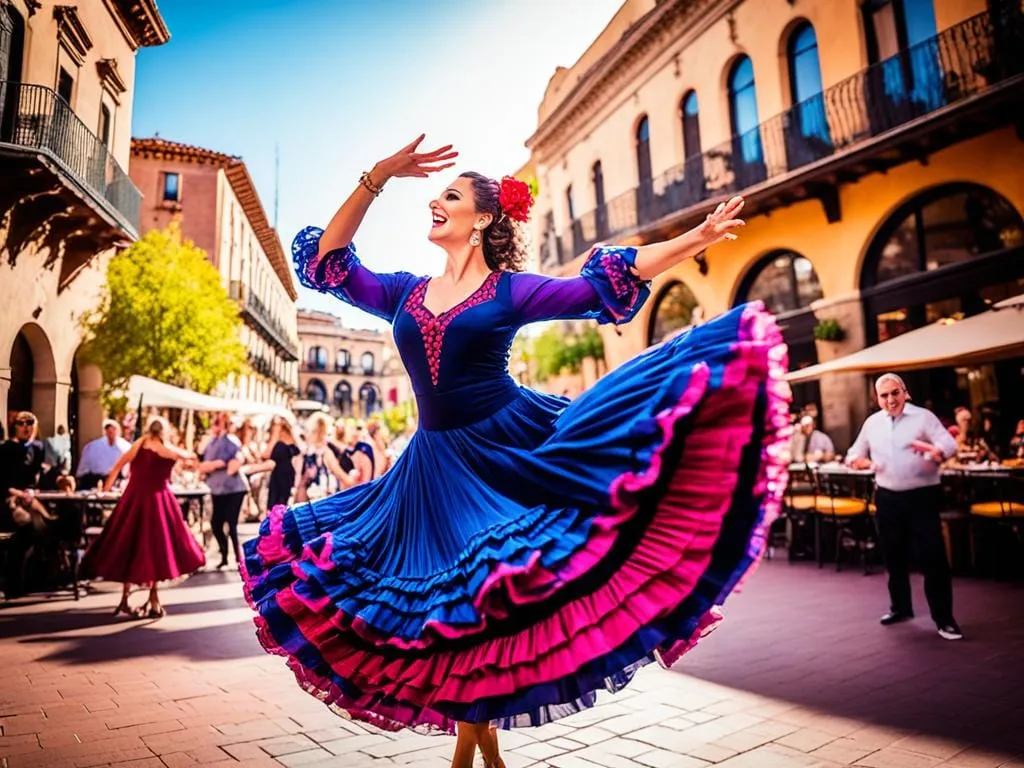
Explore Spanish culture and traditions from flamenco to festivals Dive into the rich heritage art cuisine and customs that define Spain’s identity.
I’ve always been drawn to Spain’s vibrant culture, full of history and traditions. The country’s mix of Celtic, Roman, and Moorish influences has shaped its unique legacy. From its famous food to art and architecture, Spain’s culture is truly amazing12.
Spain is diverse, with 75% speaking Castilian, 16% Catalan, and 9% other languages. Famous designers like Cristóbal Balenciaga and Manolo Blahnik have made a mark on fashion1. Music and dance, such as Flamenco and Rumba Catalana, are loved around the world1. And let’s not forget soccer, with teams like Barcelona and Real Madrid winning fans globally1.
Exploring Spanish culture further, I’m impressed by its culinary skills. With top Michelin Star restaurants and elite cooking schools, Spain has raised food artistry to new levels1. These cultural elements make Spain a fascinating place, and I’m excited to learn more about its traditions.
Introduction to Spanish Culture and Traditions
Spain’s culture is a mix of many influences, from ancient Phoenician traders to the Moorish legacy. This mix has shaped its art, architecture, and lifestyle3. At the core, it values family, food, and social events deeply.
Overview of Spain’s Vibrant and Warm Culture
Spaniards are known for their passion and love. They take pride in their history and culture, celebrating with many festivals3. They enjoy life at their own pace, valuing the moment over wealth.
Importance of Family, Food, and Social Gatherings
Family, or “La Familia,” is very important in Spanish culture. People spend a lot of time with their families, sharing meals that feed both the body and soul4. Spanish food, like paella and tapas, shows their love for food and social eating.
Socializing is key in Spain. They have a late-night culture, with bars and plazas full of laughter and music4. These gatherings help build community and strengthen relationships.
Spain’s culture, with its focus on family, food, and social events, has won the hearts of many34. It shows the beauty of Spanish traditions and how they live life fully.
Greetings and Names in Spanish Culture
Exploring Spain’s culture, I’ve learned a lot about greetings and names. People here often have two names and two surnames, with the first from the father and the second from the mother5. It’s common to use the first name and the father’s surname when greeting someone. Spanish women usually keep their surname after marriage5.
Customs of Greetings and Nicknames
“Hola” is the usual way to say “hello” in Spanish5. But there are other greetings like “Ey!” or “¿Qué tal? ¿Qué hubo?”5. For formal greetings, you can say “buenos días” in the morning, “buenas tardes” in the afternoon, and “buenas noches” at night5. In different countries, greetings vary, such as “¿Quiubo?” in Colombia, “Pura vida” in Costa Rica, and “¡Weeena weon/a!” in Chile5.
Using nicknames for family and friends is big in Spanish culture. These nicknames can be fun or sweet, making daily interactions more special5.
Significance of Two Surnames
Having two surnames in Spain comes from its history and culture6. This tradition keeps track of family lines and values ancestry6. It’s a tradition that has lasted through generations, showing respect for both the father’s and mother’s sides6.
| Common Spanish Greetings | Meaning | Usage |
|---|---|---|
| ¿Cómo estás? | How are you? | Informal greeting |
| ¡Buenos días! | Good morning | Formal morning greeting |
| ¡Buenas tardes! | Good afternoon | Formal afternoon greeting |
| ¡Buenas noches! | Good evening | Formal evening greeting |
| ¡Adiós! | Goodbye | Formal farewell |
Spanish culture is rich with traditions like unique names and vibrant greetings6.
Language and Communication Styles
Spain is known for its diverse languages, with Castilian Spanish being the main one7. Other official languages include Galician, Basque, Catalan, and Valencian7. There are about 500 million people who speak Spanish worldwide, mostly in the Americas7.
Spaniards are direct and friendly in their conversations8. Friends often interrupt each other, showing they’re excited8. Men in Spain also value personal space less than in English-speaking countries8.
It’s normal for couples and friends in Spain to show affection openly8. They expect eye contact during talks and use body language a lot8. They also use hand gestures to stress points in conversations8.
In Spain, a light touch on the fingers means someone might be a thief8. To call someone over, they wave their hand up with palms facing them, not just one finger, which is rude8.
Communication styles can change across Spain and with other Spanish-speaking countries7. Mexico, for example, has many indigenous languages and views time differently from Spain7. There, communication is indirect, using polite words to avoid hurting others’ feelings7.
Knowing how to communicate in Spanish is key for good interactions with people from other cultures7. By understanding these differences, we can better appreciate the diversity of Spain and other Spanish-speaking areas7.
Family Values and Living Arrangements
In Spain, the idea of “La Familia” is very important9. Most families are small, with kids staying with their parents until they’re in their thirties9. This shows the strong family ties and support in spanish living arrangements.
Grandparents play a big role in Spanish families9. They often live on their own but help out a lot when parents can’t. They are key in caring for their spanish grandparents. Families come together often, celebrating happy times and supporting each other in hard times.
But, the Spanish family is changing10. There’s a drop in early marriages, especially for women, and more people are living together without getting married9. There’s also a move away from the idea of marrying for life10. Yet, family is still very important in Spanish culture.
| Aspect | Statistic |
|---|---|
| Hispanic population growth in the U.S. | The Hispanic population in the United States grew from 5% of the total U.S. population in 1970 to 13% in 2000, and it is projected to comprise 20% of the U.S. population in 20309. |
| Familism among Hispanics | Hispanics show a strong sense of family values, but they are also changing with the times9. |
| Decline in ethnic endogamy among Hispanics | Hispanics are marrying outside their race or ethnicity more often, showing they are blending in more with others9. |
| Early marriage rates for female Hispanics | Women from Hispanic backgrounds are getting married less early, especially compared to Mexican women9. |
Business Etiquette and Education System
In the Spanish business world, being on time is key, and family-owned businesses value a strict hierarchy11. Meetings are often casual, with employees asking questions and interrupting freely. Afternoon meetings are rare, thanks to the long lunch breaks11.
Work Culture and Meeting Norms
Being late is seen as unacceptable in Spanish business, and a formal, hierarchical structure is common, especially in family-owned firms11. Meetings are interactive, with employees speaking up and interrupting. Afternoon meetings are not common, as lunchtime is a big deal in Spain11.
Overview of Spanish Education System
Children in Spain must attend school from ages 6 to 16, and it’s free at public schools12. School days are long, from 9:00 AM to 3:00 or 5:00 PM. After-school programs help working parents in cities12. Spain’s job rate is 61.1%, lower than the OECD average, and workers earn about €29,994 a year on average12.
| Statistic | Value |
|---|---|
| Spain’s GDP Growth Forecast | 5.9% in 2021, 6.3% in 202212 |
| Foreign Companies’ Investment Plans in Spain | 73% plan to increase or maintain investments12 |
| Foreign Companies’ Workforce Intentions in Spain | 83% plan to increase or maintain workforce12 |
| Employees Working Very Long Hours | 4% in Spain, 11% OECD average12 |
| Work-Life Balance Ranking | Spain ranks above average12 |
| Paid Leave and Public Holidays | At least 30 days paid leave, 12 paid public holidays12 |
| Foreign Workers in Labor Force | Around 15%12 |
| Gender Equality Ranking | Spain ranks 8th in the EU12 |
| Gender Pay Gap | Women earn 17% less than men12 |
| Equality Plan Requirement | Companies with 50+ employees must implement in 202112 |
| Disability Employment Quota | 2% of staff positions in companies with 50+ employees12 |
Daily Routine and Lifestyle
Spaniards live life at their own pace, valuing family, food, and social time. Their unique daily routines offer a break from the hustle of other countries. They enjoy a culture that’s all about taking it easy.
Unique Meal Timings and Siesta Culture
They start their day with a light breakfast around 10 AM. Then, they take a mid-morning snack called an almuerzo at 12:30 PM13. Lunch is the big meal, eaten between 3:30 and 5 PM, often after a siesta13.
Dinner is late, usually after 10 PM14. This schedule shows how much they value their meals and the time spent with loved ones.
Shopping and Leisure Activities
Shops open at 10 AM and stay open till 9 or 10 PM. In smaller towns, they close for a long siesta14. Weekends are for shopping, hanging out, and enjoying outdoor activities like parks and beaches13.
Spaniards are known for being friendly, funny, and loving life’s simple joys. Their free time is a big celebration of their lively culture.
The Spanish way of life is a breath of fresh air compared to other cultures. They have a unique approach to meals, siestas, shopping, and leisure. It’s all about family, food, and making connections1314.
spanish culture and traditions
Spain is known for its diverse regional foods, each offering a unique taste that shows the country’s rich culture15. From the hearty stews of the north to the vibrant seafood of the coast, Spanish food uses fresh, seasonal ingredients. It also keeps traditional cooking methods alive.
Regional Culinary Specialties
Across Spain, you’ll find many regional foods that show the country’s culinary variety. In the north, the Basque Country is famous for its pintxos, small, fancy bites. Galicia is known for its delicious seafood, like pulpo a la gallega (Galician-style octopus)1. Moving south, Andalusia is where you can try gazpacho, a cool tomato soup, and espinacas con garbanzos, a tasty spinach and chickpea stew.
| Region | Signature Dish | Key Ingredients |
|---|---|---|
| Basque Country | Pintxos | Bread, cheese, cured meats, seafood |
| Galicia | Pulpo a la gallega | Octopus, olive oil, paprika |
| Andalusia | Gazpacho | Tomatoes, olive oil, garlic, vinegar |
| Catalonia | Crema catalana | Cream, eggs, sugar, cinnamon |
Etiquette and Traditions Around Food
Spanish food culture is all about tradition and manners. A key custom is la sobremesa, where families and friends stay at the table long after eating. They chat and enjoy the company1. Sharing tapas, small plates, is also a big part of dining in Spain. It lets people try different flavors and connect with others.
Whether you’re trying a local dish or enjoying Spanish dining traditions, eating in Spain is a great way to explore the country’s rich heritage. It’s a journey into the passion for spanish cuisine, spanish regional dishes, spanish food culture, and spanish food etiquette151.
Social Life and Nightlife
Spain is famous for its lively spanish social life and exciting spanish nightlife. People here value fun and making friends, aiming for a good balance between work and leisure16. They enjoy spending time outside, whether it’s going for a walk, playing sports, or having tapas with friends, showing their love for spanish outdoor activities16.
The nightlife in Spain is amazing, with bars and clubs open till dawn16. Clubs get busy around 1-2 am, and people often party all night. They head home in the morning, which is different from the early closings in the U.S17..
Visiting Spanish Homes and Gift-Giving Customs
When visiting a Spanish home, guests should be late and stay up late, chatting over coffee or drinks16. Spanish gift-giving customs are big in their culture. Guests and hosts often bring gifts to share right away.
Spaniards are known for being social and generous. They enjoy going out for tapas, swapping languages, and spending time with loved ones17. Their lifestyle values relaxation and fun, encouraging rest and leisure over hard work. This is different from the busy work culture in some U.S. areas17.
In Spain, lunch breaks are big, with people taking a siesta after eating and coming back to work later17. Stores close for lunch and are often shut on Sundays16.
The Spanish culture’s focus on social connections, outdoor fun, and a calm pace of life offers a unique experience for visitors. It gives a peek into the vibrant spanish social life and spanish nightlife1617.
Historical Influences on Spanish Culture
Spain’s culture and traditions come from a mix of ancient times. This includes the Celtic and Iberian peoples, the Roman and Moorish empires18. These influences have blended together to make Spain’s culture special and interesting.
Celtic, Roman, and Moorish Legacies
The Celts arrived in Spain in the 6th century BCE, settling in the north and center18. Later, the Romans came and changed Spain’s architecture, language, and laws. But the Moors had the biggest impact, ruling for nearly 800 years19.
Architectural and Artistic Influences
The Moors left their mark on Spain’s architecture, like the Alhambra palace in Granada19. The 16th and 17th centuries saw famous artists like Diego Velázquez, Francisco Goya, and Pablo Picasso18. Their art still moves and inspires people today.
Spain’s history has deeply influenced its culture. It shows in its beautiful buildings and art. By celebrating these influences, the Spanish people have made a culture that is truly their own.
Internationalization and Contemporary Culture
The Franco regime wanted to keep Spain’s traditional culture alive. But in the 1960s, Spain’s economy changed, bringing in foreign money and tourists20. This change brought in foreign music, dance, and shows, making American fast-food chains and TV shows very popular20.
Tourism and globalization have changed spanish contemporary culture. Spain keeps its unique local identities and rich past20. It balances spanish international influences with traditional culture, making its culture exciting and diverse for people all over the world.
Influence of Foreign Music and Entertainment
Spain loves a mix of spanish music and spanish entertainment from everywhere. Latin American tunes and Korean pop have become big hits with Spanish young people21. Places like the Cervantes Theatre in London host Spanish events that talk about identity, love, and history21.
Impact of Tourism and Globalization
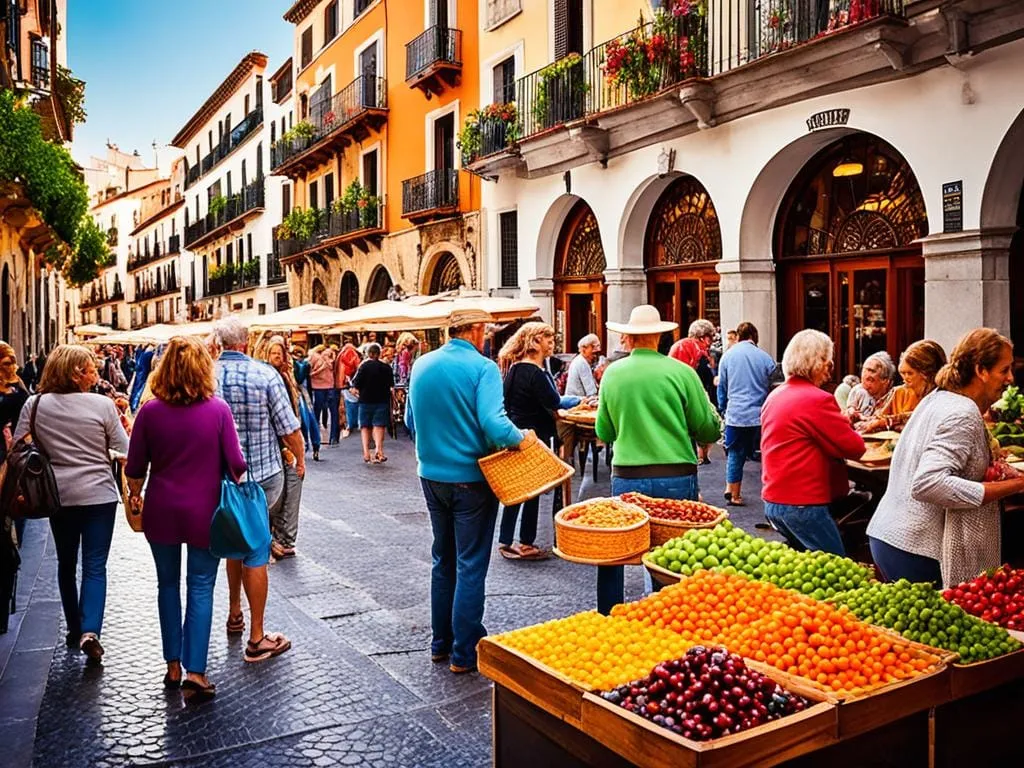
Spanish tourism has greatly influenced the country’s culture. Millions visit Spain every year, bringing new cultural ideas and helping the economy21. This has made people appreciate Spain’s heritage and traditions more.
Spain is adapting to the world’s changes while keeping its unique culture20. It’s a place where old traditions meet new influences, attracting culture lovers and showing the strength of its spanish contemporary culture.
Conclusion
Through this journey into Spanish culture and traditions, we’ve learned a lot about this amazing country22. We’ve seen how family, social events, unique customs, food, and art shape Spain’s rich history23. Even as Spain welcomes the world, its local traditions and identity stay strong, making it a must-see for cultural seekers.
Spain’s politics have changed to a system with many parties, supporting its king23. Social and family life has changed a lot since the 1950s23. The country’s economy is growing, and it’s doing well in renewable energy, education, and movies24. Spain’s many languages, traditions, and histories add to its cultural richness24.
Spain is facing today’s challenges while keeping its culture alive and open to new things24. Its lively culture and deep history draw people from everywhere, making visits unforgettable.
Curious to learn more about global cultures? Visit ecorescuezone.com for in-depth insights and fascinating articles on traditions around the world!
FAQ
What are the key aspects of Spanish culture and traditions?
Spanish culture is full of life and warmth. It has been shaped by many influences like Celtic, Roman, and Moorish. Spaniards value family and social events, especially when eating together. They also have a custom of giving nicknames to family and friends.
How do Spaniards communicate and address one another?
Spaniards talk openly and warmly, often using the informal “tú” instead of “usted.” They use a lot of body language, like giving hugs and using their hands and faces to express feelings. They also value close eye contact.
What is the significance of family in Spanish culture?
Family is very important in Spain. Many families live together until their children are in their thirties. Grandparents help take care of the grandkids. Families meet often, celebrating big events and supporting each other through tough times.
What are the unique aspects of the Spanish business culture and education system?
Being late is seen as rude in the Spanish business world. They respect a strict hierarchy, especially in family-run companies. Schools run from 9:00 AM to 3:00 or 5:00 PM, with extra activities in cities.
How do Spaniards structure their daily routines and leisure activities?
Spaniards follow a unique daily schedule. They start with a light breakfast, then a mid-morning snack. They take a long lunch break that might include a nap. Dinner is late, around 10:00 PM. Weekends are for shopping, hanging out, and outdoor fun.
What are the notable aspects of Spanish cuisine and food culture?
Spanish food is all about the Mediterranean diet, with lots of olive oil, beans, veggies, nuts, fish, and meat. They’re famous for dishes like tortillas de patatas and paella. Eating is a big deal, with a tradition of chatting for hours after meals.
How has Spanish culture been shaped by historical influences?
Spanish culture has a long history, influenced by many groups like the Celtic, Roman, and Moorish. The Reconquista and the Golden Age added to its rich culture, especially in art and architecture.
How has globalization and internationalization impacted contemporary Spanish culture?
The Franco regime tried to keep Spanish culture traditional, but the 1960s economic changes brought in foreign influences. Now, you can find American music, dance, and TV shows in Spain. American fast-food chains are also very popular.
Source Links
- https://www.spanish.academy/blog/a-brief-introduction-to-spanish-culture-traditions-and-beliefs/
- https://en.wikipedia.org/wiki/Culture_of_Spain
- https://www.berlitz.com/blog/spanish-culture-traditions-customs
- https://www.britannica.com/place/Spain/Daily-life-and-social-customs
- https://www.busuu.com/en/spanish/greetings
- https://www.spanish.academy/blog/spanish-greetings/
- https://medium.com/@matteo.arellano/communication-styles-latin-america-mexico-vs-spain-5ae455cf7939
- https://culturalatlas.sbs.com.au/spanish-culture/spanish-culture-communication
- https://www.ncbi.nlm.nih.gov/books/NBK19902/
- https://www.ncbi.nlm.nih.gov/pmc/articles/PMC8361805/
- https://businessculture.org/southern-europe/business-culture-in-spain/business-etiquette-in-spain/
- https://www.expatica.com/es/working/employment-basics/business-culture-in-spain-102512/
- https://www.spain.info/en/top/spain-happy-lifestyle/
- http://www.spanishunlimited.com/spain/culture/2014/2/spains-daily-schedule
- https://www.studying-in-spain.com/living-in-spain/spanish-culture-customs-and-values/
- https://conversaspain.com/spanish-culture-how-to-live-like-a-local/
- https://meddeas.com/discovering-spain/life-spain/
- https://www.nps.gov/casa/learn/historyculture/spanish-colonial-culture.htm
- https://www.american.edu/aumadrid/culture.cfm
- https://www.everyculture.com/Sa-Th/Spain.html
- https://www.accioncultural.es/en/programme-for-the-internationalization-of-contemporary-spanish-theater-authors-in-the-united-kingdom-2018
- https://culturalatlas.sbs.com.au/spanish-culture/spanish-culture-core-concepts
- https://www.universalclass.com/articles/self-help/spanish-culture-past-and-present.htm
- https://twq.ygn.mybluehost.me/spanish-culture-a-blend-of-historic-richness-modernity/
