
Eco Friendly Flooring: Sustainable Choices Guide
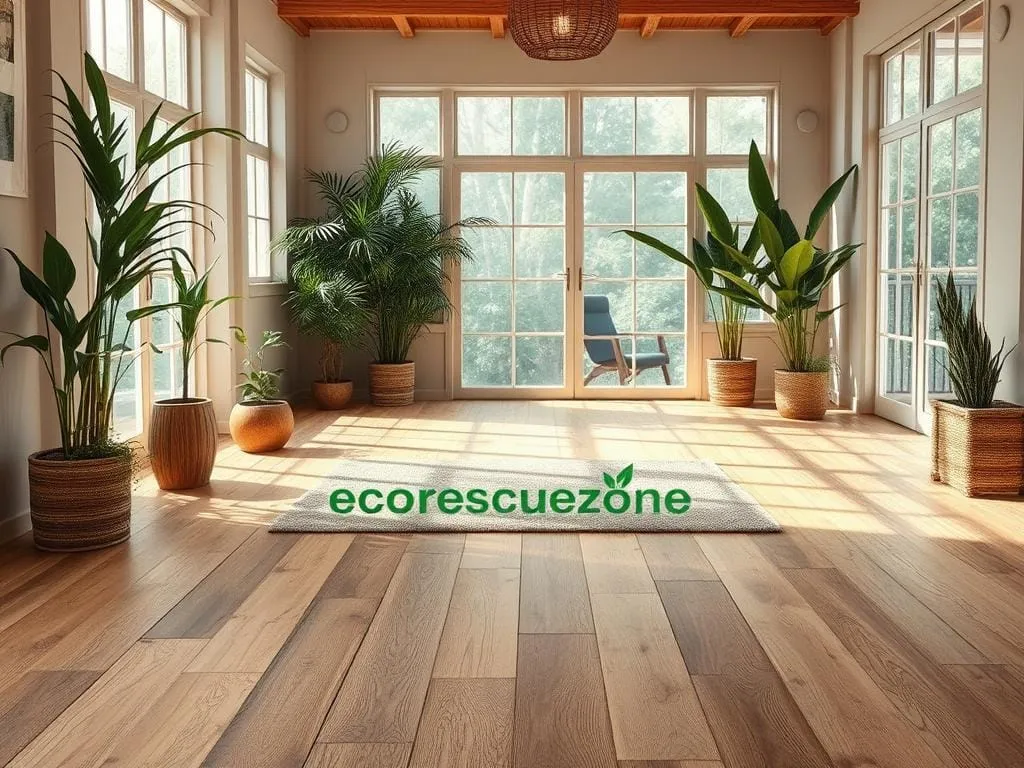
Welcome to our guide on eco-friendly flooring! We’ll show you how sustainable flooring can make your home look great and help the planet. You’ll learn about materials like bamboo, cork, reclaimed wood, and linoleum. These options are good for the earth and can make your home look amazing.
We aim to help you make your home more eco-friendly. By exploring the benefits of these materials, you’ll find the right flooring for your space. Join us as we explore the world of green building materials and sustainable flooring choices.
Why Choose Eco-Friendly Flooring?
Your choice of flooring can greatly affect the environment and your health. Choosing eco-friendly flooring makes your home look better and helps the planet. It also brings benefits that go beyond just looks.
Environmental Benefits
Materials like bamboo, cork, and reclaimed wood are good for the planet. They have a smaller carbon footprint because they’re made and sourced responsibly. This saves natural resources and cuts down on waste.
By picking these options, you help protect our planet. You also lessen the environmental harm from your home projects.
Health Advantages
Eco-friendly flooring is also better for your health. Traditional floors like vinyl and laminate can release harmful chemicals. But eco-friendly floors don’t have these chemicals, keeping the air clean.
Choosing eco-friendly flooring means you get a beautiful, green home. It also keeps you and your family healthier. Think about these benefits when planning your next home project.
Exploring Sustainable Flooring Options
The world of eco-friendly flooring has many sustainable materials to choose from. We’ll look at some popular and innovative options. We’ll talk about their unique features, benefits, and things to consider for your home.
Bamboo: A Renewable Marvel
Bamboo is a top choice for sustainable flooring. It’s known for being durable and looking great. Since bamboo grows fast, it’s a renewable resource that doesn’t harm the environment. Bamboo floors are perfect for busy areas because they resist scratches, dents, and wear well.
Cork: Comfort and Sustainability
Cork is a great flooring option that’s both eco-friendly and comfortable. It comes from the bark of cork oak trees without hurting the trees. Cork flooring is great because it’s resistant to moisture, soft, and doesn’t cause allergies. It’s perfect for those who want a cozy, green flooring choice.
Reclaimed Wood: Giving Old New Life
Reclaimed wood flooring gives old wood a new purpose. It comes from old barns, warehouses, or taken-down buildings. Using this flooring reduces waste and adds a unique, historic look to any room.
Linoleum: A Classic Eco-Friendly Choice
Linoleum is a classic, eco-friendly flooring option. It’s made from natural stuff like linseed oil, cork, and wood flour. Linoleum is tough, easy to keep up, and good for the planet. It’s a top pick for those wanting a timeless, green flooring choice.
| Flooring Material | Sustainability | Durability | Maintenance |
|---|---|---|---|
| Bamboo | High | Excellent | Easy |
| Cork | High | Good | Moderate |
| Reclaimed Wood | High | Excellent | Moderate |
| Linoleum | High | Good | Easy |
These are some of the sustainable flooring options out there. Each one has its own benefits, like being renewable or very durable. By looking into these options, you can find the best one for your style and the planet.
Bamboo: A Renewable and Durable Choice
Homeowners looking for eco-friendly flooring options find bamboo impressive. It grows fast, is durable, and looks great in any room. Let’s look at why bamboo flooring is a smart choice and how to keep it looking good.
Advantages of Bamboo Flooring
Bamboo grows super fast, up to 3 feet a day. This makes it a top pick for those who care about the planet. It’s tough against scratches, dents, and moisture, perfect for busy areas.
Bamboo also fits many decorating styles, from modern to rustic. It comes in many colors, adding warmth and style to any room. This makes it a favorite for those who want beauty and sustainability.
Caring for Bamboo Floors
- Regular sweeping or vacuuming to remove dirt and debris
- Damp mopping with a bamboo-specific cleaning solution to maintain the floor’s shine
- Avoiding excessive water exposure and promptly addressing any spills
- Using felt pads or protectors under furniture to prevent scratches and dents
- Periodically refinishing the floors to restore their luster and protect the surface
Follow these easy care tips to keep your bamboo floors looking great. Enjoy the beauty and strength of this green choice for years.
Cork: A Comfortable and Resilient Option
Cork is a standout choice for sustainable flooring. It’s not just comfy and tough but also great for the planet. Homeowners who care about the environment love it.
Cork floors are amazing at keeping noise and temperature in check. Its special cells soak up sound, making your home quiet and calm. Plus, it keeps the temperature steady, which can save you money on heating and cooling.
Cork is also super durable. It can handle lots of foot traffic without a problem. And its soft feel makes walking on it all day comfy, which is good for your health.
What’s best, cork comes from a tree that can be harvested over and over without hurting it. This means you get a floor that’s good for the earth and lasts a long time.
| Advantages of Cork Flooring | Disadvantages of Cork Flooring |
|---|---|
|
|
Cork flooring is a great pick for those wanting a comfy, strong, and earth-friendly floor. Its special qualities and eco-friendly source make it a top choice in the natural flooring materials market.
Reclaimed Wood: Giving New Life to Old Treasures
Homeowners who care about the planet are turning to reclaimed wood flooring. This choice brings charm and character to your home. It also helps reduce waste by using materials that were once thrown away.
Sourcing Reclaimed Wood
Finding the right reclaimed wood takes care. Make sure it comes from places like old buildings or sites being torn down. Working with trusted suppliers ensures your flooring supports eco-friendly values.
Installation and Maintenance Tips
- Getting reclaimed wood floors right means choosing skilled installers. They know how to handle this special material.
- When cleaning, be gentle with your floors. Use soft cleaners that are good for the planet.
- Refinish your floors now and then to keep them looking great. This also keeps their unique look.
Choosing reclaimed wood flooring makes your home eco-friendly. It shows off your values and adds beauty to your space.
Eco Friendly Flooring for Your Home
Choosing the right flooring is key to making your home sustainable and eco-friendly. Let’s look at the best options for green building materials for your home. We’ll focus on finding the right eco-friendly flooring for each room.
Think about the rooms and areas in your home that get a lot of foot traffic. Different types of eco-friendly flooring work better in different places. For example, some are great for areas that get wet, while others are perfect for rooms that need to look stylish.
It’s also important to think about how you want your home to look. Sustainable home improvements should match your home’s style and your taste. Look at options like bamboo, cork, or reclaimed wood to find the right fit for your home.
Don’t forget about your budget. Eco-friendly flooring might cost more at first, but it can save you money over time. It’s durable, needs less upkeep, and is better for the planet. By considering your budget, you can find the best eco-friendly flooring for your home.
Keep in mind the needs of each room, your style, and your budget. This way, you can pick the best eco-friendly flooring for your home. It will make your home look great and help the planet too.
Linoleum: A Classic and Sustainable Flooring Material
Linoleum is a classic choice for eco-friendly flooring that’s often overlooked. It’s durable and long-lasting, making it a top pick for those looking for sustainable options. We’ll dive into its eco-friendly features and how to keep your floors looking great for years.
Linoleum’s Eco-Friendly Properties
Linoleum is a natural, biodegradable option made from renewable resources like linseed oil, cork, wood flour, and natural pigments. It’s free from harmful chemicals and VOCs, making it a safer choice for your home and the planet. Plus, it’s very durable, lasting up to 40 years, which means less waste and less frequent replacements.
Linoleum Care and Maintenance
Keeping your linoleum floors looking their best is easy with a little care. Sweep or vacuum regularly to remove dirt and debris. For a deeper clean, use a damp mop with a neutral pH cleaner. But remember, avoid harsh chemicals and abrasive cleaners that can damage the finish. With the right care, your linoleum floors will stay beautiful and support a sustainable lifestyle.
| Key Eco-Friendly Features of Linoleum Flooring | Benefits |
|---|---|
| Natural, Biodegradable Composition | Made from renewable resources, free of harmful chemicals and VOCs |
| Long Lifespan | Can last up to 40 years, reducing waste and minimizing environmental impact |
| Easy Maintenance | Requires simple sweeping, damp mopping, and neutral pH cleaners |
Considerations for Choosing Eco-Friendly Flooring
Choosing eco-friendly flooring for your home involves several key factors. As you start your sustainable home improvement, think about the cost, durability, and how easy it is to install and maintain. Also, make sure it fits your style and the look you want for your home.
When picking flooring, think about these important points for eco-friendly options, sustainable choices, and green materials. Let’s dive into each element more:
- Cost: Eco-friendly flooring might cost more at first, but think about its long-term savings and benefits for the planet. Compare the costs over time to find the best value for your money.
- Durability: Floors like bamboo and cork are very durable and can handle a lot of foot traffic. Choose materials that last long to reduce replacements and help your home be more sustainable.
- Ease of Installation: The difficulty of installing eco-friendly flooring can affect its cost and how long it takes. Some, like reclaimed wood, might need special skills, while others, like linoleum, are easier to do yourself.
- Maintenance: Know how to clean and care for different eco-friendly floors. Some, like bamboo, need more upkeep, while others, like cork, are easier to maintain.
- Aesthetic: Choose flooring that matches your style and the look you want for your home. There are many eco-friendly options in various colors, textures, and patterns to pick from.
Thinking about these factors will help you make a smart, eco-friendly choice for your flooring. It will also support your goals for sustainable home improvement and green building materials.

Conclusion
In this guide, we’ve looked at many eco-friendly flooring options. Each one has its own benefits for the environment. We talked about bamboo, cork, and linoleum, among others.
These options help you make a choice that’s good for the planet and fits your style. You can pick a floor that’s both beautiful and sustainable. This way, you’ll have a lovely home that’s also good for the earth.
There are many ways to make your home more eco-friendly. You can choose floors made from renewable materials or those that are recycled. Each option helps make your home greener.
Switching to eco-friendly flooring is good for the planet and benefits you too. You’ll breathe cleaner air, feel more comfortable, and your floor will last longer. Start making your home more sustainable today. Show you care for the earth by choosing floors that reflect your values.
FAQ
What are the key environmental benefits of choosing eco-friendly flooring?
Choosing eco-friendly flooring helps us cut down on carbon emissions, save natural resources, and reduce waste. These choices make our living spaces more eco-friendly.
How does eco-friendly flooring impact our health and well-being?
Eco-friendly flooring materials improve indoor air quality and don’t have harmful chemicals. This means better health and a safer, more comfortable home.
What are some of the most popular sustainable flooring materials?
Bamboo, cork, reclaimed wood, and linoleum are top choices for eco-friendly flooring. Each has its own benefits and looks.
Why is bamboo considered a renewable and durable flooring choice?
Bamboo grows fast and is tough, standing up to scratches and dents. It also looks great in homes. Plus, it’s a green choice because it’s renewable.
What are the advantages of incorporating cork flooring into our homes?
Cork flooring is comfy, resilient, and good for the planet. It insulates well, takes a lot of wear and tear, and feels soft underfoot.
How can we ensure the sustainability of reclaimed wood flooring?
Make sure the reclaimed wood is sourced ethically and responsibly. This reduces waste and gives old wood a new life. Keeping it well-maintained also keeps its unique look.
What are the eco-friendly properties of linoleum flooring?
Linoleum is great for the planet because it comes from renewable sources and breaks down easily. Taking good care of it keeps it looking good and lasting long.
What are the key factors to consider when choosing eco-friendly flooring for our homes?
When picking eco-friendly flooring, think about cost, how long it lasts, how easy it is to install, and how much upkeep it needs. Also, make sure it fits your style and design goals.
