
Sustainable Waste Management Strategies for Cleaner Communities
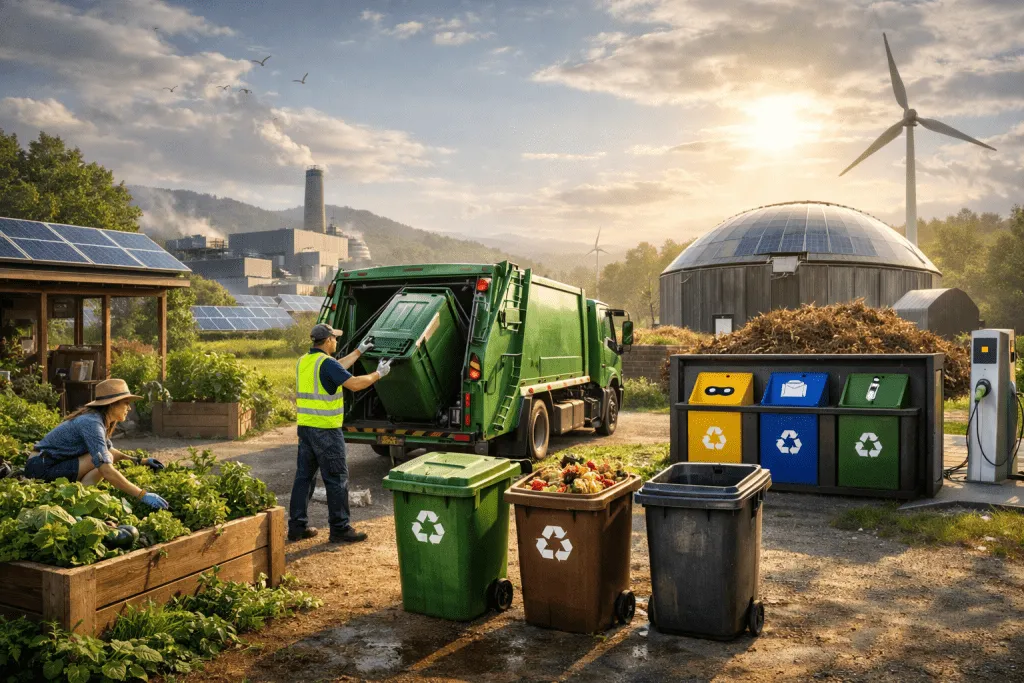
Clean, healthy neighborhoods don’t happen by accident. They are the result of deliberate choices about how waste is reduced, collected, processed, and kept out of landfills and waterways. For cities, villages, and residential areas, the most effective approach is not a single program, but a set of sustainable waste management strategies that work together across households, businesses, and local government. When done correctly, these strategies lower pollution, reduce public health risks, and cut long-term costs.
Sustainable waste management is built on one simple principle: treat waste as a resource, not an unavoidable burden. That means preventing waste before it exists, separating materials so they can be recovered, and using technology and community systems to keep waste streams clean. The cleaner the system, the easier it is to recycle, compost, and safely manage what remains.
Why Sustainable Waste Management Matters for Communities
Waste is not just an environmental issue. It is a direct community quality-of-life issue that affects air quality, water safety, neighborhood cleanliness, and disease risk. Poorly managed waste attracts pests, clogs drainage, and increases flooding during heavy rain.
Landfills also create long-term problems. They generate methane, a powerful greenhouse gas, and can leak pollutants into soil and groundwater. Even modern landfills require constant monitoring, making them expensive and risky if local management is weak.
Sustainable systems reduce these impacts by cutting landfill dependence and improving material recovery. The goal is not “perfect recycling,” but waste minimization, safe processing, and high participation. A cleaner community is typically the one with the simplest rules and the most consistent enforcement.
Waste Prevention and Reduction at the Source
The most effective waste is the waste that never gets created. Source reduction is the foundation of all sustainable systems, because recycling and disposal still require energy, labor, and transport. Communities that prioritize prevention typically see the fastest long-term improvements.
One practical strategy is reducing single-use packaging through local rules and incentives. For example, encouraging reusable bags, refill stations, or deposit-return systems can quickly reduce plastic waste. This is especially important in areas where plastic waste often ends up in rivers and coastal zones.
Another key step is controlling food waste. Households and businesses can reduce waste through meal planning, proper storage, and donation systems for edible surplus. Food waste is one of the heaviest and most expensive waste categories to transport and landfill.
Local governments can also support prevention by requiring sustainable procurement in public offices and schools. When institutions buy durable products, minimize disposable items, and use refillable supplies, they set a standard that the private sector often follows. In many communities, the most impactful sustainable waste management strategies begin with public institutions modeling the behavior first.
Segregation, Collection, and Infrastructure That Actually Works
A waste system is only as strong as its separation process. If recyclables, organics, and residual waste are mixed together, the quality of recovered materials drops sharply. Contamination is the number one reason recycling programs fail.
The best-performing communities use simple segregation categories. In many cases, three streams are enough: organics, recyclables, and residual waste. More categories can work, but only if education and enforcement are strong.
Collection schedules should match the waste type. Organics should be collected more frequently because they rot quickly and attract pests. Recyclables can often be collected less frequently, which reduces costs and encourages households to keep materials clean and dry.
Infrastructure must support the system. That includes labeled bins, clear signage, and accessible drop-off points for special waste like electronics, batteries, and bulky items. Without infrastructure, even motivated residents cannot comply consistently.
Data-based routing is also a practical upgrade. Optimizing collection routes reduces fuel use and labor costs. While this sounds technical, it is one of the most cost-effective improvements for municipal systems, especially in growing communities with expanding neighborhoods.
Recycling and Material Recovery for a Circular Economy
Recycling is often treated as the centerpiece of waste management, but it should be treated as a mid-level tool. It is important, but it cannot fix a system that produces too much waste or mixes materials poorly. Effective recycling depends on clean input, stable markets, and reliable processing.
Communities should prioritize high-value and high-volume materials first. These typically include cardboard, paper, certain plastics, glass, and metals. Programs that attempt to recycle everything at once often collapse under contamination and sorting costs.
Local partnerships are critical. Municipalities should work with recycling facilities, waste pickers, cooperatives, and private processors to build a stable chain. Informal waste workers in many regions already provide essential recovery services, and formalizing their role can increase recycling rates while improving livelihoods.
Another important approach is extended producer responsibility (EPR). Under EPR, manufacturers are required to help fund or manage the collection and recycling of their packaging. This shifts the burden away from taxpayers and encourages better product design.
Recycling education must be practical, not idealistic. Residents need clear rules such as “clean, dry, and empty” for containers, and they need to know which plastics are actually accepted. Communities that communicate simply and consistently get far better results than those that distribute long lists nobody follows.
Composting and Organic Waste Treatment
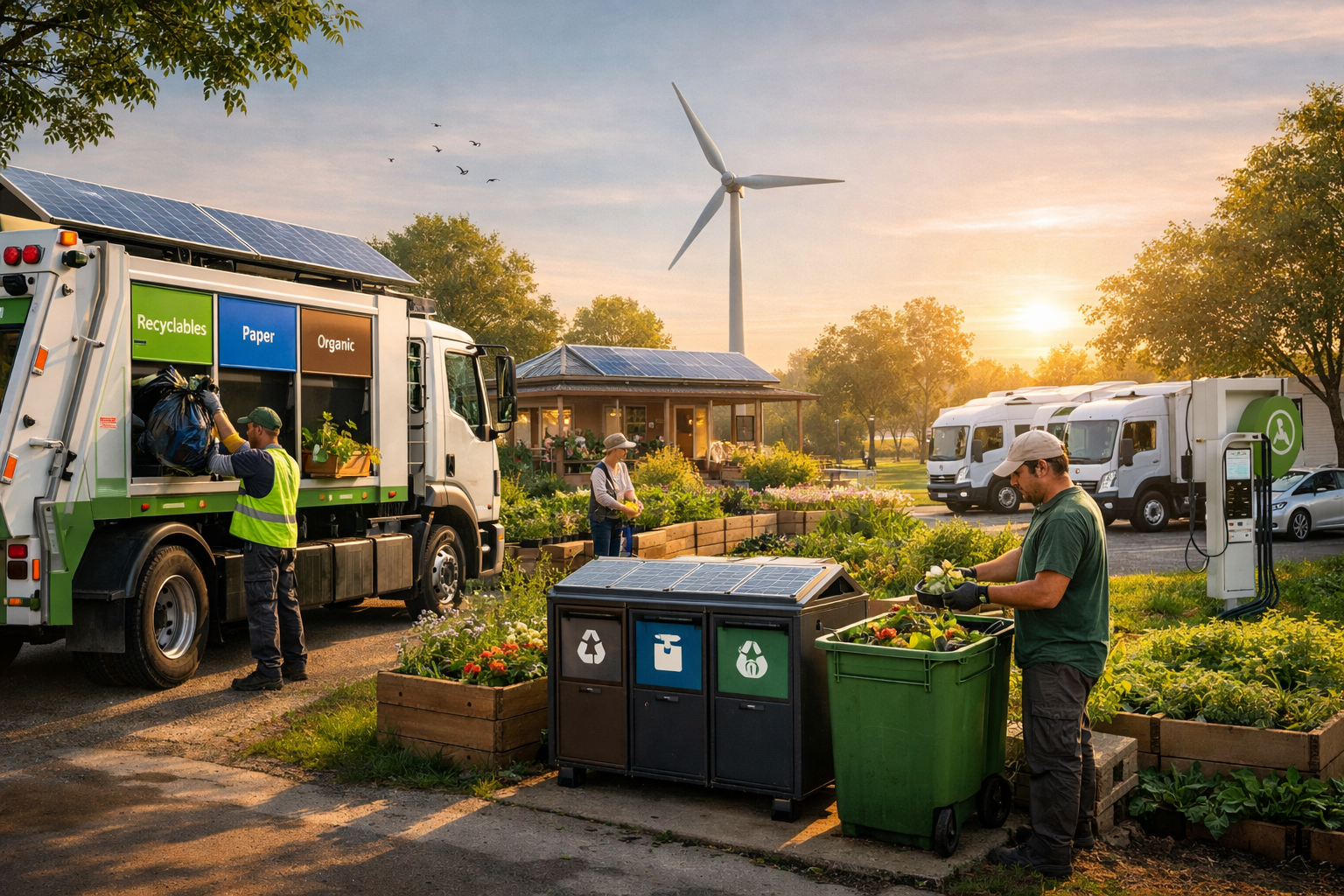
Organic waste is often the largest portion of household waste by weight. When it goes to landfills, it creates methane and produces leachate that can pollute water systems. Managing organics properly is one of the highest-impact sustainable waste management strategies for cleaner communities.
Home composting is useful, but it will not handle all organic waste in dense neighborhoods. Community-scale composting and municipal composting programs are often necessary, especially for food scraps and yard waste.
A good composting system requires correct inputs and good process control. If residents add plastics, chemicals, or non-compostable items, the compost becomes contaminated and unusable. Clear bin design and frequent collection reduce this problem.
Some communities may also use anaerobic digestion. This technology breaks down organic waste in a sealed environment, producing biogas that can be used for energy. It is more complex than composting, but it can be valuable in areas with large food waste volumes, such as markets and restaurant districts.
Compost output should have a clear destination. Communities can use compost for parks, landscaping, urban farming, or local agriculture. When residents see a visible benefit, participation rises and contamination falls.
Policy, Community Participation, and Long-Term Sustainability
Waste management succeeds when it is treated as a governance system, not just a cleaning service. Policies, enforcement, financing, and public behavior all matter. Without community participation, even the best infrastructure fails.
One of the most effective policy tools is pay-as-you-throw (PAYT). Under PAYT, households pay based on the amount of residual waste they produce. This encourages recycling and composting without relying solely on education. When designed fairly, PAYT reduces waste volumes significantly.
Another key tool is enforcement against illegal dumping. Communities need clear penalties and consistent monitoring. Illegal dumping often increases when collection systems are inconvenient or unreliable, so enforcement must be paired with accessible services.
Education must be continuous and local. One-time campaigns usually fail. Communities should use schools, neighborhood leaders, and local events to reinforce the system. The goal is to make correct sorting feel normal, not optional.
Financing is also critical. Sustainable systems require stable budgets for collection, maintenance, and facility operations. Communities that rely on short-term funding often experience breakdowns that destroy public trust.
Finally, measuring performance is essential. Tracking waste generation per household, recycling rates, contamination rates, and landfill diversion gives local leaders the data needed to adjust programs. The best sustainable waste management strategies are not static; they evolve based on real-world results.
Conclusion
Cleaner communities are built through prevention, separation, recycling, organic treatment, and strong governance working together. The most reliable sustainable waste management strategies focus on reducing waste at the source, keeping materials separated, treating organics responsibly, and maintaining consistent policies that residents can actually follow. When communities design waste systems for simplicity, accountability, and long-term funding, they reduce pollution, protect health, and create neighborhoods that stay clean year after year.
FAQ
Q: What are sustainable waste management strategies in simple terms? A: They are methods that reduce waste, increase recycling and composting, and minimize landfill use while protecting health and the environment.
Q: Which waste category should communities prioritize first? A: Organic waste is often the highest priority because it is heavy, produces odors and pests, and creates methane when landfilled.
Q: Why do recycling programs fail even when people try to participate? A: Most failures happen due to contamination, unclear rules, and lack of processing capacity or stable recycling markets.
Q: Is composting better than sending food waste to landfills? A: Yes, composting reduces methane emissions and turns organic waste into useful soil material instead of a long-term pollution risk.
Q: What is the fastest way to reduce waste at the household level? A: Reducing single-use packaging and preventing food waste typically cuts household waste volume the most quickly.
