
Top Eco-Friendly Career Opportunities for a Sustainable Future
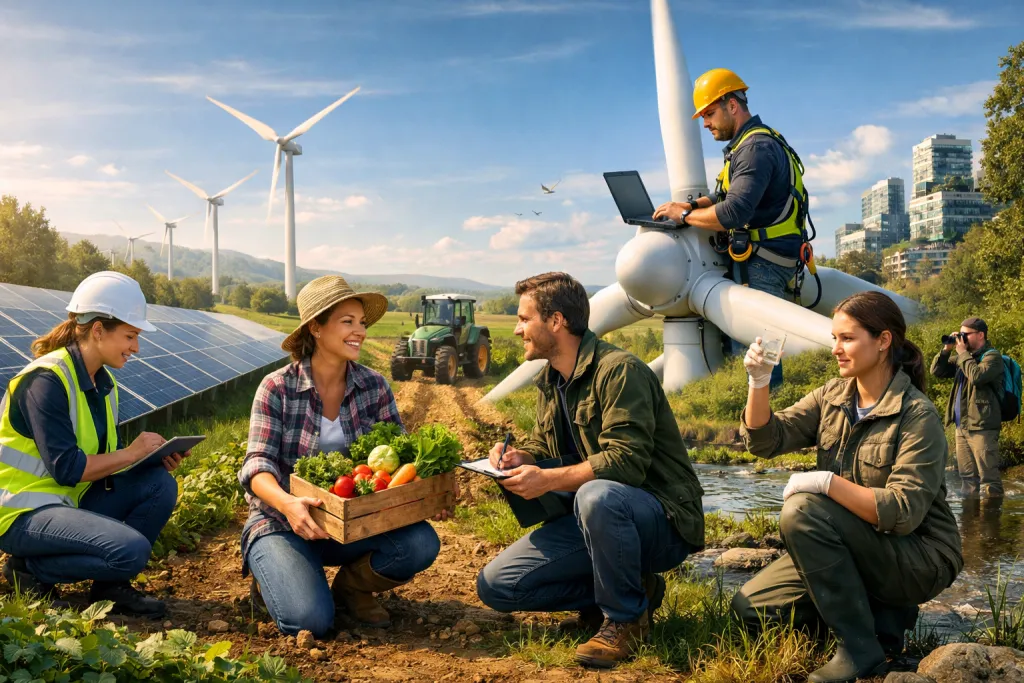
The global shift toward sustainability is transforming the job market at an unprecedented pace. Governments, corporations, and communities are investing in cleaner technologies, responsible resource management, and ethical business practices. As a result, eco-friendly career opportunities are expanding across industries, offering long-term growth, financial stability, and meaningful impact. For professionals seeking purpose-driven work, the sustainable economy presents diverse paths that combine innovation, profitability, and environmental responsibility.
Renewable Energy and Clean Technology Careers
One of the fastest-growing areas within eco-friendly career opportunities is renewable energy. Solar, wind, hydro, and geothermal power are replacing fossil fuels in many regions, creating high demand for engineers, technicians, project managers, and analysts. These roles focus on designing, installing, and maintaining systems that reduce greenhouse gas emissions and improve energy efficiency.
Solar photovoltaic installers and wind turbine technicians are among the most in-demand technical roles. These positions require specialized training but often do not demand lengthy university degrees, making them accessible and practical options. At a higher level, renewable energy engineers and energy systems analysts work on grid integration, battery storage solutions, and smart energy distribution networks.
Clean technology also extends beyond power generation. Professionals in energy storage, electric vehicle infrastructure, and smart grid development contribute directly to decarbonization efforts. As governments enforce stricter environmental policies, demand for renewable energy expertise continues to rise globally.
Environmental Science and Sustainability Consulting
Environmental science remains a foundational pillar of eco-friendly career opportunities. Environmental scientists, conservation specialists, and climate researchers assess the health of ecosystems and develop strategies to mitigate environmental damage. Their work informs public policy, corporate strategy, and land-use planning.
Sustainability consultants help organizations measure and reduce their environmental footprint. They conduct audits, analyze carbon emissions, and implement compliance frameworks aligned with international standards such as ESG (Environmental, Social, and Governance). These professionals bridge science and business, ensuring companies remain competitive while meeting regulatory requirements.
Corporate sustainability managers are also increasingly common. They oversee waste reduction programs, supply chain transparency, and ethical sourcing initiatives. As consumers demand accountability, sustainability leadership roles become central to long-term corporate success.
Green Construction and Sustainable Architecture
The built environment contributes significantly to global carbon emissions. This reality has expanded eco-friendly career opportunities in green construction and sustainable architecture. Architects and civil engineers now prioritize energy-efficient design, low-impact materials, and smart building technologies.
Green building professionals specialize in certifications such as LEED (Leadership in Energy and Environmental Design). They ensure structures meet strict standards for energy efficiency, water conservation, and indoor air quality. Sustainable urban planners also play a critical role in designing cities that integrate public transportation, green spaces, and climate-resilient infrastructure.
Construction managers trained in sustainable practices oversee projects that minimize waste and reduce environmental harm. From net-zero homes to eco-industrial parks, green construction offers both creative and technical career paths with long-term relevance.
Sustainable Agriculture and Food Systems
Agriculture is undergoing transformation as climate change affects crop yields and supply chains. Sustainable farming practices create numerous eco-friendly career opportunities focused on soil health, biodiversity, and water conservation. Agronomists and environmental agricultural specialists develop methods that reduce chemical use while maintaining productivity.
Urban farming, hydroponics, and vertical agriculture represent modern solutions to food security challenges. These roles combine technology and environmental science to grow food efficiently in limited spaces. Food systems analysts evaluate supply chains to reduce food waste and carbon emissions.
Careers in sustainable food production also include organic certification specialists and regenerative agriculture consultants. As consumer demand shifts toward responsibly sourced products, the agricultural sector continues to innovate in environmentally conscious directions.
Circular Economy and Waste Management
The traditional linear economy—produce, consume, discard—is being replaced by circular models that prioritize reuse, recycling, and resource efficiency. This transition has generated new eco-friendly career opportunities in waste management and materials recovery.
Waste management engineers design systems that convert waste into energy or reusable materials. Recycling program coordinators and environmental compliance officers ensure municipalities and companies adhere to waste reduction targets. These roles contribute directly to reducing landfill dependency and lowering environmental pollution.

Product designers are also adapting to circular principles. They focus on creating goods that are durable, repairable, and recyclable. Professionals in supply chain optimization analyze product lifecycles to eliminate inefficiencies and minimize environmental impact.
Corporate ESG, Policy, and Green Finance
Financial markets increasingly reward companies that demonstrate environmental responsibility. This shift has created eco-friendly career opportunities in green finance, ESG analysis, and sustainable investment management. ESG analysts evaluate corporate performance based on environmental and social metrics, guiding investment decisions.
Green finance specialists structure bonds and funding instruments for renewable energy projects and sustainable infrastructure. These professionals operate at the intersection of finance and environmental policy. Their work channels capital toward initiatives that accelerate climate solutions.
Policy advisors and environmental economists also shape regulations that influence sustainable development. By designing carbon pricing models and environmental tax frameworks, they guide governments toward long-term climate resilience. These strategic roles influence entire industries and national development pathways.
Education, Communication, and Environmental Advocacy
Sustainability requires informed communities. Careers in environmental education and communication form another vital segment of eco-friendly career opportunities. Environmental educators teach sustainability principles in schools, universities, and community programs.
Climate communication specialists translate complex scientific data into accessible public messaging. Their role is essential in promoting behavioral change and encouraging responsible consumption. Advocacy professionals work with non-profit organizations to influence policy and raise awareness about biodiversity protection and climate justice.
Digital platforms have expanded the reach of environmental content creators and sustainability journalists. Accurate reporting and educational campaigns strengthen public understanding and drive collective action toward environmental goals.
Conclusion
The expansion of eco-friendly career opportunities reflects a structural shift in the global economy. Renewable energy, sustainable agriculture, green construction, ESG finance, and environmental consulting are no longer niche sectors but core drivers of future growth. Professionals entering these fields contribute directly to climate resilience, resource conservation, and ethical economic development. As sustainability becomes central to business and policy, environmentally focused careers offer both stability and long-term relevance.
FAQ
Q: What qualifications are needed for eco-friendly career opportunities? A: Requirements vary by field, ranging from technical certifications for renewable energy roles to advanced degrees in environmental science, engineering, or sustainability management.
Q: Are eco-friendly career opportunities financially stable? A: Many sustainable sectors, especially renewable energy and ESG finance, show strong growth and competitive salaries due to increasing global demand.
Q: Can someone transition into a sustainability career from another industry? A: Yes, transferable skills in project management, finance, engineering, or communications can support a transition into environmental and sustainability-focused roles.
Q: Which industries offer the fastest growth in sustainable careers? A: Renewable energy, green construction, and ESG-related finance currently demonstrate some of the strongest global growth trends.
Q: Do eco-friendly careers only exist in environmental organizations? A: No, sustainability roles now exist in corporations, government agencies, startups, financial institutions, and non-profit organizations.
