
Iran war: Will Europe’s split on US strikes backfire?
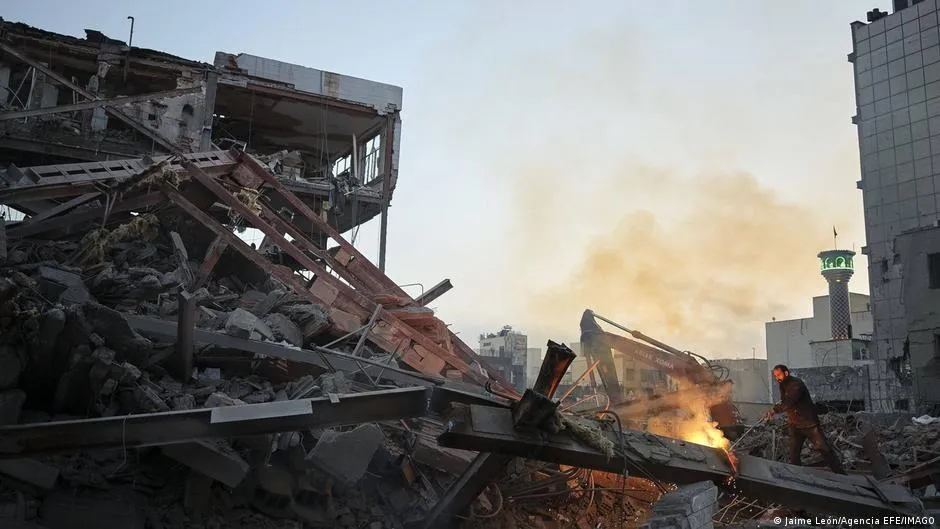
Iran War: Will Europe’s Split on US Strikes Backfire?
Following the US-Israeli strikes that killed Iran’s Supreme Leader Ayatollah Ali Khamenei, Europe’s reaction has been divided. While Spain condemned the actions as a violation of international law, Germany emphasized the importance of unity among allies. This rift extends beyond political discourse, with legal experts also expressing differing opinions on the legality of the attacks.
Iranian diaspora members celebrated in Brussels this weekend, with one man exulting,
“The dictator is dead. This is the best day of my life,”
as he danced through cobblestone streets. Meanwhile, EU officials have long criticized the Iranian regime for human rights abuses and targeted strikes on Gulf nations, imposing sanctions in the process. Yet, they now grapple with a diplomatic conundrum: were the US-Israeli actions justified under international law, or did they undermine the rules-based order the EU champions?
US President Donald Trump framed the strikes as a necessary measure to prevent Iran from acquiring nuclear weapons, stating,
“We are ensuring that the world’s number one sponsor of terror can never obtain a nuclear weapon.”
However, his administration has offered no formal legal reasoning. Defense Secretary Pete Hegseth dismissed the need for international frameworks, declaring,
“We are acting regardless of what so-called international institutions say, with no stupid rules of engagement.”
This stance contrasts sharply with European allies who remain cautious in their assessments.
Germany’s Chancellor Friedrich Merz has been deliberate in his approach, avoiding direct criticism of Washington.
“Legal assessments under international law will achieve relatively little in driving political change in Iran,”
he noted, adding,
“Now is not the moment to lecture our partners and allies. Despite our reservations, we share many of their objectives.”
In contrast, Spain’s Prime Minister Pedro Sánchez took a firmer position, asserting,
“We reject the unilateral military action by the US and Israel, which represents an escalation and contributes to a more uncertain and hostile international order.”
Legal scholars remain split on the matter. Marc Weller, director of Chatham House’s international law program, argued that the current attack on Iran lacks sufficient legal justification.
“International law does not permit the use of force in response to a hostile posture short of an armed attack,”
he wrote. Weller suggested that force is only acceptable as a last resort to protect a state from direct assault, noting that Iran’s recent crackdown on protesters “probably did not yet reach the threshold” for foreign intervention.
Rosa Freedman, a law professor at the University of Reading, disagreed.
“As a legal scholar, you have to look at this within the broader context. Law doesn’t operate in a vacuum,”
she explained. She highlighted Iran’s decades-long threat to Israel and the region, emphasizing its nuclear ambitions as a lawful justification for the strikes. “Those attacks fit within the context of preventing nuclear proliferation,” she added.
The debate, while intense, may remain confined to academic circles.
“The fact is, this discussion will largely stay in legal textbooks—because it won’t play out in court.”
Whether Europe’s internal divisions on the issue affect its collective stance remains to be seen.
