
What the numbers tell us about the Ebola outbreak
What the Numbers Tell Us About the Ebola Outbreak
Escalating Threat in the DRC and Uganda
What the numbers tell us about – Health officials have raised alarms over a rapidly growing Ebola crisis in the Democratic Republic of Congo (DRC) and Uganda, labeling the situation a “public health emergency of international concern.” The World Health Organization (WHO) confirmed this designation on Wednesday, emphasizing the outbreak’s potential to impact both national and regional populations. Despite the heightened alert, global risk remains assessed as low, according to WHO statements. The virus in question is the Bundibugyo strain, which has not yet been linked to a specific cure or vaccine. This strain, previously identified in the DRC, has now reemerged with alarming speed.
The outbreak has already claimed at least 139 lives, with nearly 600 additional cases suspected. However, only 51 infections have been officially verified in the DRC. Dr. Anne Ancia, WHO’s representative in the country, noted the challenge of tracking the virus’s true extent, stating, “We have significant uncertainty about the number of infections and how far the virus has spread.” This ambiguity underscores the complexity of containing the disease, which relies heavily on accurate diagnosis and timely reporting.
International Response and Patient Movement
As the crisis deepens, international efforts are intensifying. The Centers for Disease Control and Prevention (CDC) reported that an American healthcare worker, who had been treating patients in the DRC, has tested positive for Ebola. The individual, identified as Dr. Peter Stafford, a general surgeon specializing in burn care, is being transported to Germany for specialized treatment. The CDC also announced plans to relocate six of his close contacts to Europe for ongoing monitoring and care.
Dr. Stafford’s case highlights the interconnected nature of global health. His wife, Dr. Rebekah Stafford, and another physician, Dr. Patrick LaRochelle, are believed to have been exposed to the virus but remain asymptomatic. These three healthcare professionals are continuing their quarantine protocols, as noted by the international charity Serge, which has been tracking the outbreak. While the patient’s symptoms are now confirmed, the virus’s spread within the medical community remains a key focus of investigations.
Diagnostic Delays and the Search for Patient Zero
WHO officials revealed that the outbreak likely began “a couple months ago,” with the first known case emerging in April. The delay in identifying the Bundibugyo strain—known as a “critical four-week detection gap”—allowed the virus to spread before containment measures could be fully implemented. This period of uncertainty began when an alert was issued on May 5 regarding an unknown illness in Mongbwalu, a town in the DRC’s Ituri province. Four health workers died within four days of each other, prompting further inquiry.
Dr. Tedros Adhanom Ghebreyesus, WHO’s Director-General, expressed deep concern over the outbreak’s scale and rapid progression. “We are facing a situation that is both alarming and complex,” he remarked. The lack of a definitive “patient zero” has complicated efforts to trace the virus’s origin. Dr. Ancia explained that the initial symptoms of the outbreak were non-specific, making early detection difficult. She also highlighted the limitations of available testing methods, which contributed to the delayed confirmation of the Bundibugyo strain.
Transmission Dynamics and Regional Preparedness
Health experts have reiterated that Ebola spreads through direct contact with bodily fluids, such as blood, vomit, or fecal matter. Contaminated objects or surfaces can also serve as vectors for transmission. Notably, individuals are not contagious until they display symptoms, which typically manifest between two and 21 days after exposure. This extended incubation period creates challenges for containment, as asymptomatic carriers may unknowingly spread the virus.
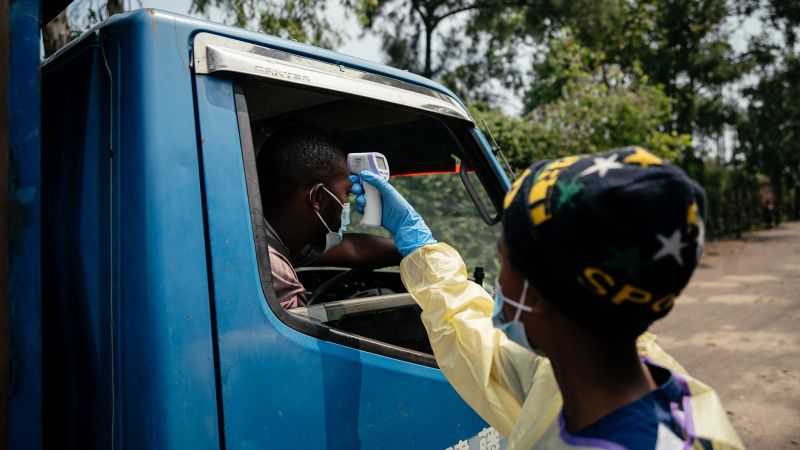
In Uganda, two confirmed cases have been reported as of Tuesday. The first involved a patient from the DRC who received treatment at a local health facility before succumbing to the illness. The second case is similarly attributed to an imported infection from the DRC. Ugandan authorities have since activated emergency protocols, including disease surveillance and response readiness measures. These actions reflect the country’s preparedness for a potential escalation, despite the current low global risk assessment.
The WHO’s evaluation of the outbreak’s risk levels underscores the regional focus of the threat. While the DRC and surrounding areas face high-level danger, the virus’s spread to other continents remains unlikely. Dr. Tedros emphasized that the outbreak’s severity is compounded by its speed, stating, “The scale of this epidemic is unprecedented, and the pace of transmission is a major concern.” This assessment has prompted increased coordination between local governments and international health organizations.
Global Implications and Next Steps
The Bundibugyo strain’s resurgence has reignited discussions about the need for improved diagnostic tools and rapid response systems. WHO officials noted that the virus’s behavior in this outbreak differs from previous instances, partly due to the initial patients’ atypical symptoms. This has necessitated a broader investigation into the outbreak’s timeline and geographical reach. The organization is now working to pinpoint the exact origin and spread patterns of the disease, with a team deployed to the affected regions as early as May 12.
While the situation remains urgent, the WHO’s declaration of an international emergency has galvanized global health resources. The movement of the American patient and his contacts to Europe illustrates the international collaboration in managing the crisis. Meanwhile, local communities in the DRC and Uganda continue to grapple with the outbreak’s impact, balancing fear with the hope that containment strategies will succeed. The stakes are high, as the virus’s capacity to spread unchecked underscores the importance of swift action and clear communication in mitigating further harm.
As the investigation unfolds, the focus remains on understanding the virus’s behavior and enhancing preparedness. The WHO’s continued monitoring, combined with the efforts of regional health authorities, aims to curb the outbreak’s trajectory. However, the challenge of identifying the precise source and ensuring rapid isolation of infected individuals remains a critical hurdle. The coming weeks will determine whether the current measures are sufficient to contain the epidemic or if additional interventions are needed to safeguard public health.
