
WHO chief reassures ‘worried’ Tenerife residents ahead of hantavirus ship arrival expected Sunday
WHO Chief Reassures ‘Worried’ Tenerife Residents Ahead of Hantavirus Ship Arrival Expected Sunday
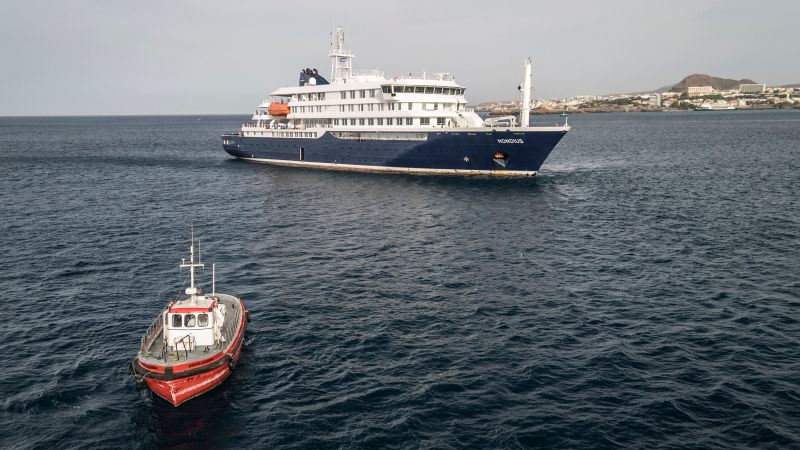
WHO chief reassures worried Tenerife residents – The head of the World Health Organization (WHO), Tedros Adhanom Ghebreyesus, has reached out to Tenerife’s residents to ease their concerns as a cruise ship infected with hantavirus is set to arrive on Tenerife early Sunday morning. During his visit to the island, Tedros emphasized that the current situation, while serious, does not pose the same level of threat as the previous pandemic. He explained that the hantavirus outbreak, which has claimed three lives on board the MV Hondius, is transmitted primarily through contact with rodent droppings, not via airborne particles like the coronavirus.
Evacuation Strategy and Risk Assessment
Tedros, who is in Tenerife to oversee the safe disembarkation of nearly 150 passengers, acknowledged the public’s apprehension about the ship’s arrival. In a letter addressed to local residents, he clarified that the hantavirus outbreak is not a new global health crisis but a localized event. “The public health risk associated with the hantavirus remains low,” he stated, adding that this conclusion was based on thorough analysis. The WHO leader praised Spain’s preparedness, noting that authorities have developed a “careful, step-by-step plan” for the ship’s docking at Granadilla port.
“You will not encounter them. Your families will not encounter them,” Tedros said during a press briefing, highlighting the measures in place to ensure the safety of the island’s population. He described the evacuation process as meticulously organized, with passengers being transported ashore in sealed, guarded vehicles to prevent any spread of the virus.
According to the cruise operator, Oceanwide Expeditions, the MV Hondius is scheduled to arrive at 5:30 a.m. local time on Sunday. From around 8 a.m., guests and a limited number of crew members will begin disembarking in controlled groups. Spain’s interior minister, Fernando Grande-Marlaska, confirmed that 358 security personnel will be deployed to support the operation, ensuring the process is smooth and risk-free.
International Collaboration and Passenger Repatriation
The U.S. Centers for Disease Control and Prevention (CDC) has also joined the effort, sending teams of epidemiologists and medical professionals to conduct assessments on American passengers upon the ship’s arrival. A spokesperson from the U.S. Department of Health and Human Services stated that the risk to the general American public remains “extremely low.” This assessment is based on the specific strain of the virus, the Andes variant, which experts at the CDC have studied extensively.
Passengers will be repatriated to their home countries using charter aircraft equipped with biocontainment units, similar to those used during the height of the pandemic. The ship will anchor at a designated location within the port, chosen by maritime and health authorities as the “safest” site for the operation. Once ashore, passengers will disembark in small inflatable boats, organized by nationality. The process will ensure that individuals from different countries are handled separately, minimizing cross-contamination risks.
Local Concerns and Protests
Despite the organized plan, some local officials in Spain have expressed reservations about the ship’s arrival. Earlier in the week, Fernando Clavijo, the leader of the Canary Islands, voiced opposition to the docking, citing fears of public health risks. This concern has led to protests by port workers in Tenerife, who criticized the lack of communication regarding the potential dangers to the island’s residents.
Clavijo reiterated his stance late Saturday, stating that his government would continue to monitor the situation closely. However, he also acknowledged the importance of the evacuation effort, calling it a necessary measure to protect the health of all involved. Meanwhile, the Spanish health ministry confirmed that patients will be isolated in individual rooms at the military hospital, with no visitors allowed. They will undergo PCR testing upon arrival and again after seven days to confirm their status.
Country-Specific Evacuation Plans
Spain has coordinated with several nations to ensure the timely repatriation of their nationals. Germany, France, Belgium, Ireland, and the Netherlands have pledged to send aircraft to transport passengers from the MV Hondius. These countries’ governments have worked closely with Spanish authorities to streamline the process and reduce the impact on local infrastructure.
Edgar Saavedra, a representative from the Canary Islands, highlighted the importance of transparency in addressing the community’s fears. “We need to ensure that every step of the operation is clear to the public,” he said. The evacuation plan includes strict protocols for handling both passengers and crew, with special attention given to those who have tested positive for the virus.
As the ship prepares to dock, the focus remains on preventing any secondary infections on the island. Tedros, alongside Spain’s health minister, Monica Garcia, visited the port on Saturday to review the logistics. “We will do everything tomorrow to make the operation a success,” he reiterated, underscoring the WHO’s commitment to supporting the effort.
Public Health Measures and Risk Mitigation
The plan to disembark the MV Hondius involves multiple layers of safety. Passengers will be kept away from residential areas during the transfer, and all movement will be monitored to limit exposure. The use of biocontainment units on the charter aircraft is a critical component of the strategy, allowing for safe transport of infected individuals back to their countries.
Spain’s health ministry also outlined additional measures to safeguard the public. Active monitoring of passengers will involve daily temperature checks, with symptoms being recorded and analyzed to detect any early signs of the virus. These precautions are designed to provide a clear understanding of the passengers’ health status and ensure that the outbreak does not escalate further on the island.
While the arrival of the MV Hondius has stirred some debate, the overall consensus among officials is that the operation is essential. The decision to send the ship to Tenerife was based on its ability to accommodate the passengers’ needs, including access to medical facilities and transportation infrastructure. The WHO chief praised Spain’s willingness to take in the vessel, calling it a “demonstration of solidarity and moral responsibility.”
As the sun rises on Sunday, the anticipation in Granadilla port is palpable. The meticulous preparation by both WHO and Spanish authorities aims to minimize any disruption to the island’s daily life. Residents are being informed through regular updates, with the goal of fostering trust in the evacuation process. The success of this operation will depend on the coordination between local and international teams, as well as the adherence to strict health protocols throughout the day.
Tedros concluded his remarks by reinforcing the confidence in the current measures. “This is a well-thought-out plan, and we are ready to implement it with precision,” he said. His reassurance comes at a time when the island’s population is on edge, but the collaborative approach between health organizations and government officials suggests a unified front against the outbreak.
