
Fact check: How can a country actually withdraw from NATO?
Fact check: How can a country actually withdraw from NATO?
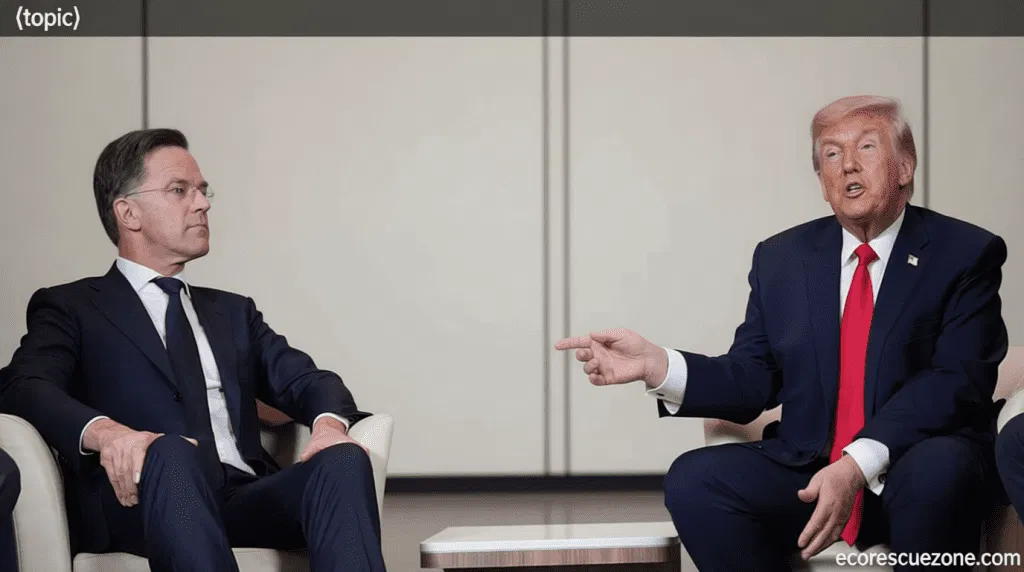
Recent weeks have seen Donald Trump escalate his criticism of NATO, particularly as tensions rise over the Iran conflict. The former president has hinted at withdrawing from the alliance after European allies and other Western partners failed to take decisive action. His latest remarks, labeling NATO a “paper tiger,” followed NATO members’ lack of response to his call for a naval effort to reopen the Strait of Hormuz, which Tehran has closed. “I would say [it’s] beyond reconsideration,” Trump stated in an interview with The Telegraph. “I was never swayed by NATO. I always knew they were a paper tiger, and Putin knows that too, by the way.”
The Legal Framework for Withdrawal
NATO’s withdrawal process is outlined in Article 13 of the 1949 North Atlantic Treaty. To exit, a country must formally notify the U.S., which then informs all other members. After a year, the withdrawal becomes official. This mechanism seems simple for European nations and Canada, provided they comply with their own legal procedures. However, the U.S. presents a unique case due to its dual role as both a member and the treaty’s depositary.
Under the treaty, the U.S. manages the documents and handles withdrawal notifications. To leave, the U.S. government would need to inform the State Department of its intent. It would then fulfill its obligation to notify other members. Theoretically, the U.S. could stay as the depositary while no longer being a member, but remaining countries would likely pass an amendment to transfer those duties to another nation.
Domestic Obstacles for the U.S.
Domestically, the U.S. faces hurdles. In 2023, President Joe Biden signed legislation that blocks a president from exiting NATO without Senate approval. This amendment to the Fiscal Year 2024 National Defense Authorization Act states that the executive cannot “suspend, terminate, denounce or withdraw” from the North Atlantic Treaty unless backed by a two-thirds Senate majority or an act of Congress. It also prohibits federal funds from supporting a withdrawal.
“The law makes it formally very difficult for the president to take the U.S. out of the treaty,” said Rafael Loss, a policy fellow at the European Council on Foreign Relations, to Euronews’ fact-checking team, The Cube. “Of course, there might be differing legal interpretations of the competencies of the U.S. legislative branches in Trump’s case.”
Any official withdrawal would likely face legal challenges, with the government arguing that the president holds the authority to exit treaties and that congressional attempts to block this are unconstitutional. Loss also noted that other U.S. laws, such as those governing NATO budget contributions, personnel appointments, and export controls, would come under scrutiny in such a scenario.
Implications of a U.S. Exit
Experts warn that even if the U.S. technically remains in NATO, it could weaken the alliance by significantly reducing its financial and military support. This would effectively negate its mutual defense obligations under Article 5. “Trump can’t legally withdraw from NATO without Senate consent,” Ian Bremmer of Eurasia Group wrote on X. “But if NATO members can’t trust that the U.S. will uphold Article 5, the alliance is already broken in the way that matters most.”
Loss added that while formal withdrawal would damage NATO, it might be preferable to a situation where the U.S. is a non-committed member. “At least such a move would provide clarity and advance notice to other members,” he said. “We can’t exclude the possibility [that the U.S. would]…”
