
Beijing promised to ‘fight back’ over Taiwan leader’s US visit. But this time it has more to lose
Beijing promised to ‘fight back’ over Taiwan leader’s US visit. But this time it has more to lose
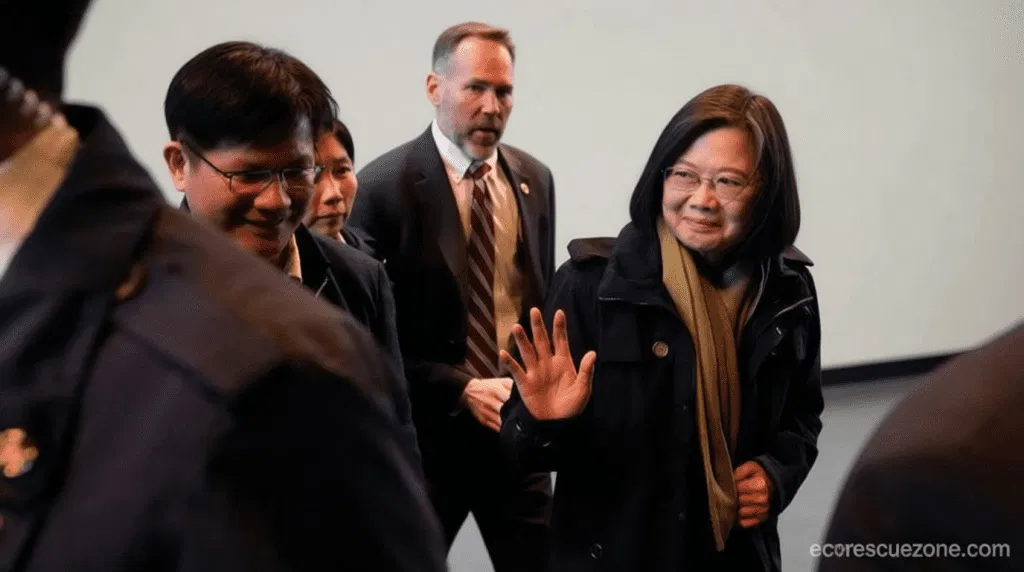
As Taiwan’s President Tsai Ing-wen prepares for a 10-day journey to California, her planned meeting with US House Speaker Kevin McCarthy has stirred apprehension. This encounter, occurring on American soil, is seen by some as a potential trigger for renewed tensions with China, which previously responded strongly to then-Speaker Nancy Pelosi’s visit to Taipei last year.
Previous Escalation: A Blueprint for Response
During Pelosi’s 2022 trip, Beijing deployed extensive military maneuvers, including missile launches and aircraft flights across the Taiwan Strait. These actions were accompanied by diplomatic and economic measures targeting the United States, from military collaboration to climate initiatives. Now, the same strategy appears on the horizon, with Beijing vowing to retaliate “resolutely” if Tsai’s meeting with McCarthy proceeds.
“This puts the burden on China not to overreact, because any overreaction is only going to push China further away from the world,” said Yun Sun, director of the China Program at the Stimson Center think tank in Washington.
Tsai, however, remains undeterred. As she departed for her trip, she emphasized her commitment to sustaining Taiwan’s global connections, vowing to resist “external pressure” from Beijing. Analysts suggest that the meeting’s location and timing—during a delicate phase in China’s foreign relations and ahead of Taiwan’s presidential election—could influence Beijing’s approach.
While the optics of the event may encourage restraint, China’s response remains uncertain. The country’s complex bureaucratic structure and opaque decision-making process complicate predictions about how it will balance competing interests in reacting to the meeting. “Every time Taiwan does anything that China doesn’t like, the Chinese react with their own military coercion,” Sun noted. Yet, in this context, “they have to consider the consequences of overreaction,” she added.
Strategic Stakes and Unofficial Ties
The meeting also highlights a critical juncture in US-China relations. With tensions flaring over issues like a Chinese surveillance balloon and semiconductor trade, the potential fallout from Beijing’s reaction could be significant. Taiwan, still reeling from last August’s military actions, now faces a renewed test of its resilience.
Taiwan’s Central News Agency confirmed Tsai’s scheduled talks with McCarthy, citing official sources. For Tsai, entering her final year in office, the meeting represents a symbolic culmination of her efforts to strengthen US-Taiwan ties. “She has this image as the Taiwanese president who has taken US-Taiwan relations to new heights,” explained Wen-Ti Sung, a political scientist at the Australian National University’s Taiwan Studies Program. “Her actions have granted Taiwan unprecedented international visibility.”
China, which asserts sovereignty over the self-governing island despite its current de facto control, has intensified its military capabilities under Xi Jinping. The ongoing pressure on Taiwan, just 110 miles from the mainland, underscores the stakes of this meeting. Should Beijing escalate, the implications for regional stability and global alliances could be profound.
