
Ceasefire or no ceasefire, the Middle East’s reshuffling is not yet done
Ceasefire or no ceasefire, the Middle East’s reshuffling is not yet done
The ceasefire negotiations currently underway in Pakistan face a complex landscape, driven by diverging interests between the United States and Iran. While both nations have compelling motivations to pause hostilities, their mutual distrust and conflicting priorities pose significant challenges. Israel’s aggressive military actions in Lebanon, escalating the regional conflict, further complicate efforts to reach an agreement. The US, under President Donald Trump, has already framed the war in terms of past achievements, signaling a desire to conclude it quickly.
Trump’s political agenda includes a state visit from King Charles later this month and a summit with Chinese President Xi Jinping in May. With midterm elections approaching in November, he also seeks to stabilize petrol prices, which have surged due to the ongoing conflict. These factors make a timely exit from the war a strategic priority. Meanwhile, Iran, though defiant, has suffered severe economic and military setbacks. Its leadership remains intact, but cities are in turmoil, and the regime needs time to recover.
Pakistani mediators, tasked with bridging the gap between the two delegations, face a daunting challenge. The proposed plans—Trump’s 15-point strategy and Iran’s 10-point demands—appear to be at odds. Leaked versions of Trump’s plan suggest a more conciliatory stance, while Iran’s demands echo past rejections by the US. Even a temporary pause in fighting requires some level of consensus, particularly on contentious issues like the Strait of Hormuz.
The Strait of Hormuz has become a focal point in the talks. Keeping the waterway closed allows Iran to exert economic pressure on global markets, while reopening it is seen as a crucial step toward de-escalation. Despite the US and Israel’s initial strikes targeting Iran’s leadership, the regime has shown remarkable resilience. Initial hopes that the death of Ayatollah Ali Khamanei would topple the government were unfounded, as his son Mojtaba remains a key figure.
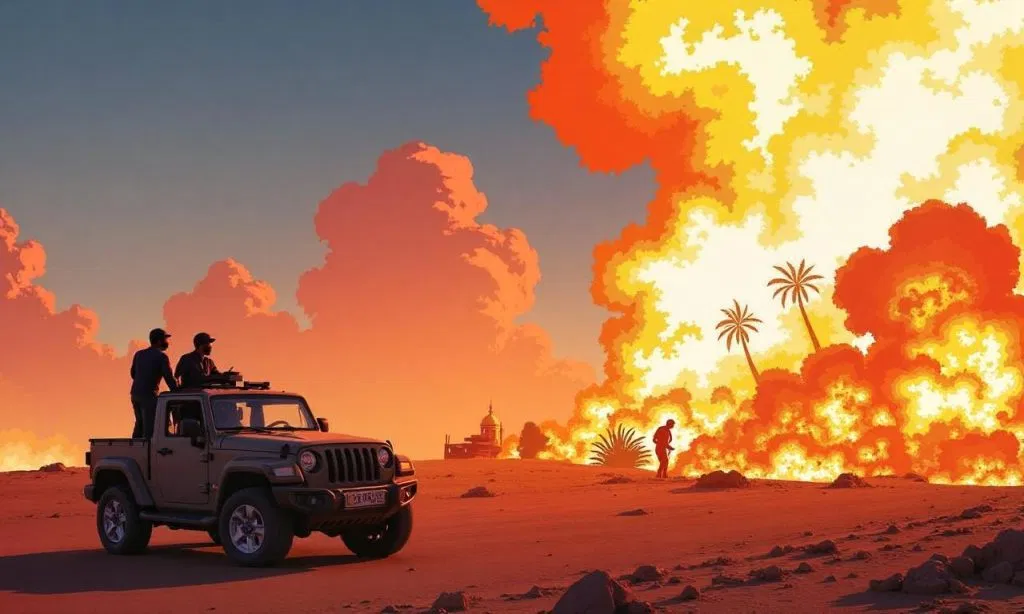
“A capital V military victory,” US Defence Secretary Pete Hegseth claimed, yet the war has not translated into lasting political gains for the US or Israel. Iran, though weakened, continues to launch missiles and drones, proving that tactical successes have not secured strategic dominance. The conflict, ignited by strikes on February 28, has already begun to reshape Middle Eastern geopolitics. As its consequences unfold, the transformation will deepen, with no immediate resolution in sight.
The millions of civilians caught in the crossfire of this conflict remain hopeful that the talks will mark the war’s end. However, the path to peace is fraught with uncertainty. The US’s rush to declare victory contrasts with the persistence of Iran’s leadership, which has managed to sustain itself despite the attacks. As the negotiations proceed, the question remains: will they lead to a durable ceasefire, or will they merely delay the inevitable return to war?
