
Israel’s closure of Al-Aqsa Mosque is an act of war
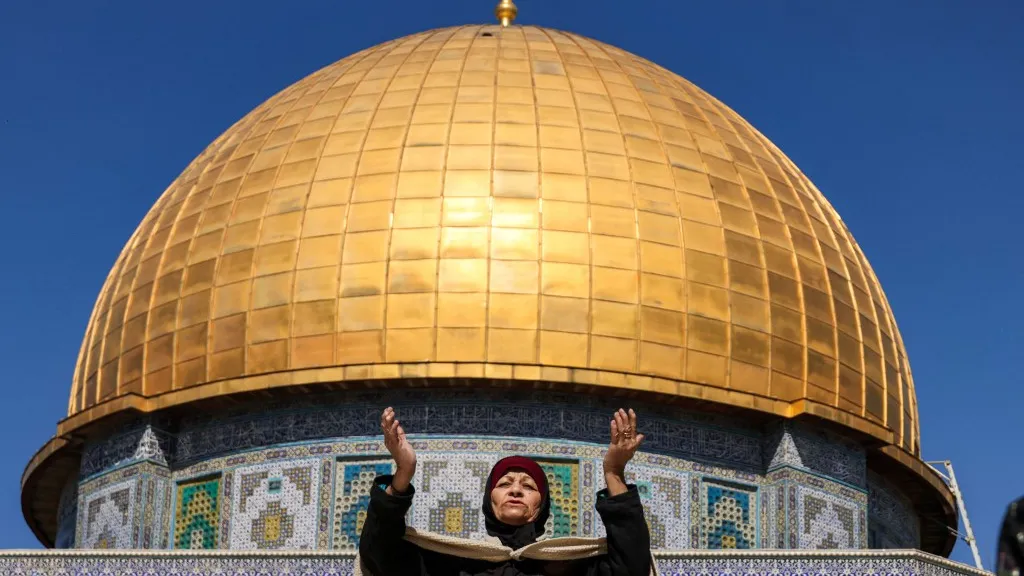
Israel’s Closure of Al-Aqsa Mosque is an Act of War
Less than a day after the US-Israeli attack on Iran commenced, Israeli forces shut down two significant religious sites: the Ibrahimi Mosque in Hebron and Al-Aqsa Mosque in occupied East Jerusalem. Worshipers were displaced, and the closures were justified as wartime “preventive measures” by the occupying authorities.
Shelter Deficit in the Occupied Territories
According to data from Israel’s state comptroller, half the population in the 1948 territories lacks shelter options to protect against air strikes. With no bomb shelters in Palestinian homes, the absence of public refuges leaves many vulnerable during conflicts.
Preventing access to mosques by confining people to their residences, markets, or workplaces does not ensure safety. In the context of the genocidal war in Gaza, Israel’s concern for Palestinian lives appears both cynical and deeply unsettling.
Religious Replacement as a Strategic Goal
The closures reflect a broader agenda of religious substitution, driven by Israel’s Zionist government and its right-wing allies. Religious Zionists, now the dominant ideology in Israeli society, refer to the Al-Aqsa complex as the Temple Mount. This term erases the site’s Islamic identity, much like the Ibrahimi Mosque is recast as the Cave of the Patriarchs.
Israeli emergency measures to close the mosques serve dual purposes. Primarily, they reinforce Israeli control over these holy sites, diminishing the role of Islamic administrators and dictating terms of access. In both cases, the waqf is rendered a passive observer of the occupation’s policies.
Secondly, these closures during Ramadan act as a trial run for future restrictions. By sealing the mosque off during the holy month, Israel tests the machinery of exclusion, paving the way for permanent control. The effectiveness of such measures during Ramadan signals their potential application at any time.
Historical Context of Control
Israel has systematically undermined the waqf’s authority over Al-Aqsa Mosque for years. In 2017, after a Palestinian attack killed five Israelis at the Lion’s Gate, the mosque was closed and metal detectors installed. Public resistance eventually led to the reversal of this decision.
Similarly, in 2020, Al-Aqsa was shut again amid the pandemic, despite its open layout allowing easy social distancing. It remained closed for two months, including during Ramadan, further solidifying the occupation’s grip.
Earlier this year, during the 12-day conflict with Iran, Israeli authorities closed the mosque once more, this time for the entire duration of the war. These repeated closures underscore a growing pattern: the claim of sovereignty over the site is becoming an unchallenged Israeli right.
Escalation During Ramadan
The current Ramadan has seen heightened aggression against the mosque. Israeli authorities reportedly restricted shifts for some guards and halted the delivery of essential supplies. At the start of the holy month, entry to Friday prayers was capped at 10,000 worshippers, with men over 55, women over 50, and children under 12 allowed in.
Rituals like Passover also face scrutiny, as rabbis and activists have urged animal sacrifices at Al-Aqsa to mark the holiday. Such actions aim to disrupt the status quo, where the site is reserved exclusively for Muslim prayer. The ongoing assault during Ramadan reveals a deliberate effort to normalize permanent control over the sacred space.
From a time of heightened religious sensitivity, Ramadan has transitioned into a period for testing elimination tactics. Measures implemented here open the door to more severe restrictions in the future.
