
Kash Patel and the Trump administration’s mockery of congressional hearings
Kash Patel and the Trump administration’s mockery of congressional hearings
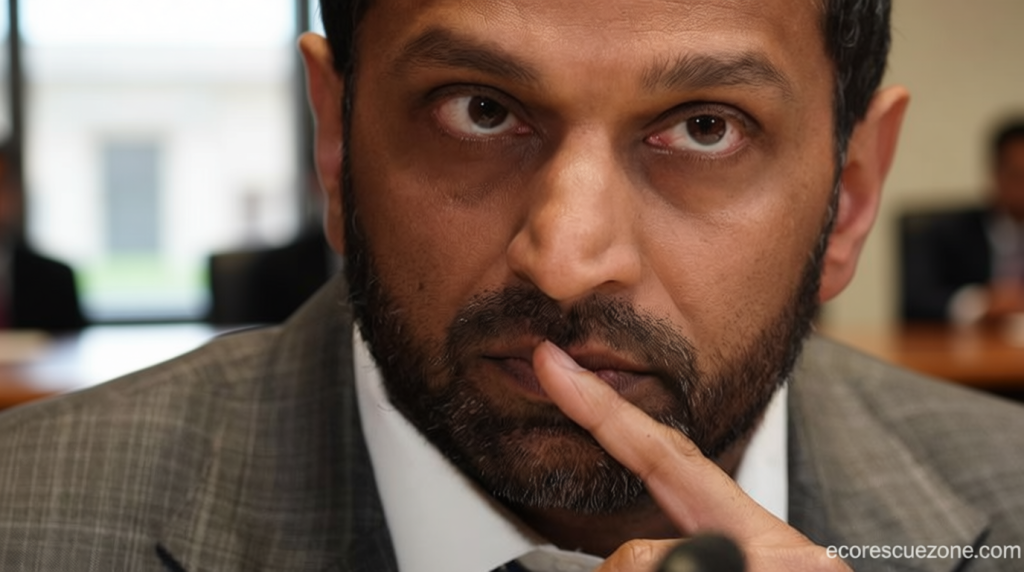
Kash Patel and the Trump administration – On Tuesday, the spotlight turned to FBI Director Kash Patel during a Senate Appropriations subcommittee hearing, where he faced intense scrutiny over his leadership of the agency. The exchange between Patel and Democratic Senator Chris Van Hollen of Maryland became a focal point of the administration’s perceived disdain for accountability. Van Hollen had previously criticized Patel for his alleged excessive drinking habits, a claim backed by a recent Atlantic article. Patel, however, turned the tables, accusing the senator of misconduct during a visit to El Salvador and referencing a $7,128 bill from the Lobby Bar in Washington, DC. This moment encapsulated the Trump administration’s strategy of deflecting criticism by attacking lawmakers, even when the scrutiny is directed at their own policies.
A Pattern of Deflection
From the outset, Trump administration officials have shown little regard for congressional oversight, often prioritizing political attacks over factual testimony. This trend was evident in the early days of the administration, where figures like former Attorney General Pam Bondi and Defense Secretary Pete Hegseth employed combative tactics during hearings. Bondi, for instance, popularized the concept of a “burn book” to highlight alleged flaws in opponents, while Hegseth’s testimony was marked by an aggressive tone that seemed more aimed at undermining credibility than addressing specific questions. These approaches laid the groundwork for a broader pattern of behavior that would later be exemplified by Patel’s remarks.
Patel’s hearing on Tuesday was a textbook case of this strategy. When pressed about his management of the FBI, he didn’t simply defend his actions but instead targeted Van Hollen. The senator had read an opening statement that accused Patel of excessive drinking and mismanagement, allegations that Patel sought to refute by shifting focus to Van Hollen’s past conduct. “The only person that was slinging margaritas in El Salvador on the taxpayer dollar with a convicted gangbanging rapist was you,” Patel said, referencing Van Hollen’s visit to the country to assess the conditions of Kilmar Abrego Garcia, an undocumented immigrant from Van Hollen’s home state who was deported by the Trump administration. The senator had also been linked to a $7,128 tab at the Lobby Bar, which Patel used to imply that Van Hollen had spent campaign funds on alcohol during the day.
“The only person that was slinging margaritas in El Salvador on the taxpayer dollar with a convicted gangbanging rapist was you,” Patel told Van Hollen. “The only person that ran up a $7,128 bar tab in Washington, DC, at the Lobby Bar was you. The only individual in this room that has been drinking on the taxpayer dime during the day is you.”
This 20-second exchange was laced with strategic ambiguity. Patel’s reference to the $7,128 bill was contested, as the charge was for general “catering” and not specifically for alcohol. Van Hollen clarified that the expense was for a staff holiday party, not personal consumption. Furthermore, the funds were campaign money, not taxpayer dollars, which Patel had implied. This discrepancy underscored the administration’s tendency to weaponize financial details to divert attention from their own actions.
Van Hollen’s visit to El Salvador had been controversial, with the Trump administration framing Abrego Garcia as a criminal. Patel accused the senator of approving the deportation of Garcia, who was described as a “convicted gangbanging rapist.” However, the evidence at the time was inconclusive. While Garcia had been indicted for alleged human trafficking, he had not yet been charged with rape. The administration had also sought to portray Democrats as overly protective of undocumented immigrants, even as they highlighted Garcia’s alleged gang ties. Yet, these claims were not included in the indictment, raising questions about their validity.
Political Weaponization and Ethical Concerns
Patel’s remarks during the hearing were not just a personal jab but also a reflection of the administration’s broader approach to accountability. By labeling Van Hollen as the one responsible for taxpayer misuse, Patel aimed to undermine the senator’s credibility while deflecting from his own alleged missteps. This tactic is not unique to Patel—Bondi had similarly cited unproven claims about Abrego Garcia during a press conference in June, even though the indictment did not include those specifics. Such instances suggest a consistent pattern of political weaponization, where facts are secondary to the narrative.
The FBI director’s testimony, taken under penalty of perjury, added weight to his accusations. However, the specificity of his statements about Van Hollen and Abrego Garcia left room for interpretation. By suggesting that Van Hollen had “drunk on the taxpayer dime,” Patel painted the senator as someone who had personally profited from the situation. This characterization could be seen as an attempt to impugn Van Hollen’s integrity, even as the senator denied the allegations. The episode highlighted a potential breach of Justice Department ethics, which mandate that officials avoid making false statements or prejudging someone’s guilt.
While the administration’s actions were often justified as necessary to counter Democratic criticism, Patel’s remarks crossed into a more aggressive territory. His ability to condense multiple accusations into a single, brief response demonstrated a calculated effort to dominate the narrative. The use of the word “convicted” to describe Abrego Garcia was particularly pointed, as it suggested a level of certainty that was not supported by the evidence. This language, combined with the reference to the Lobby Bar bill, painted a picture of Van Hollen as a habitual offender, even as the senator’s own account painted a different story.
Broader Implications for Accountability
The hearing raised broader concerns about how the Trump administration handled congressional oversight. By framing Van Hollen as the aggressor, Patel shifted the focus from the agency’s role in the deportation case to the senator’s personal habits. This strategy mirrored the administration’s approach to other issues, where they often attacked lawmakers rather than address policy specifics. For example, Bondi’s “burn book” had been used to accuse opponents of corruption, even when the evidence was scant. Hegseth’s combative testimony had similarly sought to discredit critics rather than provide clear answers.
Patel’s remarks also highlighted a key challenge in holding the administration accountable: the blurring of facts and political rhetoric. While Van Hollen had indeed visited El Salvador to evaluate Garcia’s situation, there was no indication that he had consumed alcohol during that trip. The senator had even stated, “Neither of us touched the drinks,” during the visit. This contradiction suggested that Patel’s accusations were not grounded in reality but were instead designed to cast doubt on Van Hollen’s character. The episode underscored how easily facts can be manipulated in political confrontations, especially when the stakes are high.
Despite the administration’s efforts to portray themselves as defenders of accountability, Patel’s testimony revealed a more complex dynamic. By targeting Van Hollen with personal attacks, Patel seemed to be reinforcing the idea that congressional oversight was a tool for partisan vendettas rather than a mechanism for transparency. This sentiment was echoed by other administration figures who had shared the exchange widely on social media, amplifying its impact and framing it as a victory for their party. However, the scrutiny of Patel’s statements also highlighted the need for rigorous examination of the facts, even when they are used to defend political positions.
In the end, Patel’s hearing was a microcosm of the Trump administration’s approach to congressional oversight. The ability to turn a question about leadership into a personal attack demonstrated a willingness to prioritize political messaging over factual accuracy. As the FBI director, Patel had a responsibility to uphold the agency’s integrity, yet his remarks suggested a readiness to cast doubt on others, even when the evidence was limited. The episode left lawmakers questioning whether the administration’s commitment to accountability was genuine or merely a facade, especially in the face of repeated attempts to reshape the narrative in their favor.
