
Retired cop jailed over Charlie Kirk meme settles unlawful incarceration lawsuit for over $800K
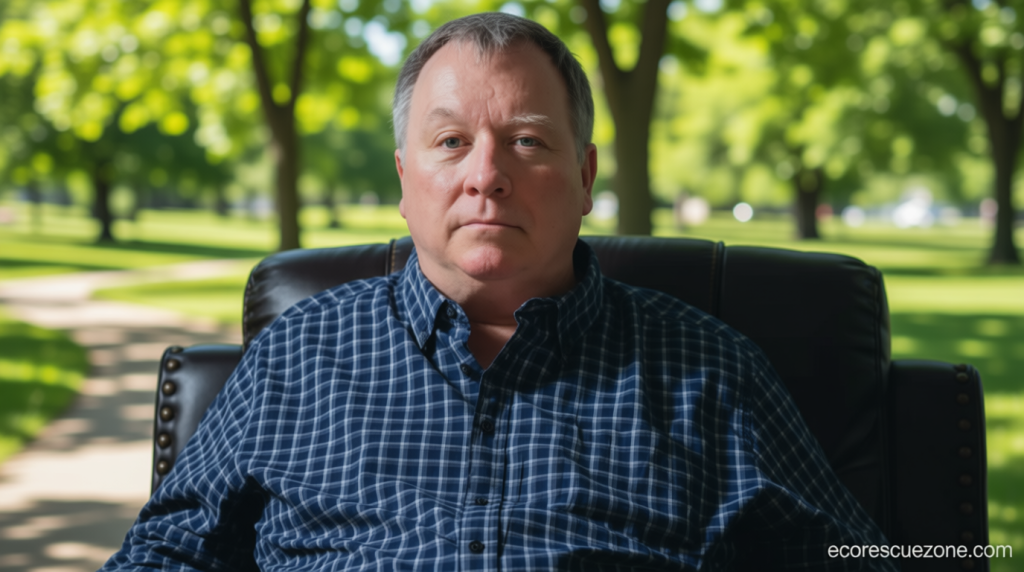
Retired Cop Jailed Over Charlie Kirk Meme Settlements More Than $800,000
Retired cop jailed over Charlie Kirk – A retired Tennessee law enforcement officer, Larry Bushart, who was jailed for over a month after being arrested over a Facebook post referencing a meme tied to the assassination of Charlie Kirk, has reached a settlement in his “unlawful incarceration” lawsuit for $835,000. The agreement, announced Wednesday, allows Bushart to drop his five-month-old case, which claimed his constitutional rights were violated during his detention in Perry County, Tennessee, last fall. “I am pleased my First Amendment rights have been vindicated,” Bushart stated in a recent statement, expressing relief over the resolution.
Legal Battle Over Free Speech and Bond Requirements
Bushart’s lawsuit, supported by lawyers from the Foundation for Individual Rights and Expression, was set to proceed to trial in late July before a federal jury in Memphis. The case centered on his arrest for allegedly threatening mass violence at a school after sharing a meme about a vigil for Kirk. The meme featured a photograph of Donald Trump alongside a quote from the former president following a 2024 school shooting in Des Moines, Iowa. “We have to get over it,” Trump said, which Bushart’s post used to imply a similar sentiment toward the Charlie Kirk shooting in Utah. The arrest occurred just 10 days after Kirk was fatally shot during an outdoor event at Utah Valley University on September 10.
The legal proceedings were sparked by Bushart’s Facebook post, which officials in Perry County interpreted as a threat to an area school with a similar name to the one involved in Kirk’s shooting. Four officers arrived at his home the following day, detaining him on charges of endangering public safety. Despite being unable to afford the $2 million bond, Bushart was held in custody for 37 days. In late October, the district attorney moved to dismiss the single charge against him, leading to his release. The settlement now covers his legal costs and provides compensation for the time spent in jail.
Bushart’s lawsuit alleged that Perry County, along with its sheriff, Nick Weems, and investigator Jason Morrow, violated his free speech rights and Fourth Amendment protections. The claim focused on the wrongful arrest and incarceration that followed his social media post, which he argued was a harmless political expression. The county’s insurer will bear the financial responsibility of the $835,000 settlement, though no admission of fault was made by the officials involved. “As Sheriff, there is no responsibility I take more seriously than protecting the children in our community,” Weems stated in a joint declaration released as part of the agreement.
The settlement highlights the balance between individual rights and public safety concerns. While officials emphasized their duty to safeguard schools, Bushart’s case underscores how social media can be weaponized in legal actions. His lawyers argued that the meme, though critical of the shooting, was not a direct threat but rather a commentary on the event. “The people’s freedom to participate in civil discourse is crucial to a healthy democracy,” they stated, framing the case as a broader issue of free speech suppression. The lawsuit also claimed that Bushart’s post-retirement job was jeopardized due to his incarceration, and his ability to engage in online political dialogue was curtailed by fear of future arrests.
With the settlement finalized, the case concludes without a trial, sparing Bushart the potential for further legal exposure. The resolution marks a significant moment for those who believe in the importance of free speech, especially in the context of political expression. While the county and its officials have not formally acknowledged any wrongdoing, the settlement provides a financial remedy for the alleged violations. This development also sets a precedent for how social media content can influence law enforcement decisions, particularly in cases involving high-profile events like the Charlie Kirk shooting. The case serves as a reminder of the complexities surrounding the interpretation of threats in the digital age.
