
Bodies of two Italian divers recovered from sea cave in Maldives
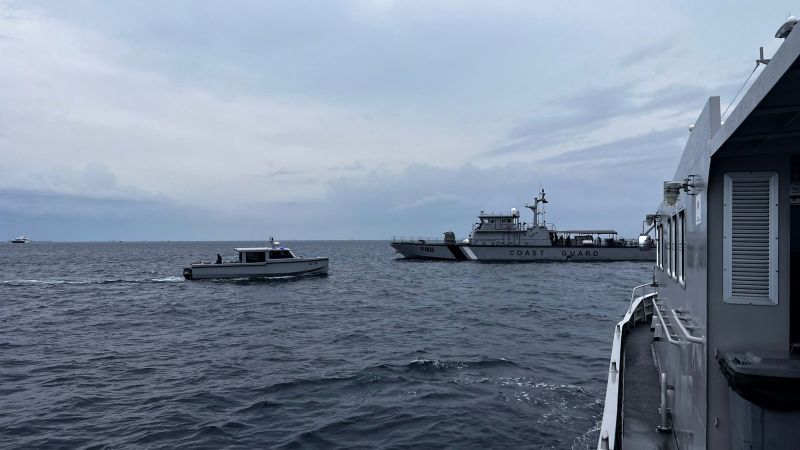
Bodies of two Italian divers recovered from sea cave in Maldives
Search for Italian Divers Intensifies After Second Fatality
Bodies of two Italian divers recovered – Two of the five Italian divers who perished in the Vaavu Atoll caves last week were retrieved by search teams on Tuesday, according to a statement from Maldivian officials. The discovery marks a critical step in the ongoing operation to recover the remaining three bodies, which are still being located in the labyrinthine underwater environment. The incident, which has drawn international attention, highlights the perilous nature of deep-sea exploration and the challenges faced by divers operating in such extreme conditions.
“The two bodies, one male and one female, were found in the third chamber of the cave,” said Mohamed Hussain Shareef, the Maldives government’s chief spokesperson. “They are now being transported to the mortuary in the capital, Malé, by police.” Shareef added that the recovery team had been working tirelessly to navigate the cave’s treacherous terrain, which has proven to be a formidable obstacle despite the use of advanced equipment and techniques.
The initial tragedy occurred when five Italian divers vanished during an expedition to the caves in the Indian Ocean. The incident, which took place last week, prompted a multinational effort involving both local and international agencies. However, the search was temporarily halted after a military diver, Sgt. Mohamed Mahudhee, succumbed to decompression sickness during a second mission into the cave. His death underscored the risks inherent in such deep-sea operations and added urgency to the search for the remaining victims.
International Collaboration and Decompression Challenges
Following the pause, the operation resumed on Monday with renewed determination. Divers, including three experienced Finnish specialists brought in by the Italian government, worked alongside Maldivian teams to locate the missing bodies. These Finnish divers, affiliated with the Divers Alert Network (DAN), a global scuba safety organization, were specifically chosen for their expertise in deep-water recovery missions. Their involvement was crucial in navigating the cave’s complex structure, which reaches depths of 70 meters (230 feet) and spans 200 meters in length.
The cave’s extreme depth has posed significant challenges for the search teams. At its deepest point, the underwater chamber is comparable to the height of a 20-story building, requiring divers to operate in conditions that test both physical and mental endurance. The legal limit for recreational diving in the Maldives is 30 meters (100 feet), making the 70-meter depth particularly hazardous. This discrepancy between recreational limits and the cave’s actual depth has raised questions about the safety protocols followed during the original expedition.
“Decompression sickness is a leading cause of fatalities in deep-sea diving,” Shareef explained. “The cave’s depth and the prolonged time spent underwater increase the risk of this condition, which occurs when divers ascend too quickly, causing gas bubbles to form in the bloodstream.” The official noted that the death of Sgt. Mahudhee during the second mission was a sobering reminder of the dangers involved, even for seasoned professionals.
The five Italian divers who died were part of a group exploring the caves for scientific research. Among them were Monica Montefalcone, an associate professor of ecology at the University of Genoa; her daughter, Giorgia Sommacal; Federico Gualtieri, a marine biologist; and Muriel Oddenino, a researcher. The loss of the diving instructor, Gianluca Benedetti, was discovered on Thursday afternoon at the mouth of the cave, providing a breakthrough in the search efforts. His body was found relatively quickly, but the remaining three divers continued to elude recovery, leaving their families in a state of anxious anticipation.
Ongoing Efforts and Future Plans
Authorities have outlined a phased approach to the remaining recovery operations, with two bodies scheduled for retrieval on Tuesday and two more on Wednesday. This method allows teams to focus on specific sections of the cave without overextending resources. The Italian government’s decision to bring in Finnish divers was a strategic move, leveraging their experience in similar rescue missions to enhance the chances of success.
The operation has also highlighted the importance of international collaboration in underwater rescues. The Maldives National Defense Force, working alongside the Italian and Finnish teams, emphasized the need for coordinated efforts and specialized training. “These divers are not only experts in their field but have also been involved in previous missions in challenging underwater environments,” said a representative from the Maldivian state media. This teamwork has been vital in overcoming the cave’s complexities, including its narrow passages and unpredictable currents.
Details of the Victims and the Dive Incident
Among the five victims, Monica Montefalcone and her daughter Giorgia Sommacal were particularly poignant figures in the incident. As a mother and daughter duo, their presence in the caves added a personal dimension to the tragedy. Federico Gualtieri and Muriel Oddenino, both researchers, were likely involved in studying the unique marine ecosystems of the region. Their contributions to science and their passion for exploration have been widely recognized in the wake of the incident.
On the day of the accident, the Italian scuba divers were reported missing early Thursday afternoon, raising alarms among their families and colleagues. The discovery of Gianluca Benedetti’s body later that day provided some closure, but the search for the remaining victims intensified. The sixth diver, who had opted not to enter the water, remains a key part of the investigation, with authorities exploring whether his decision impacted the group’s safety.
The incident has sparked discussions about the safety measures in place for deep-sea divers. With the cave’s depth exceeding the legal recreational limit, some experts have questioned whether the original team was equipped for such conditions. “The cave’s depth and the time required to complete the dive make it a high-risk environment,” Shareef remarked. “This is why decompression sickness has been identified as a critical factor in the tragedy.”
As the search continues, the Maldivian government has expressed its commitment to ensuring the safe retrieval of all victims. The operation’s progress has been closely monitored by both local and international media, with CNN’s Laura Sharman contributing to the coverage of the unfolding story. The emotional toll on the families of the victims has been evident, with many expressing gratitude for the recovery of their loved ones and hope for the remaining two.
The cave’s location in the Maldives, a nation renowned for its vibrant marine life, adds a layer of irony to the tragedy. While the islands are a popular destination for divers, this incident serves as a stark reminder of the dangers that can arise in even the most beautiful underwater settings. The recovery of the two bodies has brought a sense of relief, but the search for the
