
Scientists identify ‘ghost’ of a long-extinct relative in humans today
Scientists identify ‘ghost’ of a long-extinct relative in humans today
Ancient Proteins Bridge the Gap Between Fossils and Modern Humans
Scientists identify ghost of a long – In a groundbreaking discovery, researchers have uncovered molecular evidence linking Homo erectus, a prehistoric human species, to contemporary humans. This ancient hominin was the first to migrate out of Africa, spreading across continents and surviving for nearly two million years. Despite its historical significance, Homo erectus remains shrouded in mystery due to the limited genetic material preserved in its fossils. However, a new study has provided the first direct molecular connection between this extinct species and later human lineages, including Homo sapiens, through the analysis of proteins found in teeth.
Overcoming the Challenges of Ancient DNA
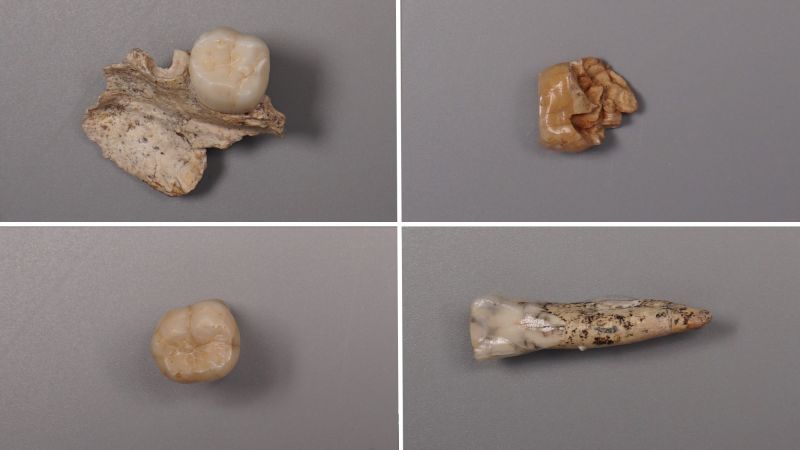
While DNA is often the gold standard for genetic analysis, its preservation in fossils is notoriously difficult, especially for specimens as old as Homo erectus. This has left gaps in understanding the evolutionary relationships between ancient and modern humans. A team led by Chinese geneticist Fu Qiaomei has now addressed this challenge by extracting ancient proteins from six teeth discovered in China. These proteins, composed of amino acid sequences, proved more resilient than DNA, offering a reliable alternative for tracing genetic connections.
The teeth, dating back approximately 400,000 years, were unearthed at three distinct locations in central and northern China: Zhoukoudian, Hexian, and another site. By using a novel method—acid etching instead of traditional drilling—the researchers preserved the fossils’ structural integrity while obtaining samples of enamel proteins. This technique allowed them to avoid damaging the physical remains, ensuring the fossils could still be studied for other traits.
Despite the success in isolating proteins, DNA extraction from these fossils proved elusive. Fu noted the difficulty of recovering DNA from such ancient remains but emphasized her determination to continue. The team focused on proteins, which, though less detailed than DNA, provided enough information to identify evolutionary patterns and interbreeding events.
Shared Ancestry and Interbreeding Evidence
The analysis of the proteins revealed two specific amino acid variations. One variant was unique to Homo erectus, while the second had previously been linked to Denisovans, an enigmatic ancient human species. This discovery suggests a complex web of genetic exchanges, with Homo erectus potentially interbreeding with Denisovans. Furthermore, the same Denisovan variant was found in some modern human populations, indicating that the Denisovan lineage may have merged with Homo sapiens at a later stage.
These findings support the theory that ancient human groups were not isolated but interacted, sharing genetic material. For instance, modern humans in Southeast Asia carry the highest levels of Denisovan ancestry, implying that these populations once shared a common habitat. The presence of Denisovan proteins in Homo erectus fossils strengthens the idea that the two groups had overlapping histories, with interbreeding occurring in regions like Asia.
Revealing the Sex of Fossils
By examining the proteins, the researchers also determined the sex of the individuals represented by the fossils. They identified a sex-specific marker in the enamel gene associated with the Y chromosome, concluding that five of the specimens were male and one female. This level of detail adds a new dimension to the study of ancient human populations, offering insights into their demographics and social structures.
The discovery marks a significant shift in how scientists approach the study of extinct species. While earlier research, such as a 2020 study on a Homo erectus fossil from Georgia, provided preliminary protein data, it did not clarify the species’ place in the broader hominin family tree. The new study, however, uses advanced methods to not only identify evolutionary ties but also to suggest a dynamic, interconnected model of human ancestry.
Implications for Human Evolution
According to the research, Homo erectus may have contributed genetic material to Denisovans, which in turn influenced some modern humans. This challenges the traditional view of human evolution as a linear process and instead proposes a network of overlapping populations. Eduard Pop, a research scientist at the Naturalis Biodiversity Center in Leiden, Netherlands, highlighted the importance of this work in validating long-standing theories about the existence of a “ghost lineage” connecting Homo erectus to modern humans.
“This study strengthens that link,” said Pop, who is collaborating with the team to explore whether protein information is preserved in Homo erectus fossils found in Indonesia. “It suggests that East Asian populations related to Homo erectus may have contributed genetically to Denisovans, and through them indirectly to some modern humans.”
Pop’s comments reflect a growing consensus that human evolution in Asia was a process of continuous interaction rather than distinct, isolated branches. This model aligns with evidence of Neanderthal ancestry in modern humans, which also stems from past interbreeding events. The fact that Denisovan and Neanderthal DNA persist in today’s populations underscores the complexity of ancient human relationships.
The research also raises intriguing questions about the origins of Homo erectus. While its fossils have been found in Africa, Asia, and Europe, the genetic clues point to a shared ancestry with Denisovans. This implies that Homo erectus may have had a broader geographic distribution and more extensive contact with other species than previously thought. The findings could reshape how scientists interpret the fossil record, particularly for specimens where DNA has not survived.
For Ryan McRae, a paleoanthropologist at the Smithsonian National Museum of Natural History, the study represents a pivotal moment in human evolutionary research. “This is a major step forward in tying together the broken branches of our human evolutionary tree,” he stated. “Homo erectus has long been a bit of an enigma, but now we have tangible molecular evidence to connect it to modern humans.”
The work has far-reaching implications for understanding the genetic diversity of ancient populations. By demonstrating that proteins can yield critical insights, the study opens new avenues for research. It also highlights the importance of non-DNA-based methods in uncovering the past, especially for fossils where DNA degradation has made traditional analysis impossible.
A New Era in Evolutionary Studies
As the first molecular evidence linking Homo erectus to modern humans, this research addresses a long-standing gap in the field. Scientists have long speculated about the role of Homo erectus in human evolution, but the absence of DNA has left many questions unanswered. The discovery of these proteins offers a fresh perspective, suggesting that the species’ legacy lives on in the genetic makeup of contemporary humans.
This breakthrough not only deepens our understanding of Homo erectus but also reinforces the idea that human evolution was a collaborative process. The presence of shared genetic markers between extinct and modern species indicates that interbreeding was common, with each group leaving an imprint on the others. This challenges the notion of a strictly linear progression and instead presents a more interconnected narrative.
While the study focuses on China’s fossils, its findings could apply to other regions where Homo erectus remains have been found. Fu’s team is now examining whether similar protein evidence exists in Indonesian fossils, which could further clarify the species’ migration patterns and genetic contributions. The research underscores the value of interdisciplinary approaches, combining paleontology, genetics, and molecular biology to piece together the story of human origins.
As scientists continue to analyze these proteins, they hope to uncover more about the interactions between ancient human species. The identification of a “ghost” lineage, once a theoretical concept, is now supported by concrete data. This molecular bridge between the past and present is a testament to the resilience of scientific inquiry and the power of new techniques in unraveling human history.
