
Iran names slain supreme leader’s son as successor, in a defiant message to Trump
Iran names slain supreme leader’s son as successor, in a defiant message to Trump
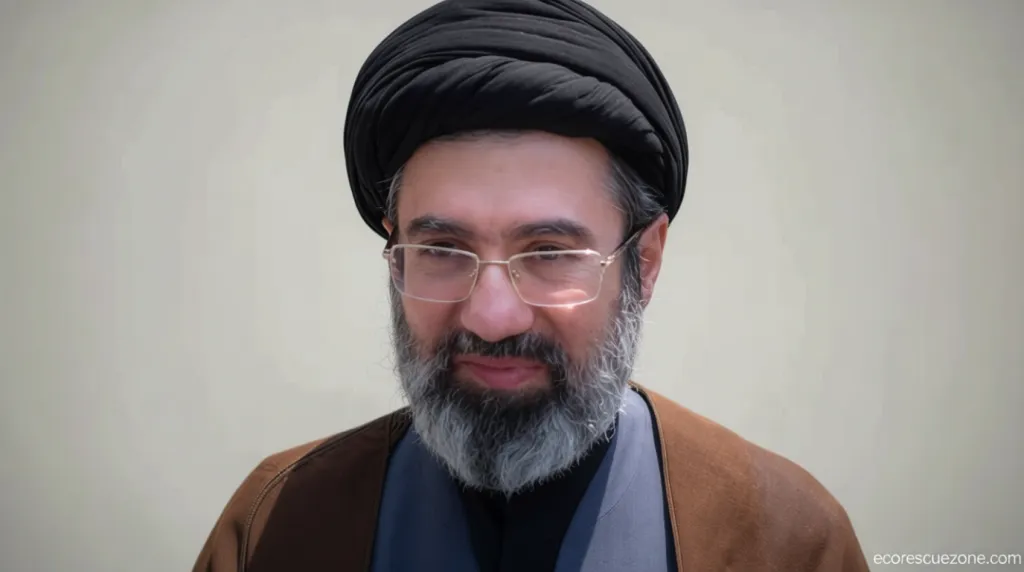
In 1979, the Iranian revolution’s fervent masses overthrew the monarchy, seemingly ending the tradition of passing power from father to son. Yet, that legacy has resurfaced. Mojtaba Khamenei, the second son of former Supreme Leader Ali Khamenei, has been appointed to the role his father held for nearly four decades, following his death in a US-Israeli airstrike. This move, approved by the 88-member Assembly of Experts, has turned the Islamic Republic into a dynastic structure, despite public hopes for a different path.
A Defiant Continuation of Tradition
The selection of Mojtaba, whom President Donald Trump had labeled “unacceptable,” appears intentional. It sends a clear signal that Iran’s leadership will not yield to American pressure. State media quickly began crafting a narrative, releasing a four-minute documentary to frame Mojtaba as a natural successor to the “martyred leader.” The film highlights his modest beginnings, seminary education, and his frontline service during the Iran-Iraq war as a teenager, emphasizing his bravery and ideological commitment.
Political Maneuvering and Sanctions
Though Mojtaba never reached the rank of Mujtahid, a key religious title for supreme leadership, his political acumen has long been evident. He was deeply involved in his father’s regime, shaping policies from behind the scenes. In 2005, he played a critical role in endorsing Mahmoud Ahmadinejad, the hardline presidential candidate, against rival Akbar Hashemi Rafsanjani. His influence was further demonstrated in 2009, when protesters in Tehran chanted “Mojtaba bemiri Rahbari ro Nabini,” translating to “Mojtaba may you die so you don’t assume the leadership role.”
“Mojtaba may you die so you don’t assume the leadership role.”
By 2019, the U.S. Treasury had sanctioned Mojtaba for his close ties to the Revolutionary Guards, accusing him of advancing his father’s “destabilizing regional ambitions and oppressive domestic objectives.” This came as the country faced a communications blackout, with state media using AI-generated footage to fill gaps in Mojtaba’s public profile. His ascension underscores a broader strategy to entrench the Revolutionary Guards’ power and solidify the regime’s grip on authority.
The Aftermath of the Leadership Transition
On the ninth day of the US-Israeli war with Iran, the attack that killed Ali Khamenei marked a pivotal moment. Mojtaba’s swift appointment followed, with a cascade of pledges of loyalty from the president, parliament, and the Revolutionary Guard Corps. These gestures were designed to reinforce the system’s stability, even as the nation grappled with uncertainty. For Iran’s core supporters, the transition was a reaffirmation of continuity, positioning Mojtaba as a leader fluent in global affairs and security challenges.
