
Iran threatens Gulf energy facilities after Israeli attack on its largest gasfield
Iran threatens Gulf energy facilities after Israeli attack on its largest gasfield
Israeli strikes on South Pars gas field prompt regional retaliation
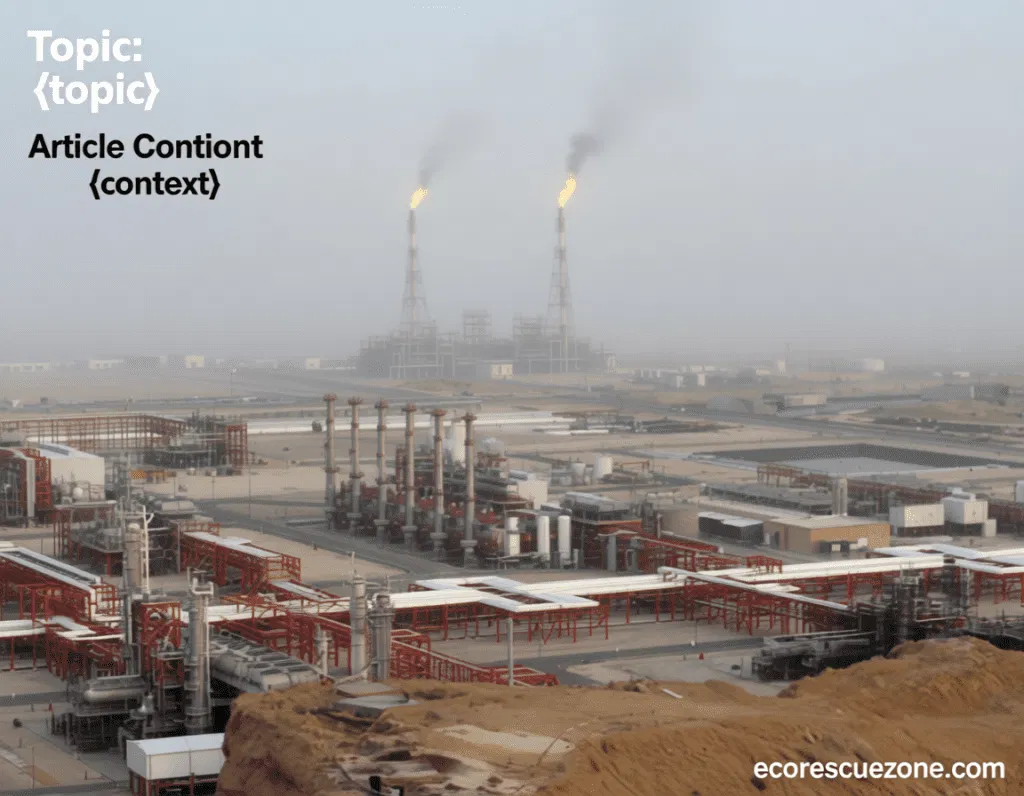
Iran has vowed to strike key energy sites throughout the Gulf region in response to Israeli air attacks on its most significant gas reserves. This marks the first instance of targeted assaults on Iran’s fossil fuel production since the conflict began. State media reported that Iran’s Revolutionary Guards are preparing countermeasures against Saudi Arabia, the UAE, and Qatar’s energy installations within the next few hours, following missile strikes on the shared South Pars gasfield with Qatar.
US-Israeli coordination fuels escalation
Israeli media claimed the strikes on Iran’s South Pars facilities were conducted with U.S. approval, signaling a major step in the ongoing military campaign. The dual attack has shifted the conflict’s focus toward Iran’s energy infrastructure, despite prior efforts by the U.S. and Israel to protect its oil and gas sectors. These measures had previously helped stabilize global oil prices amid rising concerns.
Global energy markets react to escalating tensions
The incident has already triggered a surge in oil and gas prices. The international oil benchmark reached $108.60 per barrel, while Europe’s gas index soared over 7.5% to €55.50 per megawatt hour. Iran’s state media listed Saudi Arabia’s Samref refinery and Jubail complex, the UAE’s al-Hosn gasfield, Qatar’s Mesaieed complex and holding company, and the Ras Laffan refinery as potential targets.
“These centers have become direct and legitimate targets and will be targeted in the coming hours. Therefore, all citizens, residents, and employees are requested to immediately leave these areas and move to a safe distance without any delay,”
the warning stated.
Regional attacks and production constraints
Iran’s recent actions have expanded beyond its own territory, with assaults on the UAE’s Shah natural gasfield, Iraq’s Majnoon oilfield, and Fujairah, a major port and storage hub. These strikes, alongside the blockade of the strait of Hormuz, have reduced daily oil exports in the region by 60% compared to prewar levels. Gulf neighbors have been forced to limit production as pipelines and storage capacity reach their limits.
Leaders condemn escalation as economic war
Eskandar Pasalar, the governor of Asaluyeh in southern Iran, called the U.S.-Israel alliance’s actions “political suicide.” He argued that the conflict has transitioned into a “full-scale economic war.” A Qatari government spokesperson, Majid al-Ansari, emphasized that targeting energy infrastructure threatens global energy security and regional stability. Oil prices briefly surpassed $116 per barrel earlier in the week, the highest since May 2022, as traders anticipated further supply disruptions.
