Hegseth urges Asian leaders to boost military spending against China

Hegseth Urges Asian Leaders to Boost Military Spending Against China
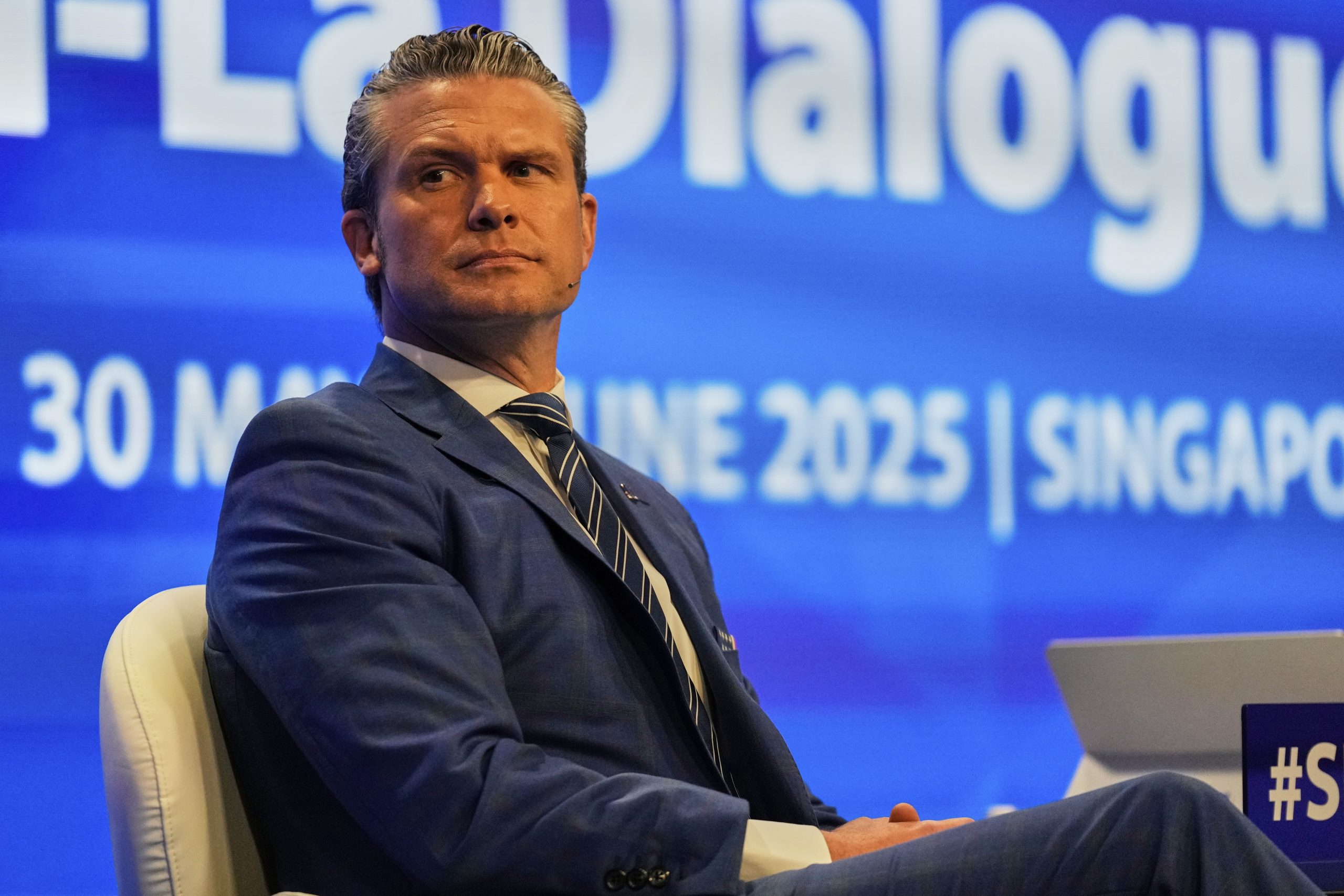
Hegseth urges Asian leaders to boost – SINGAPORE — At the Shangri-La Dialogue, a pivotal annual defense summit held in Singapore, U.S. Defense Secretary Pete Hegseth delivered a speech emphasizing the need for Asian allies to enhance their defense capabilities in response to China’s growing military presence. While he framed the discussion around countering Beijing’s “historic military buildup,” Hegseth notably omitted any explicit reference to Taiwan, a self-governing island that China claims as its own. The event, which brings together regional leaders, military officials, and diplomats, served as a platform for Hegseth to highlight U.S. strategic priorities in the Indo-Pacific.
Context of Recent U.S.-China Summit
Hegseth’s participation in the forum followed President Donald Trump’s summit with Chinese leader Xi Jinping in Beijing, a meeting both leaders described as a success. The U.S. president had previously signaled a shift in his approach to China, framing the relationship as more cooperative than adversarial. However, Hegseth’s remarks at the Shangri-La Dialogue reflected a nuanced stance, acknowledging improvements in U.S.-China ties while underscoring persistent challenges.
“U.S.-China relations are better than they’ve been in many years,” Hegseth asserted, addressing a gathering of defense professionals. Yet, he emphasized that concerns over China’s military actions remain justified. “There is rightful alarm about China’s military activities in the region and beyond,” he added, hinting at the broader implications of Beijing’s expanding influence. This balance between diplomacy and vigilance defined his remarks, which were met with mixed reactions from attendees.
Strategic Tone and Regional Dynamics
In a keynote address, Hegseth warned that a Pacific region dominated by a single hegemon could destabilize the existing power equilibrium. “A Pacific dominated by any hegemon would unravel the regional balance of power,” he said, stressing the importance of collective defense. His speech, however, was perceived as less confrontational than his previous appearance at the same forum in 2025. Zhou Bo, a retired Chinese air force colonel and analyst at Tsinghua University, noted that Hegseth’s approach was “more moderate” compared to his earlier critique of China’s ambitions.
“China seeks to be a hegemonic power in Asia,” Hegseth had stated in 2025, warning of its desire to dominate key areas of the region. This year, he shifted focus to the broader strategic competition, framing China as a critical player rather than an outright threat. “The pathway to avoiding conflict between these two countries remains entirely unclear,” remarked Ankit Panda, a senior fellow at the Carnegie Endowment for International Peace, who attended the summit. “Especially when so much of the secretary’s speech leans into themes like lethality and dominance.”
Despite his calls for increased military spending, Hegseth avoided directly addressing Taiwan, a subject of heightened interest in the region. When asked about the island during the event, he downplayed concerns, stating that the U.S. had sufficient stockpiles of weapons to support its commitments. “Future arms sales to Taiwan depend solely on President Trump,” he said, adding that “there has been no change in our status” toward the island. This response left some attendees seeking further clarity, as regional tensions over Taiwan have remained a focal point in U.S.-China relations.
Regional Concerns and Unanswered Questions
Smaller Southeast Asian nations, often caught in the crosshairs of U.S. and Chinese strategic interests, expressed cautious optimism. While they welcomed the call to strengthen collective security, many remained wary of the U.S. stance on Taiwan following Trump’s recent diplomatic moves. During the Beijing summit, the president had remarked that arms sales to Taiwan served as a “very good negotiating chip” with China, a statement that raised questions about the island’s security.
“The secretary’s speech was light on substance,” Panda noted, highlighting the lack of concrete proposals to address the region’s security challenges. He pointed out that Hegseth’s message did not provide a clear roadmap for achieving “a decent peace with China.” This ambiguity has sparked debates about the U.S. strategy in the region, with analysts questioning whether the administration’s approach balances deterrence with diplomacy.
Meanwhile, the absence of China’s defense minister from the summit for the second consecutive year underscored the country’s strategic approach to regional engagement. Instead, China sent a delegation of military experts and scholars, signaling a desire to maintain dialogue without overtly confronting the U.S. This move has been interpreted as a calculated effort to project soft power while avoiding direct confrontations.
“The U.S. is ready to resume strikes on Iran if no deal is reached,” Hegseth reiterated, linking his defense priorities to the broader Middle East conflict. This statement echoed President Trump’s earlier comments on the issue, which had sparked controversy among allies. The U.S. had recently paused arms sales to Taiwan due to the war in Iran, a decision that some regional leaders viewed as a sign of shifting priorities.
While Hegseth framed the U.S. as a key player in maintaining stability, he also acknowledged China’s role in shaping the regional balance. “The United States is not the only force in the Pacific,” he said, a subtle nod to Beijing’s growing influence. This perspective contrasts with his 2025 speech, in which he had more openly challenged China’s aspirations for dominance. The evolution in Hegseth’s messaging reflects the administration’s ongoing efforts to navigate the complex interplay between competition and cooperation with China.
Implications for the Indo-Pacific
Regional leaders, particularly those from Southeast Asia, feel increasingly squeezed between two superpowers. Vietnam’s President To Lam, in a separate address at the forum, warned of the risks posed by unchecked competition. “One of the biggest risks is unchecked competition where might makes right,” he said, emphasizing the need for cooperation to prevent conflict. His comments align with concerns that the U.S. and China might inadvertently push smaller nations into alignment with one side or the other.
Hegseth’s speech, while ambitious in scope, left some analysts questioning the U.S. strategy. “The secretary did not offer a clear vision on how the U.S. expects to arrive at a decent peace with China,” Panda observed, underscoring the lack of actionable steps in his remarks. This has raised doubts about whether the administration’s emphasis on military readiness will translate into a stable long-term relationship with China.
Despite the focus on military spending, Hegseth also highlighted the importance of economic and diplomatic ties with Asian allies. “Our shared interests in security and prosperity are stronger than ever,” he said, a sentiment that resonated with some attendees. However, the challenge remains in reconciling these shared goals with the persistent competition over strategic influence.
As the Shangri-La Dialogue concluded, the debate over U.S.-China relations continued. While Hegseth’s speech emphasized unity and preparedness, the absence of a firm commitment to Taiwan and the muted tone on military escalation suggested a more flexible approach. This shift may signal a new phase in the administration’s strategy, one that prioritizes strategic partnerships while maintaining a firm stance on regional security. For now, the path forward remains uncertain, with the balance of power in the Pacific hanging in the air.