Democrat Xavier Becerra wins the top spot in November’s race for California governor

Democrat Xavier Becerra Secures Lead in California Governor Race
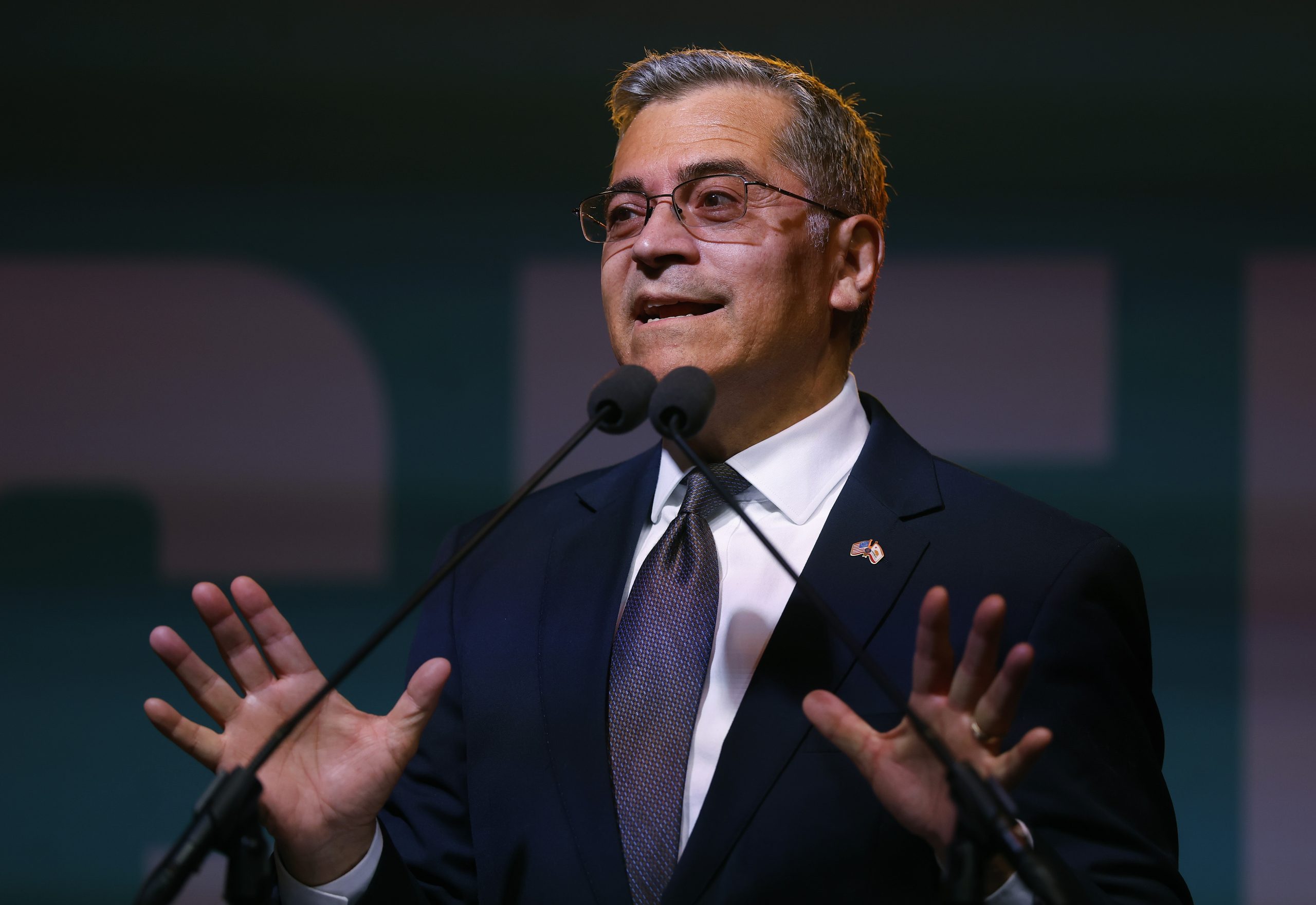
Democrat Xavier Becerra wins the top spot – San Francisco — With the final tally of ballots still pending, Democratic candidate Xavier Becerra has emerged as the frontrunner for California’s November gubernatorial election, according to The Associated Press. The state’s unique primary system, which allows all candidates to appear on a single ballot open to every registered voter, has created a dynamic political landscape. As the race intensifies, the outcome of the June primary has set the stage for a high-stakes showdown in November, where the nation’s most populous state will choose its next leader.
The California Primary System
California’s open primary format, a hallmark of its electoral process, ensures that voters can support candidates from any party, regardless of their own affiliations. This system, which has been in place for decades, guarantees that the top two vote-getters advance to the general election, regardless of party alignment. The Associated Press’s race call confirms Becerra’s position in the lead, but the second-place finisher remains uncertain as thousands of ballots continue to be counted.
Approximately 3.5 million uncounted ballots are still pending, a significant number that could shift the momentum. The state’s extended mail-in ballot period, allowing votes to be postmarked by Election Day but counted up to seven days afterward, adds complexity to the final results. This flexibility has been a point of contention in previous elections, with some arguing it dilutes the urgency of voting, while others see it as a way to ensure broader participation.
Historical Context and Political Challenges
California has not seen a wide-open primary like this since the late 1990s, when the state’s political landscape was similarly fragmented. The current race has drawn a diverse array of candidates, each vying to secure the top two spots for the November general election. The stakes are high, as the next governor will face an array of challenges, including a large budget deficit, rising costs of living, persistent homelessness, and the threat of wildfires.
Incumbent Governor Gavin Newsom, a Democrat, is term-limited and is widely expected to run for president in 2028. His departure from the race has left a void, with Democrats initially worried about a potential Republican victory. However, Becerra’s emergence as the leading candidate has alleviated some of those concerns. As the state prepares for its November vote, the political calculus has shifted dramatically, with Democrats now optimistic about their prospects.
Becerra’s Political Comeback
Xavier Becerra, the former U.S. Secretary of Health and Human Services under President Joe Biden, has orchestrated one of the most remarkable political comebacks in recent memory. Just months ago, polls showed him trailing in the polls, with his campaign struggling to gain traction in a crowded field. Yet, his recent surge has positioned him as a strong contender for the November general election.
Before his campaign for governor, Becerra served as California’s attorney general and a member of Congress, bringing a wealth of experience to the race. His ability to rebuild his campaign, despite initial skepticism, has been a testament to his resilience. The Associated Press’s race call reflects the culmination of his strategic efforts, as he now stands on the precipice of securing the Democratic nomination and moving forward to November.
“The people of the great state of California, in the greatest nation on earth, have spoken — loudly and proudly,” Becerra stated in a written statement. “We will not be bought. We will not be bullied. And we are never backing down. November, here we come.” These words underscore his determination to lead the state in the upcoming election, a race that has seen unexpected turns and dramatic shifts.
The Second-Place Battle
While Becerra has taken the top spot, the second-place finisher remains a closely contested battle between Republican Steve Hilton and Democratic activist Tom Steyer. Hilton, a businessman endorsed by former President Donald Trump, has maintained a slight edge, but Steyer’s campaign has been gaining momentum. The billionaire’s massive spending and political influence have made him a formidable opponent, even within his own party.
Hilton, a former Fox News commentator and political adviser to British Prime Minister David Cameron, has positioned himself as a reformist candidate. His campaign emphasizes change after 16 years of Democratic governance, a message that resonates with some voters. Steyer, on the other hand, has spent over $213 million of his own funds to bolster his candidacy, making this the most expensive gubernatorial race in California’s history. The rivalry between these two candidates has the potential to shape the November election significantly.
Despite the Republicans’ hopes, the Democratic stronghold in California remains a challenge. No GOP candidate has won a statewide election in the state in over two decades, a trend that could persist if the current political dynamics continue. Becerra’s path to victory is clear, but the race is far from over, with the final count of ballots yet to be finalized.
Unexpected Shifts in the Race
The path to the November election has been anything but predictable. Former U.S. Representative Eric Swalwell’s campaign for governor collapsed in April amid allegations of sexual assault and harassment, forcing him to resign from Congress shortly after. While he denied the accusations, his exit left a void that became a critical turning point for Becerra’s campaign.
Other high-profile Democrats, including former Vice President Kamala Harris, U.S. Senator Alex Padilla, and California Attorney General Rob Bonta, stayed out of the race from the beginning, a decision that initially raised concerns about a potential split in the vote. However, their absence allowed Becerra to consolidate support, making his victory in the June primary a surprise to many.
Political groups operating independently of Becerra’s campaign have played a key role in his success. These organizations, which have mobilized voters and amplified his message, have been instrumental in securing his position as the leading candidate. As the race progresses, the political landscape continues to evolve, with new developments likely to shape the final outcome.
The California governor race has become a microcosm of the broader political shifts occurring across the nation. With the November election fast approaching, the focus remains on the top two candidates, whose performance in the next phase will determine the future of the state. For now, Becerra stands poised to take the helm, while the competition for the second spot remains a nail-biting contest that could redefine the balance of power in the Golden State.