Daftar Isi
Baltimore Transforms 911 Beyond Emergency Response
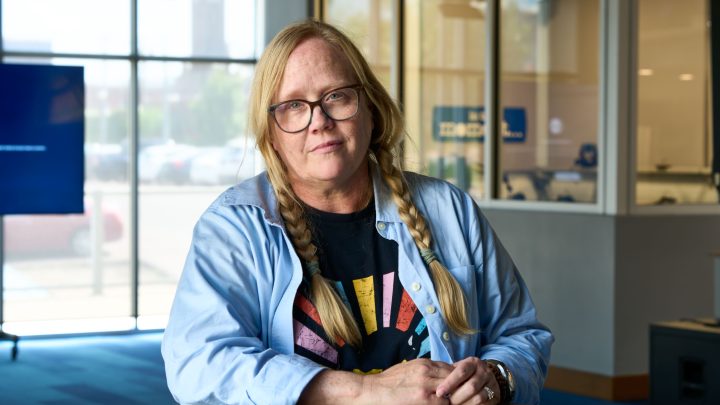
Ecorescuezone.com – When mental health clinician Michala Williams encountered a distressed woman in a McDonald’s parking lot during March, she discovered a story that illustrates Baltimore’s evolving approach to community crisis management. The 38-year-old woman sat in her vehicle, weeping uncontrollably, and shared that she occasionally contemplated self-harm. Williams, who was part of Baltimore’s mobile crisis team, recognized this as an opportunity to provide comprehensive support rather than a traditional police intervention.
The woman revealed she was managing multiple challenges simultaneously. She cared for children spanning ages two through twenty-two, was navigating personal health complications, and had recently learned her fiancé was incarcerated. The cumulative weight of these circumstances had become so overwhelming that she struggled to maintain regular eating patterns. Seeking assistance, she had attempted to drive to a hospital the previous month, but her journey was interrupted when police stopped her for having an expired vehicle registration.
“I don’t care if I get pulled over,” she explained to Williams. “But I was saying, ‘I don’t know what to do. I just want to go to the hospital.'”
Despite her clear intentions, the responding officer arrested her for erratic behavior, resulting in a jail cell rather than medical care. The woman described sitting in a cold confinement space where she couldn’t even access basic bathroom facilities. This experience ultimately motivated her to call 911 on the day she met Williams, and this time the dispatcher recognized that a mobile crisis team would be more appropriate than a police response.
These mobile crisis teams, coordinated by Behavioral Health System Baltimore—a nonprofit organization functioning as the city’s mental health department—have long diverted certain calls away from law enforcement toward mental health professionals. However, their traditional scope remained limited to acute mental health emergencies. Baltimore is now leveraging approximately $400 million received through opioid-related legal settlements to develop a more comprehensive service capable of operating continuously and addressing diverse crisis situations.
Understanding the Scope of Non-Emergency Calls
Tahir Duckett, a community safety expert at Georgetown Law, noted that Baltimore recorded 1.68 million 911 calls throughout 2024. A significant portion of these calls did not necessitate conventional emergency services such as police officers, firefighters, or emergency medical technicians. Instead, these calls involved situations like a homeless individual sleeping in a retail establishment, someone appearing disoriented in a public park, or a person shouting at pedestrians on the street.
“Such calls don’t require a badge, a gun, and handcuffs to resolve,” Duckett observed.
Unfortunately, Duckett explained that individuals experiencing these situations frequently end up incarcerated rather than receiving appropriate assistance. Research from Durham, North Carolina demonstrated that when non-law enforcement teams handled 911 calls, arrest rates decreased substantially—particularly among Black callers, men, and individuals between twenty-five and thirty-nine years of age. Police interventions can sometimes generate additional trauma or produce outcomes inferior to what community-based services might achieve.
Baltimore’s Strategic Investment in Community Health
The philosophy underlying Baltimore’s mobile crisis teams and expanded service model centers on identifying what individuals in crisis actually need and connecting them to relevant resources rather than pursuing arrests. This approach aligns with broader trends in the city. Between 2021 and 2025, Baltimore experienced a sixty percent reduction in homicide rates, establishing new records for violence decline. Simultaneously, the city faced national attention for drug overdose statistics, with approximately one thousand residents succumbing to overdoses annually from 2020 through 2023.
Baltimore’s distinctive path in addressing the opioid crisis began in 2018 when the city declined to participate in a nationwide settlement involving pharmaceutical manufacturers and distributors. Instead, Baltimore pursued independent litigation against these entities. As these lawsuits reached resolution, municipal leaders committed to directing settlement funds toward addressing drug-related harms and implementing preventive services including housing assistance, healthcare access, and educational programs.
One innovative initiative places containers of naloxone—the medication that reverses opioid overdoses—at every subway station throughout the city. The expansion of 911 services represents a component of a comprehensive strategy to strengthen municipal capabilities, with $15 million in settlement money already designated for this purpose. By reimagining emergency response as a holistic system, Baltimore aims to create pathways that connect vulnerable residents with sustained support rather than cycling them through the criminal justice system.
Related Reading
Frequently Asked Questions
What is Baltimore will turn 911 into more?
Baltimore will turn 911 into more is the main topic of this guide. The article explains the context, practical details, and next steps readers should understand.
Why does Baltimore will turn 911 into more matter?
Baltimore will turn 911 into more matters because readers are looking for a useful answer, not just a short summary. Good content should match search intent and help them decide what to do next.