
Parents released from Arizona DHS facility reunite with their teen son dying of cancer
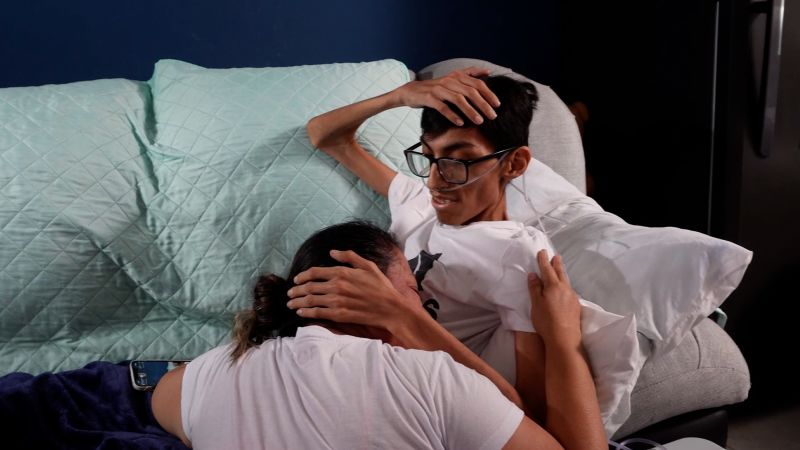
Parents Released from Arizona DHS Facility Reunite with Teen Son Dying of Cancer
Parents released from Arizona DHS facility – After a court ruling, the parents of Kevin González, an 18-year-old American citizen with terminal colon cancer, were freed from a Department of Homeland Security detention center in Arizona. The couple, Isidoro González Avilés and Norma Anabel Ramírez Amaya, reconnected with their son in Durango, Mexico, just hours after their release. Their emotional reunion marked a significant moment for the family, who had endured months of separation as Kevin battled his illness.
Kevin’s Illness and Family Background
Kevin González was diagnosed with stage 4 colon cancer during a visit to Chicago in the holiday season. Born in the U.S. but raised in Mexico, he had been living in the country with his parents since childhood. The couple, Mexican nationals, had been deported in 2011 after entering the U.S. without proper documentation. Despite their past, they had fought to reunite with their son, hoping to provide him with the care he needed in his final months.
After re-entering the U.S. in April, the parents were detained near Douglas, Arizona, and faced prolonged separation. Their attempt to secure a humanitarian visa was rejected, leaving them stranded in a detention center. Kevin’s condition deteriorated rapidly, prompting urgent calls for his parents’ release. The family’s plight has since drawn widespread attention to the impact of immigration policies on vulnerable individuals.
Legal Breakthrough and Emotional Reunion
A critical legal victory occurred when a U.S. district judge in Tucson granted the parents’ release, just days before Kevin’s scheduled return to Mexico. The decision allowed the couple to reunite with their son, who had been receiving treatment in Chicago. As they arrived in Durango, the parents embraced Kevin tightly, their relief palpable in the face of his critical health.
Kevin, visibly weakened by his illness, expressed gratitude for the reunion. “Thank you for helping my family have the choice to be here,” he told CNN. The moment underscored the personal stakes of immigration enforcement, as the parents’ emotional journey highlighted the urgency of their situation. Their prolonged detention had left them anxious about Kevin’s future, and the reunion offered a glimmer of hope amid uncertainty.
Familial Bonds and Symbolic Gestures
Isidoro Avilés shared tattoos of his son’s name and Saint Jude, the patron saint of lost causes, during the reunion. The symbols symbolized the family’s resilience and their faith in Kevin’s recovery. “Kevin is very strong,” Avilés said, emphasizing the boy’s determination. The couple’s efforts to remain together despite their deportation history reflected their deep commitment to each other and their son.
Norma Amaya, tearfully holding her son, described the reunion as a “gift from God.” Her words echoed the broader theme of family unity in the face of adversity. Kevin, in turn, vowed to celebrate Mother’s Day by giving his mother “lots of hugs, over and over.” These heartfelt gestures highlighted the emotional depth of their bond, now rekindled after years of separation.
Political Response and Immigration Debate
Representative Delia Ramirez, who represents Kevin’s district, voiced support for the family’s case. She criticized the denial of visas, arguing that such decisions harm families rather than protect communities. “Detaining immigrants in inhumane conditions is not securing our nation,” she stated, stressing the human cost of current policies.
The incident has intensified debates over immigration enforcement and its effects on individuals in critical health. Kevin’s case exemplifies how families can be torn apart by bureaucratic processes, even when their circumstances demand compassion. Advocates argue that the separation not only deepens emotional distress but also complicates medical care for patients like Kevin, who requires constant attention.
