
Memorial Day sticker shock: Gas prices near all-time highs
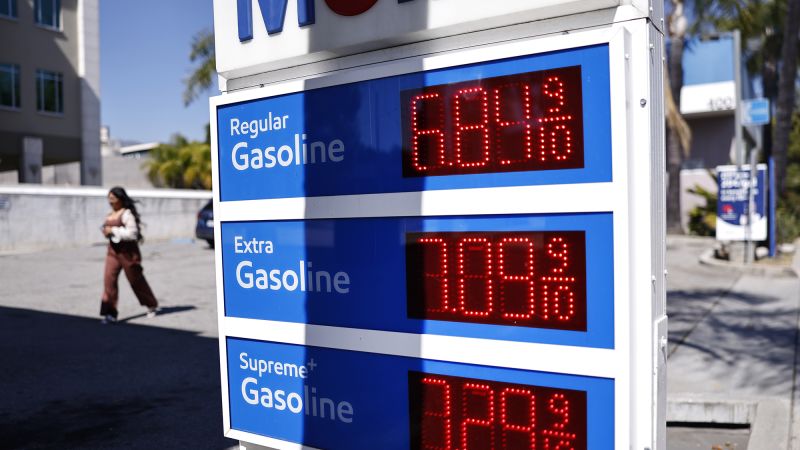
Memorial Day Sticker Shock: Gas Prices Near All-Time Highs
Memorial Day sticker shock – As the nation gears up for the Memorial Day holiday, millions of drivers are bracing for a significant financial challenge at the pump. The current surge in fuel costs has reached a critical point, with the national average hovering near $4.48 per gallon. This figure, according to GasBuddy, marks a 42% increase from the previous Memorial Day and stands as the second-highest recorded price in history. The only time gas prices exceeded this mark was in 2022, when the average hit $4.61 following the Russia-Ukraine conflict. Analysts warn that this trend may continue, with some predicting prices could climb to $5 a gallon by the end of the month if the Strait of Hormuz remains closed.
Global Instability Drives Price Increases
The ongoing conflict with Iran has thrown the global energy market into turmoil, creating a ripple effect that has sent fuel prices soaring. Despite urgent measures by the Trump administration to curb the impact, such as releasing oil from the Strategic Petroleum Reserve and waiving the Jones Act, the situation has worsened. These steps were intended to stabilize the market, but the continued disruption from geopolitical tensions has offset their efforts. Patrick De Haan, GasBuddy’s head of petroleum analysis, emphasized that the situation is highly dependent on the status of key oil routes. “Prices were incredibly stable last summer. This summer is probably the complete opposite, perhaps the most volatile,” he noted, highlighting the uncertainty surrounding the energy landscape.
For the summer months—spanning from Memorial Day to Labor Day—GasBuddy forecasts an average of $4.80 per gallon, surpassing the prior record set under President Biden in 2022. This projection underscores the magnitude of the price hike, which has intensified consumer frustrations. The cost-of-living crisis has become a central issue for many voters, with the high fuel prices exacerbating existing economic anxieties. According to a recent CNN poll, only 21% of Americans approve of Trump’s performance on gas prices, a sharp decline from his earlier reputation as a leader on energy issues.
The Human Cost of Rising Prices
For everyday Americans, the spike in fuel costs is more than just a statistic—it’s a tangible burden. Chris Haenel, a Pittsburgh resident and computer technician, shared how the war with Iran has drastically altered his weekly expenses. “Every day, I drive by the gas station and it’s just insane,” he said, noting that his gas bill has jumped from $50 to $80 each week. His experience reflects a broader trend: the cost of commuting has become a major concern for working families, especially those with limited financial flexibility. “I’m 60 years old and trying to save for retirement, but this is limiting how much I can save,” Haenel added, illustrating the personal toll of the price surge.
Experts estimate that the war has already added an estimated $43 billion to energy costs nationwide. This figure, based on the difference between current prices and projected levels without the conflict, highlights the widespread economic strain. Gasoline alone accounts for nearly $24 billion of this increase, with households facing an average of $200 more in fuel expenses. The impact is felt most acutely by those reliant on vehicles for daily travel, creating a cycle of financial stress that extends beyond the pump. “Everything goes up—except the paycheck,” said Gary Auerswald, a retired Illinois resident, who pointed out the disparity between rising costs and stagnant wages.
Political Reactions and Economic Consequences
While the White House has taken several steps to mitigate the crisis, including invoking the Defense Production Act and pausing Russian oil sanctions, these measures have not been enough to quell public discontent. The administration’s focus on energy dominance remains a key policy goal, but the current price spikes are testing its credibility. A spokesperson for the White House, Taylor Rogers, defended the approach, stating, “President Trump remains committed to fully unleashing American energy dominance, lowering costs, and putting more money back in the pockets of hardworking American families.” However, this message has not resonated with the majority of voters, many of whom are feeling the pinch of higher prices.
According to the same CNN poll, 75% of Americans believe the Iran war has negatively impacted their finances. This sentiment reflects a growing frustration with the administration’s handling of the economy. With the US inflation rate reaching nearly 4% in April, real wages—adjusted for inflation—are now shrinking for the first time in three years. This means that while prices continue to climb, the purchasing power of workers is diminishing. “My wife comes home with three bags of groceries and it’s $300,” Haenel said, capturing the frustration of many Americans who are struggling to balance their budgets.
Historical Context and Future Outlook
The current situation is a stark contrast to the relative stability of the previous summer, when gas prices averaged around $4.43 per gallon. The volatility this year has created a sense of unpredictability for consumers and businesses alike. De Haan’s warning about the Strait of Hormuz underscores the delicate balance between geopolitical events and market prices. “If the blockade continues, we will see global energy markets stabilize and gas prices plummet back to the multi-year lows Americans enjoyed prior to the start of Operation Epic Fury,” he said, though his optimism is tempered by the current trajectory.
Despite the administration’s efforts, the price surge is not a temporary blip. The war with Iran has disrupted supply chains and triggered a global response, with oil prices reacting to the uncertainty. The Trump team has framed the situation as a necessary trade-off for national security, arguing that the conflict prevents Iran from acquiring a nuclear weapon. However, critics like Gary Auerswald question this logic. “It’s not a small price to pay,” he said, emphasizing the human and economic costs of the ongoing crisis.
As the Memorial Day holiday approaches, the challenge of navigating high fuel prices has become a central issue for travelers and commuters. AAA estimates that 39.1 million Americans will embark on road trips this weekend, a number nearly identical to the previous year. Yet, for many, the journey will be more expensive than before. The data from GasBuddy and Brown University’s Climate Solutions Lab paint a clear picture: the cost of living is rising, and the energy sector is a major driver of this trend. With the summer season in full swing, the question remains whether the price spike will ease or intensify, and how it will shape the political landscape for the coming months.
Quotes Highlighting the Crisis
“This is peanuts,” Trump told reporters, dismissing the price hikes as a minor inconvenience. “I appreciate everybody putting up with it for a little while. It won’t be much longer.”
“Every day, I drive by the gas station and it’s just insane,” said Chris Haenel, a Pittsburgh resident, describing the daily struggle of balancing his budget.
“President Trump remains committed to fully unleashing American energy dominance, lowering costs, and putting more money back in the pockets of hardworking American families,” said Taylor Rogers, White House spokeswoman, while acknowledging the ongoing geopolitical challenges.
The interplay between global events and domestic costs has created a perfect storm for American consumers. As the summer unfolds, the price of gas will likely remain a focal point of public discourse, with its impact felt across all levels of society. Whether the situation stabilizes or worsens will depend on the resolution of the Iran conflict and the effectiveness of the administration’s economic strategies. For now, the sticker shock of Memorial Day serves as a reminder of the fragility of the energy market and the growing challenges facing the average household.
