
Judge dismisses charges against former school official in case of 6-year-old who shot teacher
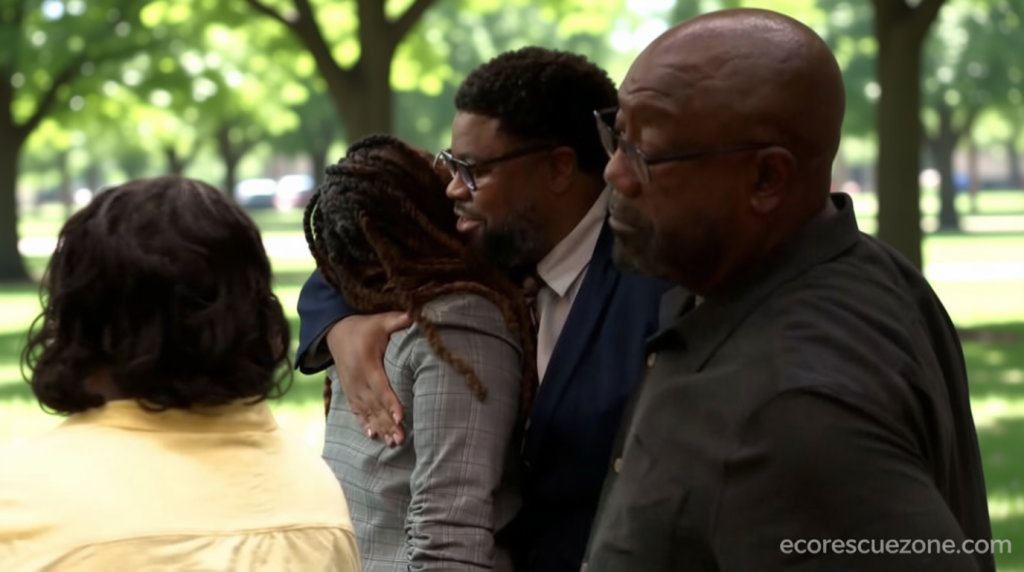
Circuit Court Judge Dismisses Criminal Charges in Virginia School Shooting Case
Judge dismisses charges against former school – In a landmark decision on Thursday, a Virginia circuit court judge dismissed criminal charges against Ebony Parker, a former elementary school assistant principal, in the aftermath of a January 2023 shooting at Richneck Elementary School. The incident, in which a 6-year-old boy wounded his first-grade teacher, Abby Zwerner, had sparked a legal debate over accountability in school shootings. Parker, who had been accused of failing to act on warnings about the child’s access to a firearm, now faces no further prosecution, as the court ruled the charges were not sufficient to establish a criminal act.
“The court is of the legal opinion that this is not a crime,” said Circuit Court Judge Rebecca Robinson, who presided over the case. Her ruling underscored the uncertainty surrounding the legal criteria for culpability in such incidents.
The dismissal came after Parker’s defense team argued that the allegations against her lacked the necessary criminal intent. According to the defense, the charges stemmed from a subjective interpretation of Parker’s actions rather than an objective act of negligence. The prosecution, however, had claimed Parker ignored critical warnings about the boy’s possession of a gun, which was unsecured in his mother’s purse and later carried to school in his backpack. The case now joins a growing conversation about who should bear legal responsibility when a juvenile commits a violent act at school.
Case Background and Legal Details
The shooting occurred on January 6, 2023, when the boy, who had a documented history of behavioral and emotional challenges, fired a gun at Zwerner during a classroom activity. Officials stated the weapon was retrieved from his mother’s bag and brought to school without any prior notice. Parker, who had been overseeing the school’s operations, was accused of not taking immediate action to address the threat. Her defense contested this, asserting that the incident was not a result of her direct criminal behavior but rather a series of misjudgments and lack of evidence linking her to the act itself.
Initially, Parker had pleaded not guilty to eight felony charges, including child abuse and disregard for life, with each count tied to a bullet fired by the boy. These charges carried a potential sentence of up to five years in prison per offense. The prosecution’s argument relied on the phrase “a willful act or omission in the care of such students, in a manner so gross, wanton and culpable as to show a reckless disregard for human life,” which appeared in court documents. However, the judge found the legal foundation for these charges to be ambiguous, leaving questions about whether the accusations were justified.
Legal Precedent and Broader Implications
This trial marked a significant moment in the evolving legal landscape of school shootings. It was one of the first cases to hold a school official accountable in such circumstances, and its outcome could influence future prosecutions. In recent years, parents in Michigan and Georgia have been convicted of serious charges related to their children’s actions, while law enforcement officers in Parkland and Uvalde were acquitted despite calls for greater accountability. Parker appears to be the first educator to face a criminal trial in the wake of a school shooting, raising questions about the boundaries of responsibility in educational settings.
Her case also highlighted a divergence in legal perspectives. While the prosecution emphasized Parker’s role in the classroom, the defense turned the narrative, attributing the failure to address the threat to teachers and staff who had direct contact with the child. “If the commonwealth wants to accuse Dr. Parker, what about these other people that had direct contact with this child?” asked defense attorney Curtis Rogers, challenging the focus on Parker. The defense argued that the burden of proof had not been met, and that the evidence did not conclusively show a criminal act had occurred.
The Trial Process and Key Testimony
The trial, which began on Tuesday, featured a range of testimonies that shaped the court’s understanding of the events. Several educators testified that they had raised concerns about the child’s potential for violence, noting his history of behavioral issues. Despite these warnings, Parker had directed an educator to search the boy’s backpack but had hesitated to examine his pockets until the child’s mother arrived at the school. This delay, according to the prosecution, was a critical factor in the incident.
Assistant Commonwealth Attorney Josh Jenkins, who opened the case for the prosecution, stated that Parker was the sole individual in the school with both the authority and knowledge to act on the crisis. “There was only one person in the school that day that had both the authority to act and the knowledge of the ongoing crisis, and that person you will see was Dr. Parker,” he said, underscoring the prosecution’s belief in her liability. However, the defense countered by pointing out the absence of clear evidence that Parker had directly caused the shooting or acted with criminal intent.
During the trial, the prosecution rested its case on Wednesday, leaving the final decision to the judge. The defense then requested the judge to dismiss the charges, arguing that the prosecution had not proven a crime had been committed. Judge Robinson agreed, citing the confusion over whether the legal basis of the charges was tied to the unfired bullets in the gun, the psychological trauma suffered by the children, or Parker’s awareness of the boy’s prior behavioral problems.
Parental Accountability and the Shooting’s Aftermath
The case also brought attention to the mother of the 6-year-old boy, Deja Taylor, who had previously pleaded guilty to a state charge of felony child neglect and federal gun offenses. Taylor served multiple years in custody and was released last week, illustrating the differing approaches to accountability between parents and educators. Prosecutors acknowledged that the boy, described as having “extreme emotional issues,” would not face criminal charges himself, further emphasizing the focus on adult responsibility.
Defense attorney Elyse Hershon noted that the dismissal of Parker’s case may signal a shift in legal accountability. “It’s putting a limit on this recent trend of expanding accountability for these horrific events at the school,” she remarked. “Right now, in terms of the judiciary and in terms of the legal process, they’re kind of stopping it, limiting it at the parents.” This perspective suggests that the legal system may be prioritizing parental liability over the actions of school staff in cases involving juvenile violence.
As the trial concluded, the broader implications of the ruling remained a topic of discussion. The decision to dismiss charges against Parker not only affected her personally but also raised questions about how schools and educators will be held responsible for such incidents in the future. With the case dismissed and the legal debate ongoing, the focus now shifts to understanding how this outcome may shape the narrative around school shootings and the distribution of blame among those involved.
