
A third of National Park island home to rare wildlife has burned in spate of Southern California wildfires
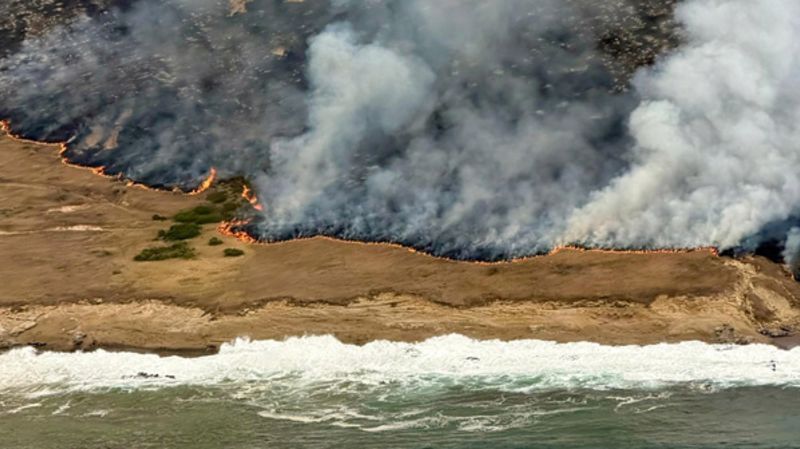
Santa Rosa Island’s Third of National Park Burned in Southern California Wildfires
A third of National Park island – Over a third of Santa Rosa Island, a key part of the National Park, has been consumed by wildfires sweeping through Southern California. The blaze, which started on Friday, has scorched approximately 17,554 acres, marking the largest fire of the year in the state. The National Park Service has expressed concern over the loss of rare species unique to the island, with officials highlighting the unusual scale of the disaster. “This is not typical for Santa Rosa Island,” said a spokesperson, emphasizing the vulnerability of the area’s ecosystems.
Unprecedented Fire Spread and Containment Efforts
The fire has expanded rapidly, reaching 44% containment by Thursday. While most of the island remains unscathed, isolated areas have been devastated, raising alarms for species like the Santa Rosa Island fox. These foxes, found on six of the eight Channel Islands, have evolved distinct traits on each. Officials warn that the timing of the fire, which coincides with the foxes’ breeding season, could disrupt their population. The blaze also threatens Torrey pine trees, a critically endangered species that thrives only in specific habitats.
“Fires of this scale are rare on Santa Rosa Island,” noted the National Park Service. “The Channel Islands are not as fire-adapted as mainland ecosystems, making this event particularly concerning.”
A Biodiversity Hotspot in Peril
Santa Rosa Island is often called a living museum of biodiversity, home to dozens of species found nowhere else. The park service estimates that the island hosts around 46 endemic plants and animals, with three species existing solely on its shores. These delicate habitats are now at risk, as the fire continues to spread. Conservationists fear that the loss of over a third of the National Park could have long-term impacts on these rare species.
Ecologically significant areas, including bald eagle nesting sites and snowy plover habitats, have been damaged. The fire’s trajectory has also threatened the island’s spotted skunks, which rely on specific microhabitats. “The loss of these habitats could mean irreversible consequences for the island’s wildlife,” said a CalFire representative, underscoring the urgency of the situation.
Cultural and Ecological Losses
Two historic structures on Santa Rosa Island have been lost to the flames, representing both cultural and ecological devastation. A helicopter crew from the Santa Barbara County Fire Department evacuated 11 National Park Service staff as the fire advanced. The island was temporarily closed to visitors, with emergency warnings issued to ensure safety. The Coast Guard also played a role, rescuing a sailor whose boat crashed near the fire’s origin, highlighting the interconnected challenges of the disaster.
Meanwhile, other Southern California wildfires have caused widespread disruption. The Bain Fire, which has burned 1,456 acres, remains 39% contained, leading to evacuations for over 700 residents. The Verona Fire, burning 600 acres, has also resulted in injuries to firefighters and civilians. De La Rosa, a CalFire spokesperson, confirmed that four individuals were hospitalized after the Santa Rosa Island fire, though the severity of one case is still under investigation.
Long-Term Implications for Conservation
The rapid loss of over a third of the National Park has sparked debates about the resilience of its ecosystems. Scientists are studying how the fire might affect species like the Santa Rosa Island fox and Torrey pine, which are already under threat. The National Park Service has pledged to monitor the damage closely and implement recovery strategies. “This event highlights the need for adaptive management in conservation,” said Cholo, stressing the importance of protecting the island’s unique biodiversity.
As the fire continues, the focus remains on mitigating further harm. Efforts to protect remaining habitats and rescue displaced wildlife are ongoing. The incident underscores the growing challenges of climate-driven wildfires and their impact on protected areas. With over a third of the National Park now in ashes, the urgency to preserve what remains has never been higher.
