
Trump and Netanyahu diverge on Iran war’s future in tense phone call
Trump and Netanyahu Diverge on Iran War’s Future in Tense Phone Call
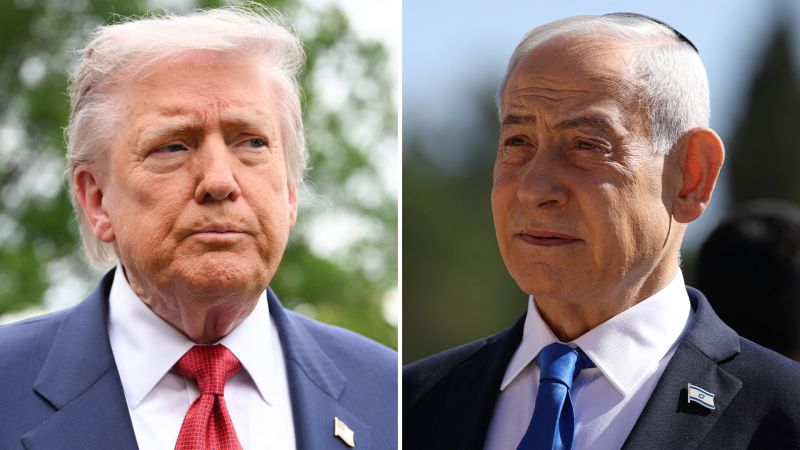
Trump and Netanyahu diverge on Iran – US President Donald Trump and Israeli Prime Minister Benjamin Netanyahu engaged in a high-stakes conversation on Tuesday, revealing starkly different strategies for dealing with Iran, according to a US official. The call highlighted the growing rift between the two leaders, who have increasingly clashed over the timing and approach of military action against Tehran. This was not their first interaction in recent days, as the pair had previously discussed the situation over the weekend, setting the stage for the current disagreement.
Initial Agreements and Sudden Shifts
On Sunday, Trump informed Netanyahu of his intention to launch new targeted strikes on Iran, a move that had been previously code-named Operation Sledgehammer. The official described the discussion as a mix of agreement and underlying tension, with Trump emphasizing the need for decisive action. However, just 24 hours later, Trump announced a pause in the planned strikes, citing pressure from allies in the Persian Gulf region, including Qatar, Saudi Arabia, and the United Arab Emirates. This decision has since sparked concern among Israeli officials, who view it as a potential setback in the ongoing conflict.
Behind the scenes, negotiations between the US, Gulf nations, and Pakistan have intensified in recent days. The White House, along with mediators from the Gulf states, is working to establish a framework that could pave the way for further diplomatic talks with Iran. Despite these efforts, the Israeli government remains wary, with some officials expressing frustration over the delay in military operations. “We’re in the final stages of Iran. We’ll see what happens,” Trump told reporters Wednesday, underscoring his cautious optimism about a potential resolution. “We’ll either have a deal or we’re going to do some things that are a little bit nasty,” he added, hinting at the possibility of more aggressive measures if diplomacy fails.
Netanyahu’s Disappointment and Strategic Concerns
Netanyahu’s dissatisfaction with Trump’s decision became apparent during their Tuesday conversation. The prime minister argued that delaying the strikes would grant Iran additional time to consolidate its military and nuclear capabilities, according to sources close to both leaders. “This pause is a mistake,” Netanyahu reportedly said, urging Trump to stick to his original plan. His frustration, however, is not new, as Israeli officials have long advocated for a more assertive stance against Tehran.
“The US approach is causing us significant unease,” said an Israeli source, describing the pressure from Netanyahu’s inner circle. “We are pushing for immediate action, but Trump keeps oscillating between military and diplomatic options.” The Israeli government’s top brass has shown a strong preference for renewed attacks, fearing that Iran’s diplomatic maneuvering could weaken their strategic position. The pause in strikes, they claim, allows Tehran to gain an advantage in negotiations, potentially complicating future efforts to curb its nuclear ambitions.
The Uranium Controversy
A critical point of contention in the talks centers on Iran’s enriched uranium stockpile. Trump has insisted that the US will secure the highly enriched uranium from Iran, stating during a press conference on Thursday: “No, no, we get the highly enriched. We will get it.” He added, “We don’t need it; we don’t want it. We’ll probably destroy it after we get it, but we’re not going to let them have it.” This stance reflects the US’s desire to eliminate Iran’s nuclear weapons potential, while Israeli officials argue that retaining the uranium is essential for maintaining leverage in the standoff.
Meanwhile, Iranian Supreme Leader Mojtaba Khamenei has reportedly issued a directive requiring that the country’s near-weapons-grade uranium not be sent abroad, according to two unnamed senior Iranian sources cited by Reuters. However, the directive has not yet been officially acknowledged by Iran’s state media, and a US official noted that the White House had not received confirmation of the order as of Thursday morning. This lack of communication has fueled Israeli concerns about the effectiveness of the current diplomatic strategy.
International Mediation and Strategic Implications
The situation has drawn in additional international actors, with Pakistan playing a key role as a mediator. Iran’s Foreign Ministry spokesperson, Esmaeil Baghaei, confirmed to the state-affiliated Nour News outlet that Tehran and Washington have been exchanging messages through Pakistani channels. “Based on Iran’s initial 14-point text, messages have been exchanged on several occasions, and we have received the American side’s viewpoints and are currently reviewing them,” Baghaei said. This backchannel diplomacy has become a crucial element in the effort to avoid escalation.
Field Marshal Asim Munir, the head of Pakistan’s army, is set to travel to Tehran on Thursday as part of ongoing diplomatic efforts. His visit underscores the importance of regional allies in brokering a compromise between the US and Iran. Analysts suggest that Pakistan’s involvement is aimed at easing tensions and ensuring that Iran’s nuclear stockpile remains a focal point in the negotiations. “The window for diplomacy is narrowing,” one US official remarked, “but we’re still hopeful it can lead to a lasting solution.”
Despite the friction, Trump has maintained that the current diplomatic strategy is worth pursuing. “Things with Iran are right on the borderline,” he stated on Wednesday, emphasizing the urgency of reaching an agreement before further military action is deemed necessary. This position has drawn mixed reactions, with some Israeli officials accusing Trump of indecision. “He’s playing both sides,” said a senior Israeli source, “and we’re left wondering if he’s truly committed to our goals.”
The divergence between Trump and Netanyahu reflects deeper strategic differences between the US and Israel. While Trump prioritizes diplomatic solutions to reduce the risk of broader conflict, Netanyahu believes that military pressure is vital to securing Iran’s concessions. This tension has also influenced the tone of their interactions, with Netanyahu reportedly expressing impatience during their Tuesday call. “We’ve waited long enough for a decision,” he told the US official, “and this delay is costing us.”
As the talks continue, the stakes have never been higher. With Iran’s nuclear program at the center of the discussion, the outcome of the negotiations could determine the next phase of the conflict. Trump’s willingness to pause strikes has given Iran breathing room, but the US remains determined to take control of its enriched uranium. “I’m in the driver’s seat,” Trump said on Wednesday, addressing the prime minister’s objections. “He’ll do whatever I want him to do.”
For now, the battle between military action and diplomacy remains unresolved. While the US and its Gulf allies work to build a framework for talks, Israel watches closely, fearing that any further hesitation could embolden Iran. The tension between the two leaders, however, has not diminished, as their conflicting priorities continue to shape the future of the Iran war. With the clock ticking, the world awaits the next move in this high-stakes geopolitical game.
