
‘Defund then abolish’: A leading Democrat in Wisconsin governor’s race urged abolishing police
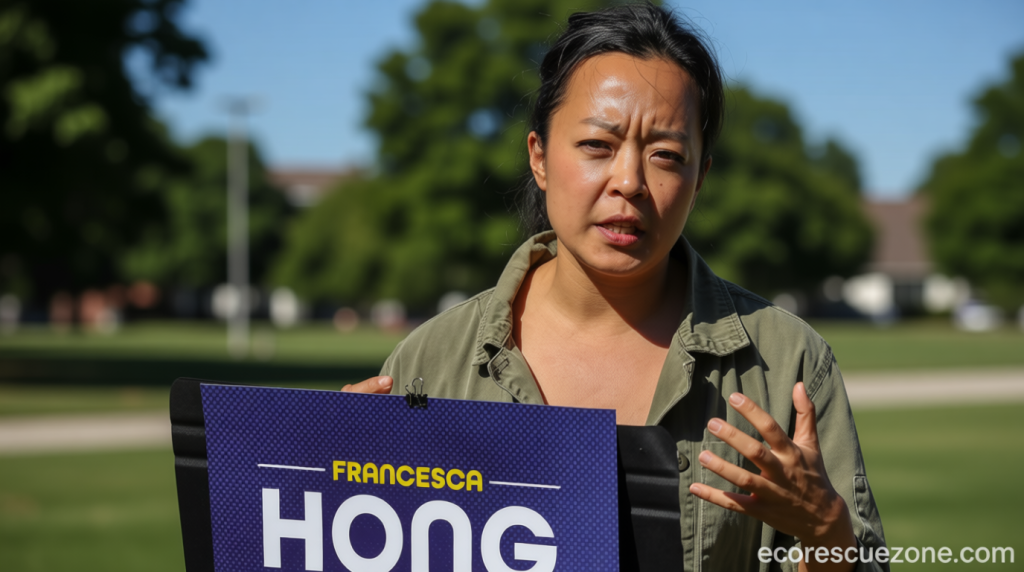
Defund Then Abolish: Wisconsin Governor’s Race Candidates Push Police Reform
Defund then abolish – A key figure in Wisconsin’s Democratic gubernatorial race has reignited the debate on defunding and abolishing police departments, challenging the party’s recent shift toward moderation. Francesca Hong, a state representative and member of the Democratic Socialists of America, has consistently promoted the slogan “defund then abolish” as a core policy stance. While other Democrats have softened their positions in response to backlash, Hong remains steadfast, advocating for systemic change that redefines public safety. Her campaign has drawn attention for its bold approach, positioning her as a pivotal voice in a primary race marked by diverging views on police reform.
Hong’s Advocacy and Political Stance
Francesca Hong’s push for police abolition has been central to her political platform, rooted in her belief that law enforcement must be reimagined to address systemic inequities. In 2020, she asserted on social media that defunding the police was the first step toward abolishing them entirely, emphasizing that reform alone was insufficient. By 2021, her rhetoric had evolved, with statements like “police exist to uphold white supremacy. Defund then abolish. Reform can’t be an option” becoming a rallying cry for her supporters. Despite the broader Democratic party’s pivot away from radical calls, Hong has maintained her uncompromising stance, framing her vision as both urgent and essential.
Her advocacy aligns with a growing segment of Democrats who see police reform as a long-term revolution rather than a temporary policy adjustment. While Hong acknowledges the need for pragmatic solutions, she argues that current policing models perpetuate harm, particularly in marginalized communities. “I envision a world where public safety is not equated with law enforcement,” she explained to CNN. “Our goal is to build systems of care, but that doesn’t mean we should stop pushing for radical change.” This balance between idealism and realism has shaped her campaign’s identity, setting her apart from more centrist Democrats in the race.
The Democratic Primary Landscape
Hong is vying for the Democratic nomination against a field of candidates with varied priorities. Competitors include Lt. Gov. Sara Rodriguez, Milwaukee County Executive David Crowley, and state Sen. Kelda Roys, each representing different voter bases and policy focuses. The race has intensified as the Democratic Party seeks to unify its message ahead of a general election showdown with Republican US Rep. Tom Tiffany. While some candidates have distanced themselves from the “defund then abolish” slogan, Hong’s unwavering commitment has sparked both support and criticism, reflecting the broader ideological divide within the party.
Recent polls highlight the challenges Hong faces. A March survey by Marquette Law School showed her trailing in support, with 14% of voters backing her compared to 11% for Mandela Barnes. Yet, the undecided majority—65% of voters—suggests a dynamic race where policy positions can shift rapidly. Barnes, who previously faced scrutiny for his 2022 Senate campaign, has since clarified his stance, stating he does not support abolishing police. Hong, however, continues to emphasize the need for a total reimagining of the system, even as her rivals adjust their messaging to appeal to a wider electorate.
Republican Pushback and Political Strategy
Republicans have seized on Hong’s defunding rhetoric as a tool to undermine Democratic credibility. The Secure America Act, recently passed by Senate Republicans, was framed as a direct response to the “defund the police” movement, with lawmakers criticizing it for threatening public safety. In Wisconsin, GOP strategists have highlighted Hong’s past statements, aiming to portray her as extreme. Despite this, Hong’s supporters argue that the movement’s core message remains relevant, especially in a state where police violence and systemic racism have sparked public outrage.
As the race progresses, the “defund then abolish” slogan has become a litmus test for progressive voters. While it may alienate moderates, it resonates with those seeking transformative change. Hong’s campaign underscores the tension within the Democratic Party between incremental reform and radical overhaul, with her position symbolizing a return to the movement’s original fervor. The outcome of this primary could shape the national discourse on policing for years to come, as Wisconsin becomes a battleground for the future of law enforcement in America.
