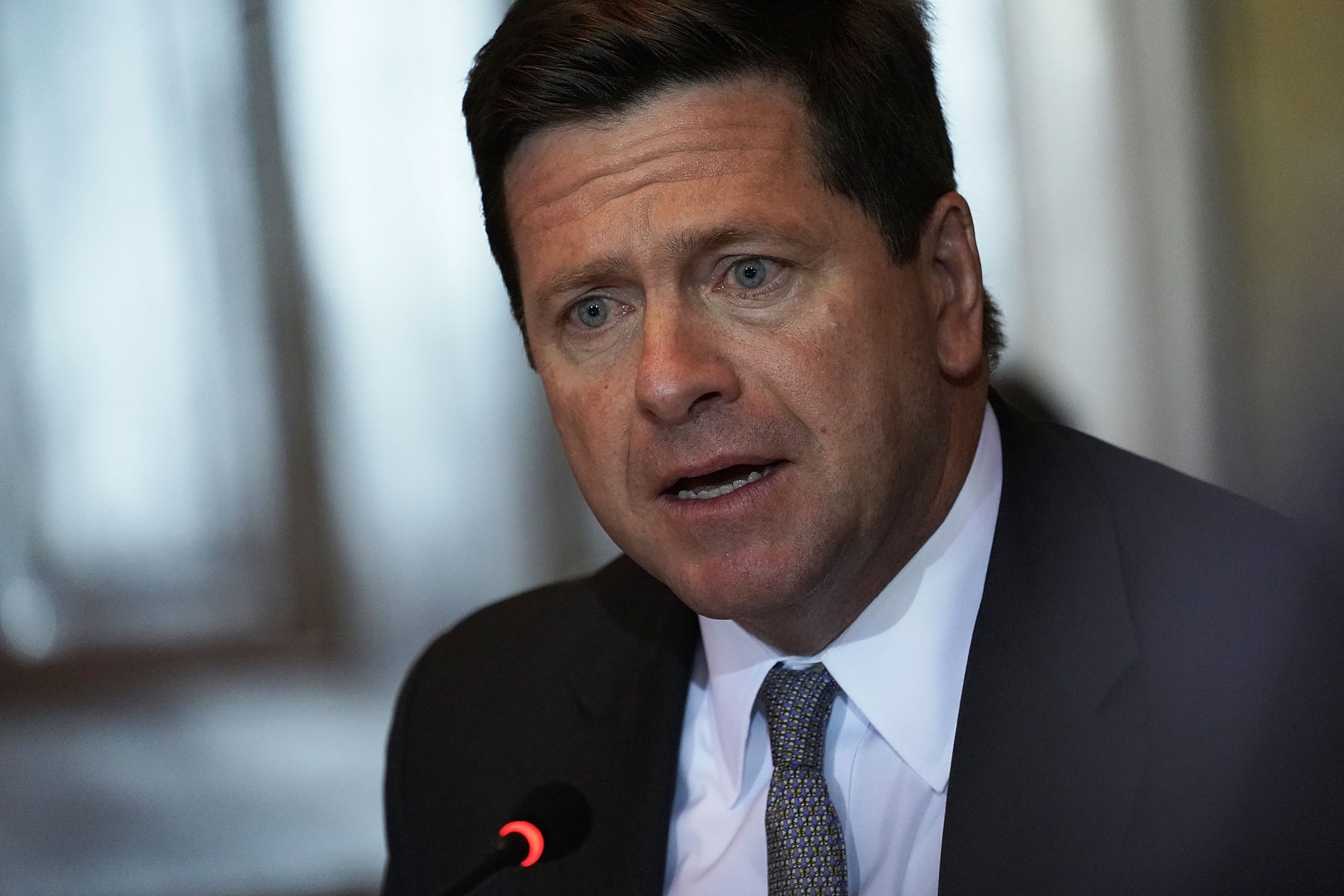
Trump Appoints Jay Clayton as Director of National Intelligence
Trump names Jay Clayton to serve – President Donald Trump unveiled a significant personnel shift on Thursday, appointing Jay Clayton as the new director of national intelligence. The decision came after Clayton, a seasoned federal prosecutor and former head of the Securities and Exchange Commission, was officially nominated for the role. This move marks a strategic pivot in the administration’s approach to intelligence oversight, with Clayton’s legal acumen and regulatory experience positioning him as a potential bridge between law enforcement and national security priorities.
A Statement of Endorsement
In a post on his Truth Social platform, Trump highlighted Clayton’s reputation, stating, “Few people anywhere in the Legal Community are respected at the level of Jay.” The president’s endorsement underscores the high regard in which Clayton is held, particularly among legal professionals. By urging the Senate to expedite the confirmation process, Trump emphasized the urgency of securing a leader capable of navigating the complexities of intelligence operations.
“Few people anywhere in the Legal Community are respected at the level of Jay,” the president wrote in a post on Truth Social announcing the nomination. “I encourage the United States Senate to confirm Jay as soon as possible. Thank you for your attention to this matter!”
Shifting Priorities and Political Dynamics
Clayton’s nomination follows a controversial choice earlier this week, when Trump nominated Bill Pulte, a close political ally and known partisan, to serve as acting director of national intelligence. Pulte, the 38-year-old director of the Federal Housing Finance Agency, had been thrust into the role following the administration’s decision to replace the previous acting director. His selection, however, ignited a fierce debate in Congress, particularly regarding the future of FISA-702, a critical surveillance tool set to expire on Friday.
The appointment of Pulte created tension among lawmakers, as his lack of national security experience raised concerns about the direction of intelligence policy. Democrats in particular warned that his tenure could lead to the misuse of sensitive data against political opponents. This backdrop of controversy contrasts sharply with Clayton’s more measured reputation, which may offer a more stable alternative for the intelligence community.
The Fate of FISA-702
The expiration of FISA-702, a provision of the Foreign Intelligence Surveillance Act, has become a focal point of the political drama. This law authorizes the collection of foreign intelligence through surveillance of non-U.S. persons, a process that has been instrumental in monitoring global threats. However, its renewal has been stalled by the ongoing disagreement over the leadership of the intelligence agency. Despite the House’s failed attempt to pass a three-week extension of the program on Thursday, the legislation remains in limbo, threatening to disrupt critical intelligence operations.
The political fallout from Pulte’s appointment has not only affected FISA-702 but also broader discussions about the balance of power between the executive and legislative branches. With the Senate still deliberating on Clayton’s confirmation, the deadline for FISA-702’s renewal looms, casting uncertainty over the nation’s surveillance capabilities. Analysts suggest that the delay could have far-reaching consequences, particularly for agencies reliant on the program to track foreign adversaries and domestic threats.
Clayton’s Background and Potential Impact
Jay Clayton’s career spans over two decades in federal law enforcement and financial regulation, earning him a reputation for meticulous analysis and pragmatic decision-making. As a prosecutor, he played a key role in high-profile cases, including those involving corporate fraud and market manipulation. His tenure at the Securities and Exchange Commission (SEC) further solidified his expertise in regulatory frameworks, a skill that could prove invaluable in the intelligence sector.
Clayton’s appointment signals a potential shift in the administration’s focus toward strengthening legal and institutional foundations in intelligence operations. While Trump’s previous choices, such as Pulte, reflected a preference for ideological alignment, Clayton’s background suggests a more centrist approach. This could be a strategic move to bolster credibility with lawmakers and the public, especially as the FISA-702 program’s expiration threatens to undermine intelligence efforts.
Legislative Challenges and Congressional Response
The House’s failure to pass the FISA-702 extension on Thursday highlights the challenges of bipartisan cooperation in the current political climate. The vote, which came amid heated debates, fell short of the required threshold, leaving the program in jeopardy. This setback has forced lawmakers to reconsider their positions, with some arguing that the intelligence community needs clear leadership to navigate the crisis effectively.
With the Senate set to return to Washington the week of June 22, the window for action remains narrow. Clayton’s confirmation could provide a temporary reprieve, but the broader implications of the FISA-702 expiration extend beyond the immediate political battle. The program’s renewal is essential for maintaining the nation’s surveillance infrastructure, and its expiration could force agencies to rely on alternative methods, potentially reducing their effectiveness.
As the debate continues, the selection of a director of national intelligence has become a symbol of the administration’s priorities. Trump’s emphasis on legal expertise and regulatory oversight through Clayton’s nomination reflects a desire to align intelligence operations with established legal principles. Meanwhile, the political tensions surrounding Pulte’s appointment reveal the challenges of balancing loyalty with competence in key roles.
The outcome of this leadership transition will have lasting effects on the intelligence community’s ability to function efficiently. While Clayton’s confirmation offers hope for a more stable approach, the expiration of FISA-702 serves as a reminder of the urgency at hand. Congress faces a critical decision: to renew the program with a confirmed leader or risk leaving the intelligence apparatus vulnerable in the face of evolving global threats.
As the deadline approaches, the spotlight remains on both the new nominee and the legislative process. The Senate’s role in confirming Clayton will determine whether the nation’s intelligence capabilities can be preserved, or if the program’s expiration will mark a significant setback in the fight against national security challenges. The coming weeks will be pivotal in shaping the trajectory of U.S. intelligence policy and its relationship with the legal and political systems that govern it.