Louisiana lawmakers pass a congressional map to dismantle a majority-Black district

Louisiana lawmakers pass a congressional map to dismantle a majority-Black district
Supreme Court ruling sparks redistricting push
Louisiana lawmakers pass a congressional map – With the U.S. Supreme Court’s recent decision casting doubt on the effectiveness of Section 2 of the Voting Rights Act of 1965, Louisiana lawmakers have moved swiftly to reshape the state’s congressional boundaries. The new map, approved by Republicans in the legislature, is designed to reduce the number of majority-Black districts, potentially giving the GOP an edge in the upcoming midterm elections.
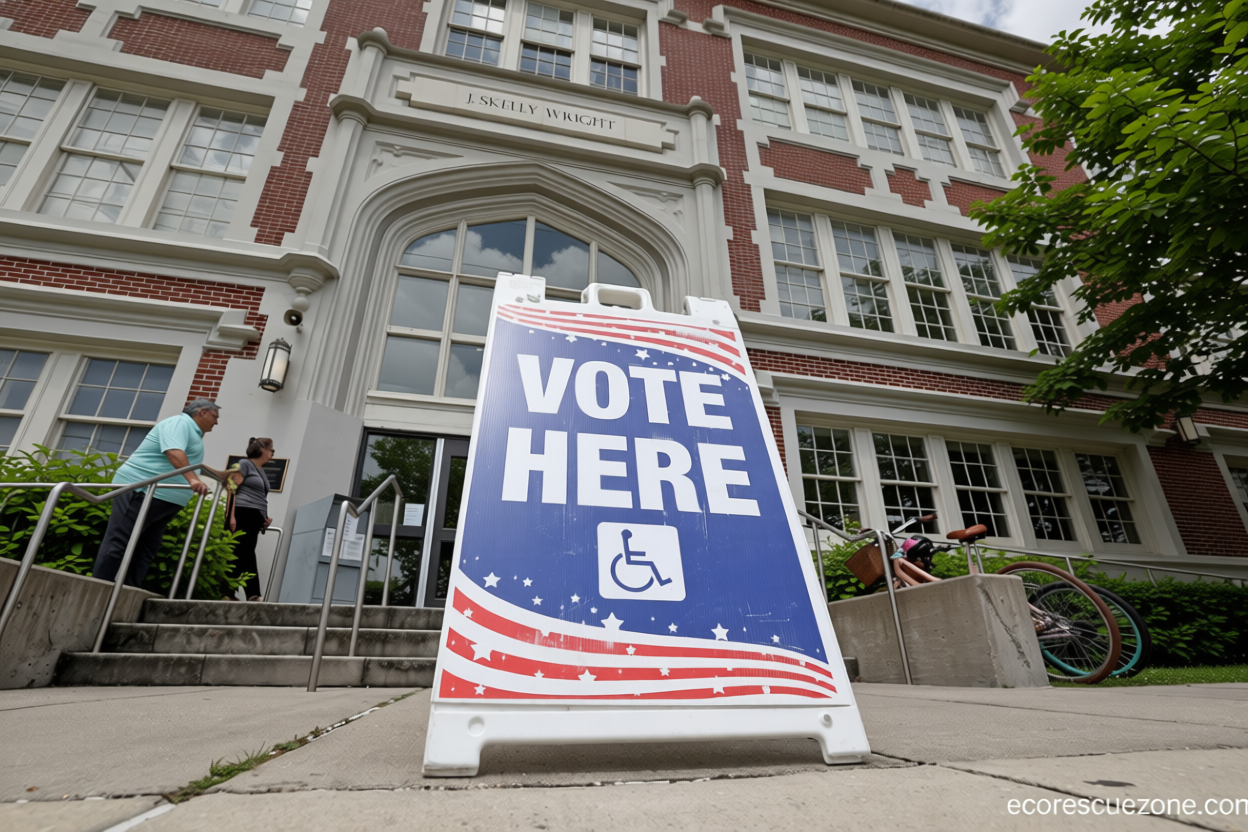
The ruling, which weakened the legal protections for minority voters, has emboldened legislative efforts to redraw electoral lines. Just days before early voting was set to commence, and amid a surge in mail-in ballots, Republican Governor Jeff Landry issued an executive order to delay the House primary elections originally scheduled for May 16. This move provided lawmakers with additional time to adjust the map, which they finalized ahead of the November 3 general election.
“The best way to end race-based discrimination is to stop making decisions based on race,” Landry wrote in the executive order that pushed back the primaries.
Strategic shifts in district boundaries
The revised map eliminates one of two congressional districts where Black voters constitute a majority, a move that has drawn criticism from civil rights advocates. The original configuration, which included a zigzagging district stretching from Baton Rouge to Shreveport, was established after a 2022 lawsuit argued that lawmakers had diluted Black voting power by failing to create a second majority-Black district in a state where Black voters make up approximately one-third of the population.
A federal court initially supported this claim, leading to the current map’s implementation. However, the Supreme Court’s recent intervention redefined the legal standards for evaluating racial gerrymandering, ruling that Section 2 of the Voting Rights Act only safeguards against districts drawn with discriminatory intent. This shift allowed Louisiana legislators to redraw lines without facing the same level of scrutiny, effectively dismantling the previously protected district.
The new map consolidates Black communities into a single district covering most of New Orleans and extending into predominantly Black neighborhoods in Baton Rouge. While Shreveport is incorporated into the broader northwest Louisiana region, the state’s Black population is now split across two districts. This strategic reorganization aims to weaken the influence of Black voters in key areas, favoring Republican candidates in the state’s congressional races.
Impact on representation and political strategy
Democratic Rep. Cleo Fields, who has represented a similar district since 1992, now faces a redrawn map that could threaten her re-election. Her current district, which spans Baton Rouge, was previously challenged in court in 1996 and was dismantled as a result of that decision. The latest changes mirror that historical shift, potentially undermining the community’s electoral strength.
Similarly, Democratic Rep. Troy Carter, who represents a majority-Black district centered in New Orleans, will remain in office under the new configuration. However, the loss of the other majority-Black district means Louisiana will have only one such district in the House, a significant reduction from the prior setup. Legislators opted to eliminate just one district instead of two, fearing that further adjustments might jeopardize the competitiveness of Republican-held seats, such as those represented by House Speaker Mike Johnson and Majority Leader Steve Scalise.
This careful balancing act reflects a broader strategy to maintain political control while avoiding excessive backlash. By targeting one district without fully erasing the others, lawmakers hope to preserve their existing advantages while still shifting the electoral landscape in their favor.
Broader implications for Southern redistricting
Louisiana joins a growing list of Southern states actively modifying their congressional maps in response to the Supreme Court’s ruling. Tennessee, for instance, has already removed its sole Democratic-held majority-Black district in Memphis, a move that has drawn widespread attention. Alabama’s legislature received Supreme Court approval to revert to its 2023 map, which eliminated one large Black-majority district, though this plan has since been temporarily blocked.
Meanwhile, governors in Georgia and Mississippi have announced intentions to propose similar redistricting plans, which will take effect after the midterms. These actions signal a coordinated effort across the South to reshape electoral outcomes, leveraging the weakened protections of the Voting Rights Act to reshape representation. The trend underscores the intense political stakes of redistricting, as parties seek to maximize their gains in a closely contested House race.
The changes in Louisiana are part of a national redistricting war that has intensified under President Trump’s leadership. With the House currently divided along narrow partisan lines, Republicans are determined to secure control by optimizing their district maps. This approach has been evident in other states as well, where gerrymandering efforts have focused on minority-majority districts to dilute their voting power and consolidate majority-white areas.
Historical context and future challenges
Redistricting in Louisiana has long been a tool for political advantage. The 1996 court decision that dismantled the Baton Rouge-based district marked a pivotal moment, prompting the creation of new majority-Black districts in subsequent years. The 2022 lawsuit and its aftermath highlighted the ongoing tension between protecting minority representation and maintaining party control, a debate that has now been redefined by the Supreme Court’s latest ruling.
While the new map is expected to benefit Republicans in the House elections, it has sparked concerns about the erosion of voting rights for Black communities. Advocacy groups argue that the changes will reduce the state’s ability to elect representatives who reflect its racial demographics, potentially reinforcing systemic inequities. The delay in primaries and the quick passage of the map also raise questions about the pace of legislative action and the influence of partisan priorities over minority interests.
As the November 3 election approaches, the stakes for Louisiana and other Southern states have never been higher. The redistricting battle is not just about winning seats but also about shaping the political future of the region. With the Voting Rights Act’s Section 2 now more vulnerable to challenges, the focus has shifted to how effectively lawmakers can use the law to influence election outcomes. This development has broader implications for the nation’s electoral system, as it sets a precedent for how race-based gerrymandering will be evaluated in the years to come.
Despite the changes, some advocates remain hopeful that the existing majority-Black district will serve as a bulwark against full-scale racial gerrymandering. The district’s boundaries, which span from New Orleans to Baton Rouge, are seen as a symbol of Black political power. However, the narrowness of the state’s current map and the Republicans’ strategic choices suggest that the fight over representation will continue in future cycles. For now, the focus is on November 3, where the new map will test its impact on the midterm elections and the balance of power in Congress.