Enhancing Agility Through Explosive Power: A Scientific Approach
Want to improve your agility Try these – Traditional fitness routines often focus on strength and cardiovascular endurance. However, a less commonly discussed aspect of physical training—explosive power—can play a critical role in improving agility and reducing the risk of injury. Jessica Scott, a researcher in exercise physiology, has dedicated her work to understanding how physical activity affects diverse populations, including cancer patients and astronauts. Her insights reveal a vital connection between rapid force generation and daily functional mobility.
The Science Behind Explosive Power
Explosive power refers to the body’s capacity to produce maximum force in the shortest time possible. According to Scott, this isn’t simply about lifting heavy weights but rather about executing quick, controlled movements with lighter loads. “The key is speed,” she explains, emphasizing that the ability to rapidly shift energy is essential for tasks like climbing stairs or rising from a seated position. This skill also contributes to balance and coordination, helping individuals avoid slips or falls during routine activities.
“Explosive power isn’t about lifting the heaviest object—it’s about moving a lighter one with precision and velocity,” Scott says. “This kind of training strengthens the neuromuscular system, allowing for faster reaction times and more efficient movement patterns.”
As we age, maintaining explosive power becomes increasingly important. Scott notes that beginning around age 40, individuals experience a gradual loss of fast-twitch muscle fibers, which are responsible for quick, powerful contractions. This decline can lead to reduced mobility and a higher susceptibility to injuries. By incorporating explosive power exercises, people can counteract these changes and preserve their ability to perform essential movements safely.
Foundational Fitness Before Intensifying
Scott advises that individuals should first establish a solid fitness foundation before diving into explosive power training. This involves at least three months of consistent aerobic activity, such as walking or cycling, combined with one to two days of strength training per week. “These exercises require a base level of endurance and muscular control,” she states, “so that your body can handle the demands without overexertion.”
Once this foundation is in place, Scott recommends integrating a 20-minute session of explosive power workouts into weekly routines. She highlights that these exercises are distinct from traditional resistance training, where the goal is often to push through fatigue. Instead, explosive power focuses on quality over quantity, with short, controlled movements that maximize efficiency and minimize strain.
Beginner-Friendly Explosive Exercises
For those new to explosive power training, Scott suggests starting with basic movements that can be performed at home. These exercises prioritize form and balance, ensuring that participants build strength without compromising technique. The following routines are designed for all fitness levels, with modifications to suit individual needs.
“Control is everything,” Scott says. “Even the most simple movements, when executed with intention, can yield significant benefits.”
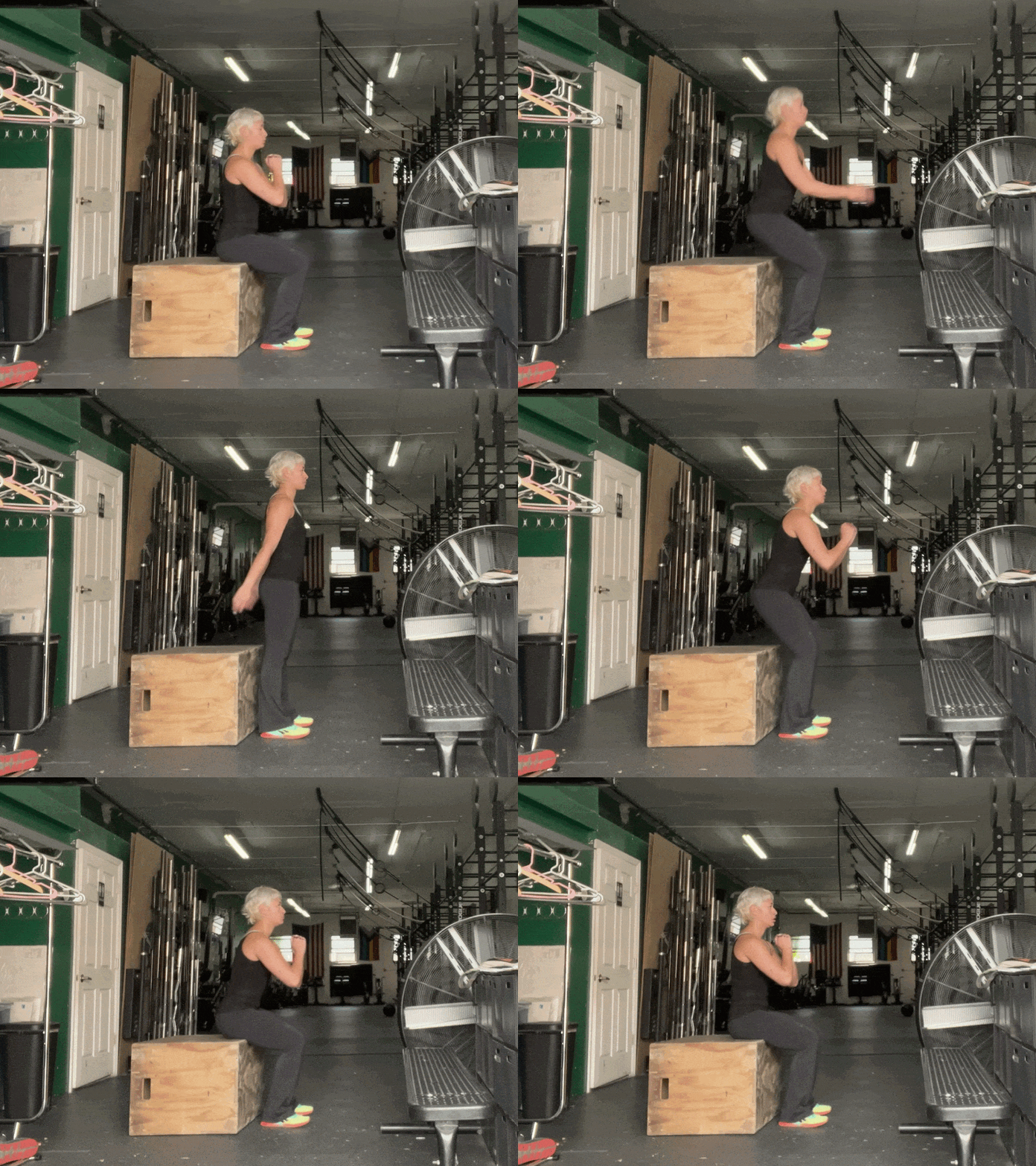
**Chair-Assisted Squat-to-Stand** Position yourself near a sturdy chair or bench. With feet hip-width apart, slowly lower your body into a seated position while maintaining tension in your core. From there, push through your heels to stand swiftly, then return to the starting position with deliberate control. Adjusting the height of the platform increases the challenge, engaging stabilizing muscles and improving coordination.
**Modified Plank Push-Ups** Begin in a high plank position with your hands aligned beneath your shoulders. Gradually lower your chest toward the floor, ensuring your elbows are tucked close to your sides. Push back up with force, keeping your body stable and your core engaged. This movement enhances upper-body strength while training the nervous system to respond quickly to changes in position.
**Heel Raises** Stand with feet shoulder-width apart and slowly lift your heels off the ground, shifting your weight onto the balls of your feet. Lower your heels back down with control, maintaining balance throughout. This exercise targets lower-body stability and helps improve the ability to transition between static and dynamic positions.
Advanced Explosive Power Workouts
For those with a stronger fitness base, Scott outlines more intense movements that further challenge the body’s ability to generate force rapidly. These exercises require greater coordination and are ideal for individuals aiming to elevate their athletic performance.
“These advanced movements push the body beyond its comfort zone,” Scott explains. “They’re designed to enhance power output while reinforcing proper movement mechanics.”
**Squat-to-Velocity Jump** Start in a squat position with feet hip-width apart and arms extended behind your torso. Lower your body slowly, ensuring your knees track your toes and your chest remains upright. From the squat, explode upward into a vertical jump, reaching as high as possible with fully extended hips. Land softly in the squat position to absorb impact, completing the cycle with controlled precision.
**Lateral Jump Squats** Begin in a standing position with feet hip-width apart. Jump sideways into a wider stance, simultaneously lifting your arms overhead to create momentum. Land back in the original position and repeat. This movement strengthens the lateral stabilizers and improves reaction time, making it particularly beneficial for sports like basketball or tennis.
**Push-Up to Jump** Using a platform or wall, start in a high plank with hands stacked beneath your shoulders. Lower your chest to the ground, then push up with explosive force while extending your arms overhead. Jump forward or backward as you transition, focusing on maintaining a stable core and balanced posture. This exercise combines upper-body strength with dynamic movement, ideal for building overall athleticism.
Why Explosive Power Matters for Long-Term Health
Scott’s research underscores the role of explosive power in preventing injuries and maintaining independence as we age. The decline in fast-twitch muscle fibers not only affects physical performance but also increases the risk of falls, which can lead to serious consequences for older adults. By regularly engaging in explosive exercises, individuals can slow this decline and improve their quality of life.
Moreover, explosive power training has shown promising results in sports performance. Studies indicate that athletes who incorporate these movements into their regimens experience enhanced speed, power, and coordination. This is particularly relevant for sports requiring quick directional changes or sudden bursts of energy, such as soccer or track and field. Even in non-athletic contexts, explosive power supports activities like lifting groceries or navigating uneven terrain with confidence.
Scott also highlights the psychological benefits of these exercises. The combination of speed and strength creates a sense of accomplishment, motivating individuals to maintain consistency in their workouts. “Explosive power is about mastering the art of movement,” she says. “It’s not just about physical gains—it’s about improving how your body functions in real-world scenarios.”
Regardless of fitness level, the core principle remains the same: prioritize controlled, deliberate motion. Scott recommends performing three sets of each exercise, with repetitions limited to three to five per set. This approach ensures that the focus stays on quality rather than volume, allowing for optimal results without overtraining.
In summary, explosive power exercises offer a unique way to enhance agility, prevent injuries, and support long-term mobility. By integrating these movements into their routines, individuals can unlock new levels of physical capability while maintaining a balanced, sustainable approach to fitness. Whether you’re a beginner or an advanced athlete, the key is to start with a strong foundation and progress at your own pace. As Scott puts it, “Explosive power isn’t a luxury—it’s a necessity for staying active and independent as we age.”