Did you know? Alan Greenspan and Ayn Rand were close friends

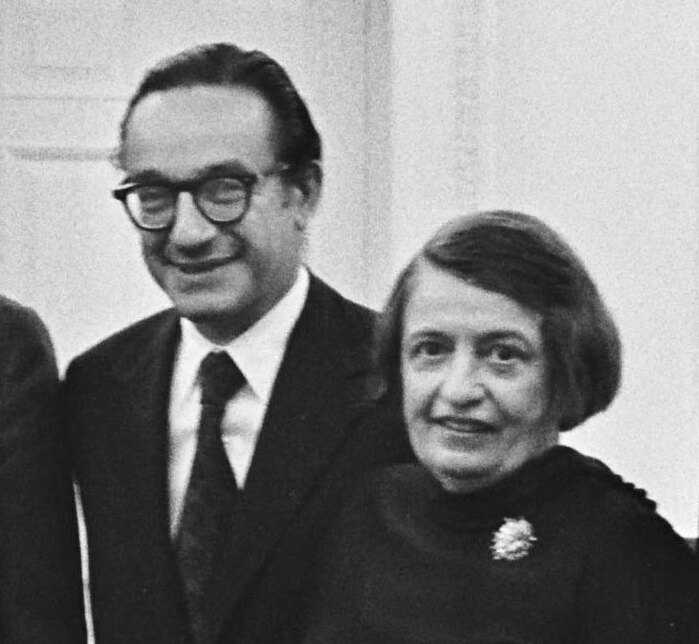
Did You Know? Alan Greenspan and Ayn Rand Shared a Deep Intellectual Connection
A Friendship That Shaped Economic Thought and Philosophical Beliefs
Did you know Alan Greenspan and Ayn – Alan Greenspan, the legendary Federal Reserve chairman whose decisions influenced global financial markets, maintained a significant intellectual bond with the novelist Ayn Rand long before his rise to prominence. This relationship, which spanned decades, played a crucial role in shaping his worldview and later informed his economic theories. Rand, renowned for her 1957 novel *Atlas Shrugged*, remains a cornerstone figure in American conservative philosophy. Her works, particularly *The Fountainhead* (1943), not only captivated readers but also inspired a generation of thinkers and policymakers, including Greenspan.
Greenspan and Rand first crossed paths in the early 1950s, when he was in his mid-twenties and she was in her forties. At the time, Rand had already established herself as a formidable literary force, with *The Fountainhead* becoming a bestseller and laying the foundation for her Objectivist philosophy. Their meeting was facilitated by Greenspan’s then-wife, Joan Mitchell, a Canadian art historian who was personally acquainted with Nathaniel Branden. Branden, Rand’s protege and former lover, served as a bridge between the two, introducing Greenspan to her inner circle and ideas.
Greenspan’s marriage to Mitchell lasted only a year, ending in 1952. Yet his friendship with Rand endured much longer, spanning over three decades until her passing in 1982. This deep connection was rooted in mutual admiration for intellectual rigor and a shared belief in individualism. Greenspan joined Rand’s “Collective,” a small group of thinkers and friends who met regularly at her midtown Manhattan apartment to debate politics, culture, and economic principles. The Collective became a hub for Objectivist discussions, and Greenspan’s presence added a unique perspective to the group.
Greenspan’s association with Rand was marked by both professional and personal dynamics. In his 2007 memoir, *The Age of Turbulence: Adventures in a New World*, he described Rand as a pivotal figure in his life. “She was a wholly original thinker, sharply analytical, strong-willed, and very insistent on rationality as the highest value,” he wrote.
“In that regard, our values were congruent – we agreed on the importance of mathematics and intellectual rigor.”
This quote underscores the philosophical alignment between the two, which extended beyond casual camaraderie.
Greenspan’s reputation as a serious and austere figure often earned him the nickname “the undertaker,” a moniker Rand gave him early in their friendship. The title, tied to his preference for dark suits and his serious demeanor, contrasted with his youthful artistic inclinations. Before dedicating himself to economics, Greenspan pursued a career in music, studying clarinet at Juilliard and performing in a swing band with future jazz legend Stan Getz. His musical tastes reflected his political leanings, as he favored traditional forms of popular music over the more experimental styles that emerged after the big band era.
Rand’s influence on Greenspan’s intellectual development was profound. He contributed essays to her magazine, *The Objectivist*, including a notable piece on the gold standard published in 1966. This essay, later included in her book *Capitalism: The Unknown Ideal*, highlighted his commitment to free-market principles and his analytical approach to economic theory. Even as he ascended to positions of power, such as chairman of the Council of Economic Advisers under President Gerald Ford, Rand remained a central figure in his life. During his swearing-in ceremony, she stood beside him, flanked by her husband, Frank O’Connor, and Greenspan’s mother, Rose Goldsmith, symbolizing the enduring support of his family and mentors.
Greenspan’s legacy as a central banker is often tied to his stewardship of the U.S. economy during the 1980s and 1990s. However, his early interactions with Rand reveal a more personal side of his character. The Objectivist movement, which Rand founded, emphasized rational self-interest and capitalism, ideals that Greenspan would later champion in his economic policies. Their friendship, though not romantic, was deeply rooted in intellectual exchange, with Greenspan frequently engaging with Rand’s ideas and refining his own through their dialogues.
Despite their differences, Greenspan and Rand’s partnership was characterized by mutual respect. While he embraced the mathematical precision of economics, Rand’s literary genius provided a broader cultural context for his work. Their collaboration bridged the gap between philosophy and practical policy, demonstrating how ideas can transcend disciplines. Even as Greenspan’s career evolved, the Objectivist principles he absorbed from Rand continued to shape his decisions, from monetary policy to regulatory frameworks.
Greenspan’s life story is a testament to the power of intellectual mentorship. His time with Rand not only enriched his personal philosophy but also left an indelible mark on his professional trajectory. The lasting impact of their friendship is evident in his later writings and speeches, where he often cited Rand’s work as a foundational text. As the Library of Congress recognized *Atlas Shrugged* as one of the books that shaped America, it’s clear that Greenspan’s relationship with Rand was a key chapter in his journey from an ambitious young economist to a global economic leader.
By intertwining his artistic past with his economic future, Greenspan exemplified the versatility of intellectual thought. His ability to navigate both the world of music and the realm of economics highlights the interdisciplinary nature of his contributions. The nickname “the undertaker” may have reflected his somber appearance, but it also symbolized his role as a custodian of ideas, preserving and advancing the principles he held dear.
In the end, Greenspan’s friendship with Ayn Rand was more than a passing connection. It was a partnership that bridged two worlds – the arts and economics – and laid the groundwork for his enduring influence on American policy. Their shared dedication to rationality and individualism continues to resonate, offering a unique lens through which to view the intersection of philosophy and economic practice.