
Greek police using masked migrants to forcibly push other migrants back across border
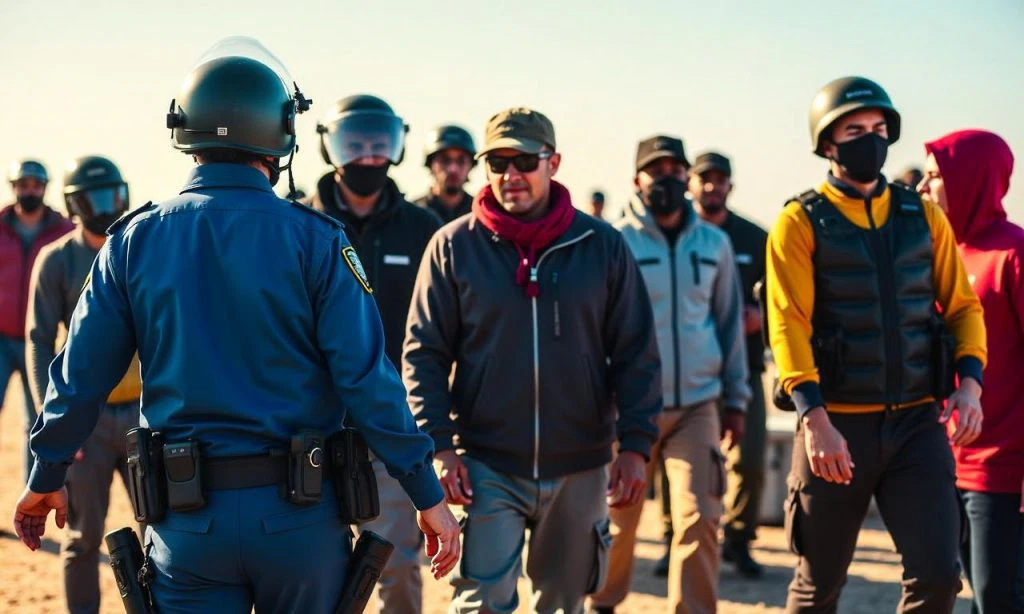
Greece’s Police Force Utilizes Migrant Labor to Forcibly Repatriate Asylum Seekers Across Border
Recent investigations by the BBC suggest that Greek police have been employing migrants as armed operatives to expel other asylum seekers back into Turkey, supported by extensive documentation. Internal police records reveal that senior officers authorized and monitored the recruitment of these so-called mercenaries, with guards detailing their actions in the files. These records highlight allegations of harsh treatment, including cases where individuals were stripped, robbed, beaten, and subjected to sexual assault.
Historical Context and Allegations
Claims of unregistered migrant enforcers operating on the Greek-Turkish border have persisted since at least 2020. The prime minister, Kyriakos Mitsotakis, informed the BBC that he was “totally unaware” of these accusations, though his government has yet to address detailed inquiries submitted by the media. Pushbacks, which involve returning migrants without proper legal procedures, are typically deemed unlawful under international law.
In 2022, Lighthouse Reports, a Netherlands-based outlet, highlighted incidents involving masked foreign individuals facilitating such expulsions. The BBC’s own probe, conducted in partnership with the Consolidated Rescue Group (CRG), began last autumn after receiving troubling video footage allegedly depicting mistreatment by mercenaries. The video was provided by a smuggler who claimed to have grown disillusioned with his group. Although the content remains unverified, it aligns with accounts from other independent sources.
Operational Insights and Evidence
Greece’s border with Turkey stretches 200 kilometers along the Evros River, marking the EU’s eastern frontier. Refugees entering Greece via this land route are subjected to a militarized zone featuring watchtowers. A local police source revealed that hundreds of people are reportedly repatriated weekly through this method, with all personnel acknowledging the practice.
The mercenaries, themselves migrants from countries like Pakistan, Syria, and Afghanistan, are allegedly rewarded with money, seized phones, and documents that grant them passage through Greece. Footage from June 22, 2023, shows a group of migrants ambushed by masked men after crossing into Evros. An independent Frontex investigator reported that between 10 and 20 “third-country nationals” were under the direction of Greek officers during the event, subjected to abuse, including threats of death and rape, and bodily searches.
Frontex’s Response and Human Rights Concerns
The report concluded that the migrants were forcibly transported back to Turkey, violating EU human rights standards. Greek authorities have contested this, stating no migrants from the group were present on that day. The Fundamental Rights Office has documented over 100 alleged forced return incidents in Evros since 2020, with dozens involving non-Greek nationals, including recent cases in October 2025.
Maria Gavouneli, head of Greece’s human rights commission (GNCHR), called the findings a “extremely significant” breach of human rights. Despite a decline in reported cases, the organization maintains that these incidents reflect a systemic issue. In March, the prime minister briefly addressed the BBC, reaffirming Greece’s commitment to border security and emphasizing that European leaders would not allow another large-scale influx of migrants and refugees.
