
The middle is a ‘unique place to be’ — what it’s like in the dead-center of America
The Middle of America: A Unique Place to Be
The middle is a unique place – Imagine a journey that feels like a pilgrimage, where the road itself becomes the destination. To locate the geographic center of the United States, one must traverse a considerable distance across the vast, unbroken plains of Kansas. This route isn’t just about reaching a point on a map—it’s an experience that encapsulates the essence of the American road trip, blending isolation, simplicity, and a touch of wonder. As the terrain unfolds, the sense of open space grows, and the notion of being “in the middle” takes on a new kind of meaning.
The Myth of the Geographic Center
For centuries, the idea of a central location in the U.S. has sparked debate. The term “Middle America” often evokes a cultural shorthand, referring to the everyday lives of people living between New York and Los Angeles or those who embody the average American experience. Yet, when it comes to exact geography, the answer is far less certain. Various methods have attempted to pin down the center, but none have achieved universal consensus. The U.S. Department of the Interior once noted:
“There is no generally accepted definition of geographic center, and no completely satisfactory method for determining it.”
This ambiguity has led to a range of contenders, with the center often shifting between states like Kansas, Nebraska, and South Dakota.
Back in the early 1900s, before Alaska and Hawaii joined the nation, a solution emerged from an unconventional source. Experts at the U.S. Coast and Geodetic Survey devised a method by cutting out a cardboard representation of the country and balancing it on a pin. The pivot point, identified in this way, settled in northern Kansas—just outside the quiet town of Lebanon. This discovery, though seemingly simple, sparked a quiet revolution, transforming Lebanon into a destination for those seeking the heart of the nation. Over time, the town’s modest charm became a symbol of something greater: a connection to the land and the stories it holds.
A Road Trip Through Time
The 260-mile drive from Kansas City to the supposed center of America offers more than just a physical journey. It’s a passage through history, as the highway winds through landscapes that feel untouched by modernity. I-70, for instance, crosses a historical marker that proudly states it’s the first section of interstate in the U.S. This stretch, opened in 1956, was a milestone in President Eisenhower’s vision of connecting the nation with a network of highways. As the road twists and turns, the scene shifts from the sprawling plains to the pastoral rhythm of rural Kansas, where the sky stretches endlessly and the weather changes as quickly as the pace of travel.
Along the way, landmarks like Manhattan, affectionately known as “the Little Apple,” emerge as tiny hubs of life. The town’s charm is unassuming, yet it carries a legacy of community and tradition. Further along, the route leads to Clay Center, a mid-point that marks the halfway distance between Los Angeles and New York. These towns, though small, are steeped in character, with grain elevators, water towers, and red-sided barns dotting the horizon. It’s a place where the hum of engines blends with the rustle of crops, and the sense of timelessness feels palpable.
The World’s Largest Ball of Twine
Just a short drive from the geographic center lies Cawker, a town that seems to exist in a different era. Its claim to fame is the world’s largest ball of twine, a whimsical creation that defies logic. According to the signs at the site, this massive structure is made from over 8,500,000 feet of sisal string, weighing more than 27,000 pounds. Its origin traces back to 1953, when local farmer Frank Stuber began crafting it as a tribute to his wife, who loved to knit. The ball, now a tourist attraction, has grown into a symbol of small-town ingenuity and resilience.
The twine ball’s journey to prominence wasn’t without competition. In the 1980s, it faced challenges from a rival in Minnesota, but ultimately, Cawker’s version secured the title. Today, the structure is as much a part of the town’s identity as its name. Even the local water tower, a modest building, is adorned with a twine-like texture, mirroring the ball’s presence. Visitors flock to the site, drawn by its quirky charm, and leave behind their own strands of string, adding to the ever-growing sphere. The scent of twine and the sound of laughter from tourists create a unique atmosphere that lingers long after the journey ends.
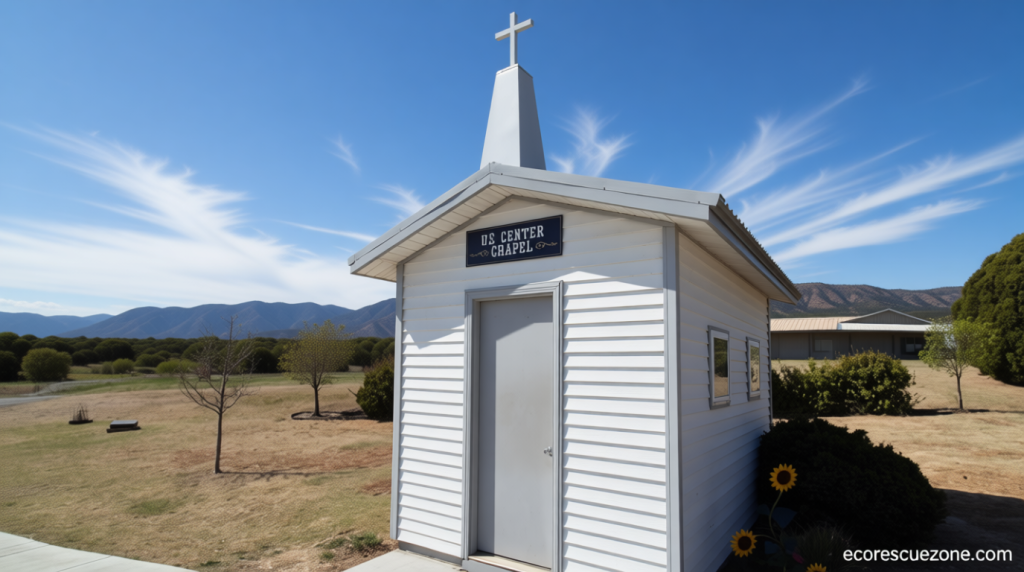
The exact center of the “lower 48” is reached via a spur of asphalt, off Highway 281, just north of Lebanon. While its selection is somewhat arbitrary—owing to the cardboard map and pin method, as well as its later relocation to avoid private property—it’s a place that feels deeply rooted. A small, white one-room chapel sits nearby, its silhouette framed by the ever-present pines. The quiet hum of the town contrasts with the grandeur of the ball of twine, yet both coexist as testaments to the American spirit. Here, the land speaks through its vastness, and the people through their creativity, offering a glimpse into what makes the middle of the country so special.
For those who have romanticized the American heartlands, this journey is a homecoming. The landscapes, the pace of life, and the sense of community all reflect a simpler time, even as the world moves faster. The road trip to the center is not just about geography—it’s about rediscovering the essence of what it means to be American. In a world of constant motion and digital connectivity, this spot remains a reminder of the beauty in the mundane and the power of human imagination. It’s a place where the road, the land, and the stories of the people intertwine, creating a unique and enduring sense of place.
As the sun sets over the plains, the drive home is not just a return to a starting point but a reflection on the journey itself. The memories of winding roads, the quiet towns, and the surreal spectacle of a ball of twine become the true treasures. In the middle of America, where the country feels both vast and intimate, the experience is as much about the path taken as the destination reached. It’s a story that’s worth telling, one that lingers in the mind like the last echoes of a radio transmitter in the distance.
