Move over Chutes & Ladders: Schisto & Ladders has educational value plus worms

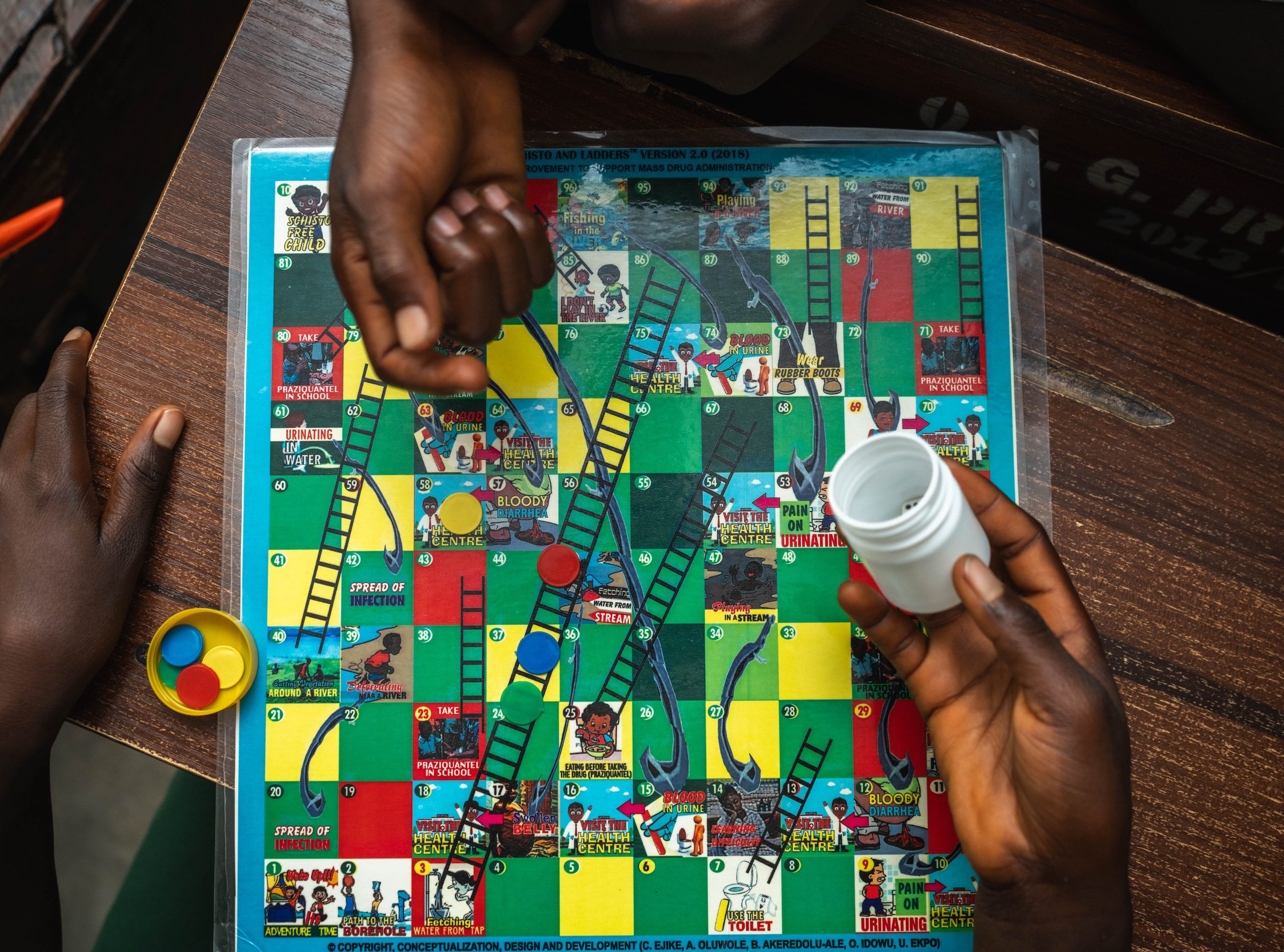
Introducing Schisto & Ladders
Move over Chutes Ladders – For decades, the classic board game Chutes & Ladders has entertained generations of American children. Its origins trace back to an ancient Indian game designed to impart moral lessons through gameplay. Now, in Nigeria, a similar game has emerged with a more pressing purpose: educating players about the dangers of schistosomiasis, a parasitic infection caused by a specific type of worm. Known locally as “Atosi Aja” or “Bloody Urine,” this disease has far-reaching consequences, affecting not just individual health but entire communities. The game, developed by Nigerian researcher and educator Cynthia Umunnakwe, serves as a creative tool to combat the spread of this condition, blending play with public health education.
Schistosomiasis is transmitted when microscopic larvae from infected freshwater snails penetrate human skin. This often occurs in regions where people rely on rivers for daily activities like washing, fishing, and cooking. In Nigeria, the disease is particularly prevalent among school-age children, who are more likely to engage with contaminated water. Untreated cases can lead to severe complications, including damage to major organs, neurological issues, infertility, and even bladder cancer. Despite these risks, awareness of the disease’s transmission remains low, making innovative approaches like the game essential for prevention.
The modified version of Chutes & Ladders, titled “Schisto & Ladders,” replaces traditional chutes and ladders with illustrations of the disease’s progression. For instance, a square labeled “playing in a river” might send a player’s token down a worm-like slide, symbolizing the risk of infection. Conversely, a square encouraging “cutting vegetation around a river” could lift a player up a ladder, representing a preventive action. This visual metaphor helps children grasp the connection between their daily habits and the spread of schistosomiasis, making the educational message more engaging.
The Game’s Educational Framework
Developed in 2014 by a team led by Professor Uwem Ekpo of Akwa Ibom State University, the game is part of a broader initiative to address schistosomiasis in underserved areas. It incorporates key elements of the disease’s life cycle, highlighting how human waste can reintroduce parasites into water sources. By gamifying these concepts, the creators aim to instill long-term behavioral changes among young players. For example, a square prompting “eat before taking medicine” not only teaches a practical health tip but also rewards the player with a step forward, reinforcing positive habits.
One particularly impactful square depicts “Fetching water from a stream,” showing a child bending over the river’s edge. The game’s board then visually traces the parasite’s journey, with a worm extending from this square to a later one labeled “Swollen belly.” Another square, “Defecating near a river,” sends players far down the board to “Spreading infection,” emphasizing the role of human waste in perpetuating the cycle. These design choices make the game a dynamic teaching aid, allowing players to see how their actions can either contribute to or prevent the disease.
Cynthia Umunnakwe, who co-created the game, explains its dual role as entertainment and education. “Children go up the ladder when they encounter good behavior that prevents schistosomiasis,” she says with a smile. This includes actions like taking medication at school or removing invasive plants that serve as habitats for snail hosts. The game’s structure ensures that players not only learn about the disease but also understand how to interrupt its life cycle through simple, actionable steps.
“Hi everyone, I am Dr. Cynthia from Nigeria.” She says with a warm smile, underscoring her commitment to using playful methods to tackle serious health challenges. The game is part of a Ministry of Health program that also provides urine testing and treatment for affected individuals. During a visit to a school in Apojola village in July 2025, Umunnakwe demonstrated the game to young students, reinforcing its message through interactive play.
Challenges and Opportunities
Schistosomiasis remains a significant challenge, especially in impoverished communities where access to clean water and medical facilities is limited. With over 200 million cases reported across sub-Saharan Africa, the disease disproportionately affects rural populations. In Ogun State, where the game was introduced, one-third of residents tested at a local clinic were found to have active infections. This highlights the urgent need for targeted interventions, as the Oyan River plays a central role in daily life, from washing clothes to fishing and preparing cassava root, a staple crop.
The game’s success hinges on its ability to address both the immediate and long-term aspects of schistosomiasis. While effective medication exists, its accessibility is often limited in areas lacking infrastructure. The game helps bridge this gap by educating children on prevention strategies before they are exposed to the parasite. For instance, players learn to avoid touching infested water, even in small amounts, as microscopic larvae can easily penetrate skin. This awareness is crucial, as it empowers communities to take proactive measures in reducing the disease’s prevalence.
By integrating the game into school programs, local health officials aim to create a sustainable impact. The Ministry of Health’s initiative not only provides urine testing but also links the game to real-world health outcomes. In Apojola, the combination of educational play and medical services has shown promising results, with children demonstrating improved understanding of the disease’s risks and preventive actions. The game’s design ensures that players remember these lessons, as the visual elements and interactive gameplay make the information more memorable.
A New Approach to Public Health
Umunnakwe’s work exemplifies how creative solutions can complement traditional health education. The game’s mechanics mirror the challenges of schistosomiasis, making it relatable to young players. For example, the “Blood in Urine” square serves as a warning, while the adjacent “visit the health center” square offers a path to recovery. This contrast encourages players to recognize the importance of seeking medical help, a critical step in combating the disease.
Despite its simplicity, the game’s impact is profound. It transforms a potentially dry subject into an interactive experience, fostering a sense of agency among players. By connecting the game to real-life scenarios, such as schoolchildren splashing in the river while collecting fish traps, the creators ensure that the lessons learned are applicable in everyday settings. This approach not only educates but also inspires behavioral change, making it a valuable tool in the fight against schistosomiasis.
As the game continues to gain traction, it offers hope for reducing the disease’s burden in Nigeria and beyond. Its success underscores the power of integrating education with play, creating a lasting impact on public health. With over 200 million cases globally, schistosomiasis remains a critical issue, but initiatives like “Schisto & Ladders” provide a beacon of innovation in the quest for prevention and treatment.