Vermont is creating a statewide trail, and making sure it’s accessible to all

Building an Inclusive Path Through Vermont’s Mountains
Vermont is creating a statewide trail – Across the Green Mountains, a transformative project is taking shape. The Velomont, an ambitious 485-mile multi-use corridor, is gradually weaving through Vermont’s landscape. Mountain biking enthusiasts have dedicated years to this expansive vision, and now construction is accelerating following extensive periods of permit processing, planning, and community engagement. Organizers emphasize that accessibility remains a central priority throughout development.
Angus McCusker serves as the trail director for Vermont Huts and Trails, the nonprofit overseeing this collaborative effort. He explains that considering adaptive riders requires minimal additional effort during construction. “For us, it’s not a huge lift to just be mindful when we’re trying to build trail or improve trail to think about the adaptive rider,” McCusker noted. The initiative addresses a growing population of disabled athletes who utilize specially engineered equipment for mountain biking.
Connecting to Existing Networks
One significant challenge involves integrating with trail systems that predate modern accessibility standards. McCusker described this complexity: “The challenge is we’re connecting to existing trail networks that were never intended for adaptive bikes. So, where we can, we’re trying to do adaptive assessments.” These evaluations help identify modifications needed for wider, heavier adaptive bicycles.
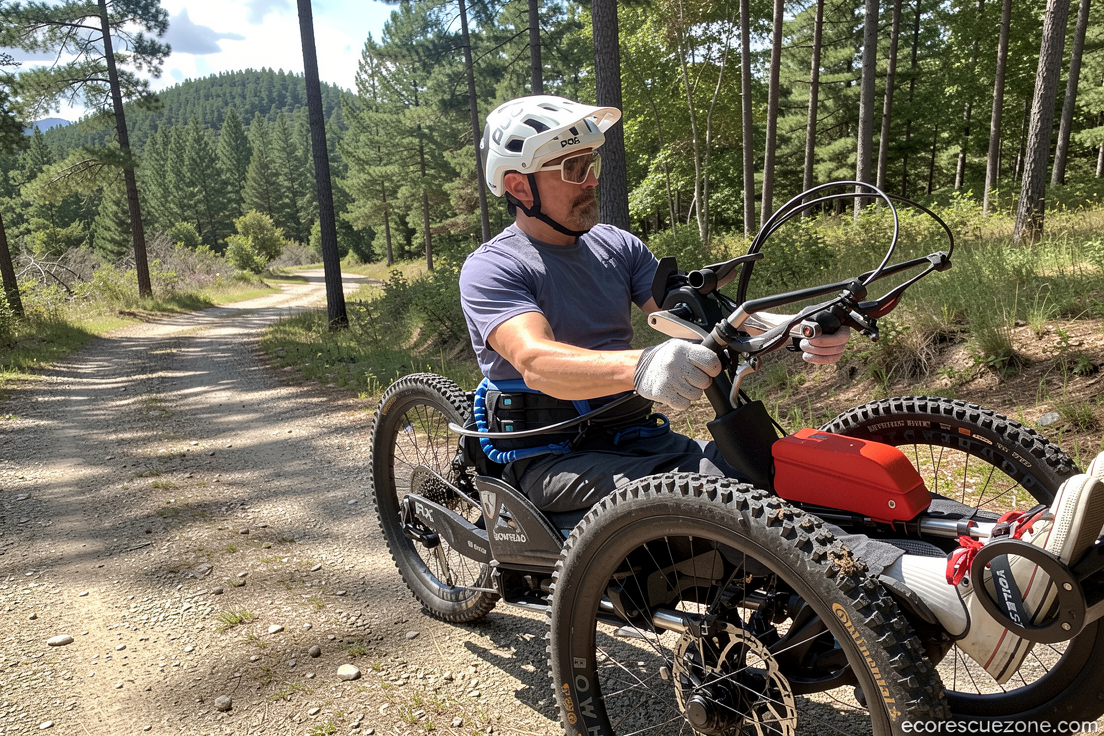
Louis Arevalo from Essex Junction participates actively in these assessments. Recently, he tested trails in Randolph, a central Vermont community positioned along the eastern slopes of the Green Mountains. Arevalo navigates using his hands while riding an electric-powered recumbent three-wheeler that sits close to the ground. His service dog, Azul, accompanies him on these outings.
“Once you realize what these bikes are capable of or this equipment actually opens up, it kind of blows your mind,” Arevalo observed.
Paralyzed six years ago during a skiing accident, Arevalo considers trail access life-changing. “There’s a reason we live in the Green Mountain state. It’s because we like to get outside…you know, seeing the squirrels and chipmunks and birds… I mean, it’s life,” he shared with evident enthusiasm.
Testing and Refining Trail Design
Nick Bennette, executive director of the Vermont Mountain Bike Association, brings another perspective to these evaluations. Bennette rides a different style of adaptive bicycle and encountered difficulties navigating several tight corners during testing. “It’s helpful to have different kinds of adaptive bikes on these tests because they all handle a little differently,” he explained. Bennette and fellow assessors document findings through photographs and detailed notes.
Bennette demonstrated a simple solution: “Just scalloping out a bit of material on the outside of that corner. That will allow adaptive bikes to make that corner without really changing the way the trail rides.” Such modifications ensure accessibility without compromising the trail experience for other users.
Accessible Overnight Accommodations
Contractors are simultaneously addressing accessibility at trailside lodging. A new ADA-compliant hostel is under construction in downtown Randolph this summer. Additionally, two remote huts will feature locked storage units containing off-road wheelchairs, eliminating the need for riders to transport their own equipment.
At the Chittenden Brook Hut, McCusker pointed out improvements including a new ramp and expanded driveway. “So if you’re an adaptive rider, you can imagine rolling right up here and you can transfer to your chair that’s available here, and then roll down the ramp and go down to the fireplace, to the privy, to make your meal,” he described.
Arevalo experienced this accessibility firsthand during his first camping trip following his accident last summer. “There was a babbling brook right there…and it was really refreshing to have easy access to a beautifully built hut that was easy to navigate, and then have these world-class trails right out the door,” he recalled. “And with these Velomont trails, I can actually plan a hut-to-hut trip with other people.”
Economic and Social Impact
Jeff Alexander, director of strategic partnerships with Vermont Adaptive Ski and Sports, sees tremendous potential in this inclusive approach. His organization provides outdoor recreation opportunities for people with disabilities. An economic analysis commissioned by the group revealed that their programming generated over $10 million in revenue last year alone.
“So the adaptive community has money, they travel, they want to travel and they want to play with everybody,” Alexander stated. “We just need to level the playing field so that everyone can play together.”
As the Velomont nears completion, it will connect 27 communities while incorporating huts and hostels for overnight stays. The project represents more than infrastructure—it embodies Vermont’s commitment to ensuring outdoor recreation remains accessible to all residents and visitors, regardless of physical ability.