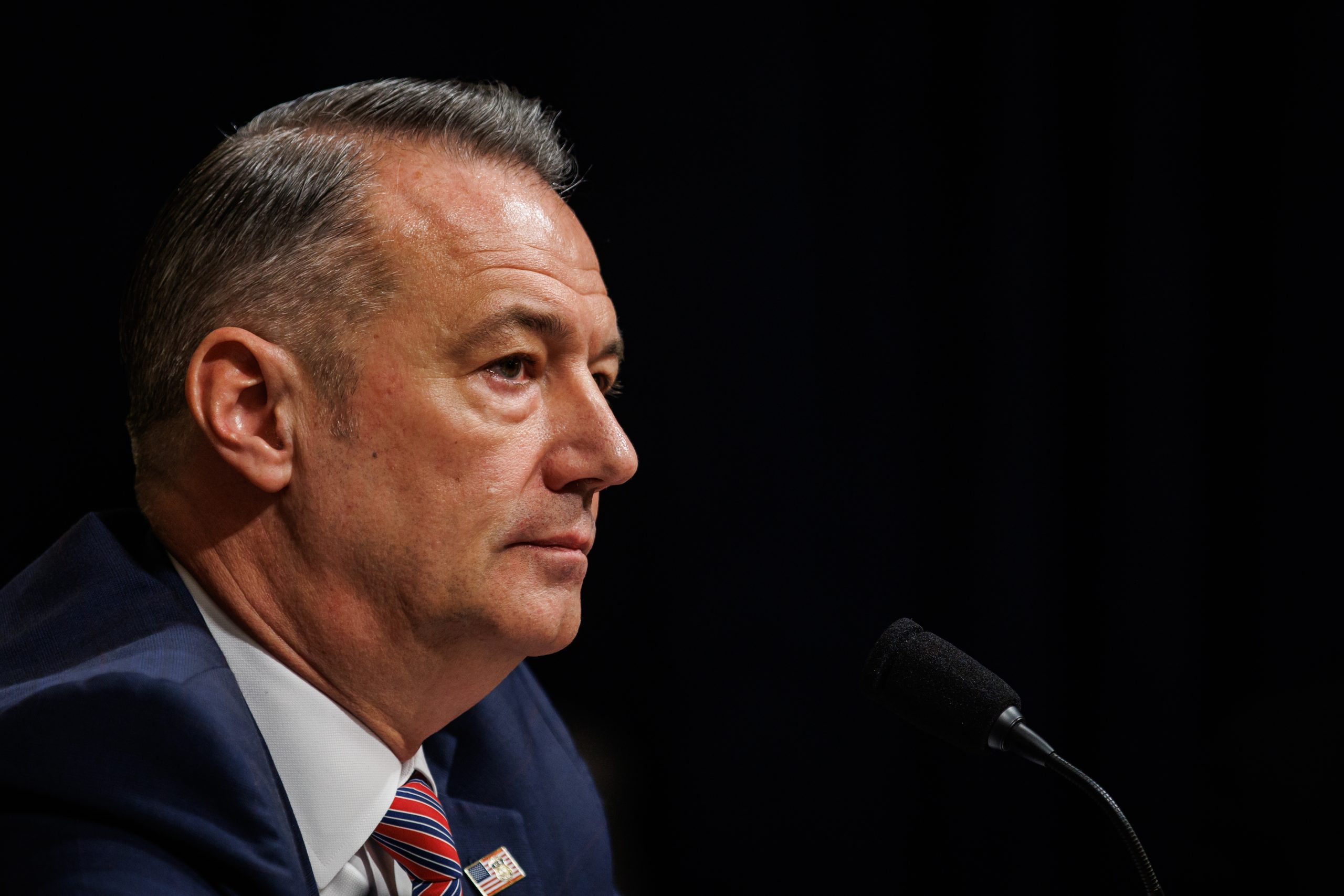
Former ICE Leader Lands New Role in National Security Consulting
Former ICE leader lands new job consulting – Todd Lyons, who oversaw U.S. Immigration and Customs Enforcement (ICE) during some of the most contentious periods of the year, has transitioned to a new position with a defense contractor. The company, Navigators Security and Defense, announced that Lyons will now serve as its senior vice president for U.S. homeland security and international affairs, focusing on shaping strategies related to border protection, interagency coordination, and global security initiatives.
Company Clarifies Role and Restrictions
When confirming the appointment, Navigators Security and Defense emphasized to NPR that it maintains a nonpartisan stance and does not engage in lobbying efforts. However, the firm noted that Lyons will face a one-year restriction on working directly with the Department of Homeland Security (DHS) due to federal regulations requiring a cooling-off period for former agency officials. This move aligns with the broader trend of former government leaders leveraging their expertise in private sectors, often with ties to entities involved in policy implementation.
“Lyons brings more than three decades of law enforcement leadership and military expertise in support of Navigators Security and Defense clientele,” the company stated in a press release.
Lyons’ new role appears to position him as a strategic advisor for organizations seeking to bolster their defense capabilities, particularly in the realm of immigration enforcement. His previous work at ICE, which was closely associated with the Trump administration’s heightened focus on border security and deportation rates, has made him a valuable asset for companies aiming to influence or adapt to national security priorities.
Lyons’ Tenure and Policy Challenges
Lyons served as the acting director of ICE from March 2025 to May 2026, a period marked by significant operational shifts. Under his leadership, the agency intensified its efforts to meet aggressive targets set by the White House, including a daily arrest quota of 3,000 immigrants. This goal, while ambitious, placed immense pressure on ICE agents to prioritize rapid removals over due process, leading to controversial tactics such as detaining individuals within immigration courts.
Despite these measures, the quota remained unmet, raising questions about its feasibility and the human cost of such policies. Critics argued that the mandate contributed to overcrowded facilities and strained resources, while supporters claimed it was necessary to address the growing backlog of undocumented immigrants. Lyons’ tenure reflected the balancing act between administrative directives and operational realities, a challenge that continues to shape immigration policy debates.
Behind the Scenes: Navigators Global’s Influence
Navigators Security and Defense is a subsidiary of Navigators Global, a lobbying firm with a diverse portfolio of clients, including automotive giant General Motors, sports team New York Jets, and GEO Group. This private prison operator, which manages numerous immigration detention centers nationwide, has long been a key player in shaping policies affecting immigrant communities. The firm’s connection to Lyons underscores the interplay between government and industry in the U.S. immigration landscape.
Interestingly, Navigators Global has also represented NPR and its network in congressional affairs since 2011, highlighting the firm’s role in bridging media and political interests. This dual engagement suggests that the company’s influence extends beyond traditional lobbying, potentially shaping narratives around immigration enforcement through its relationships with both public and private entities.
Legacy of Policy and Transition
Lyons’ departure from ICE was met with a mix of praise and scrutiny. While he was celebrated for his administrative acumen and dedication to the agency’s mission, his decisions also drew criticism from advocacy groups. His replacement, David Venturella, brings a unique perspective to the role, having previously worked for GEO Group in multiple capacities, including as senior vice president of client relations and a paid consultant. This succession reflects the ongoing integration of private sector expertise into federal immigration operations.
Lyons’ new role with Navigators Security and Defense comes at a time when private contractors are increasingly central to homeland security. His experience in enforcing immigration policies could prove invaluable to clients like GEO Group, which has seen a surge in business during the Trump era. The firm’s financial performance in 2025—reporting $254 million in revenue, a 700% increase from 2024—illustrates the demand for such services amid shifting political priorities.
Implications for Immigration Enforcement
The hiring of Lyons signals a continuation of the privatization trend in immigration detention and enforcement. As the U.S. continues to rely on private companies to manage facilities and operations, the lines between government oversight and corporate influence blur. This dynamic raises concerns about accountability, as agencies like ICE may find themselves dependent on contractors for day-to-day functions.
Lyons’ transition to consulting also highlights the personal benefits of navigating the political landscape. With his deep understanding of immigration law and enforcement strategies, he is well-positioned to advise organizations on how to align their operations with national security goals. His work could help shape future policies, particularly as the Biden administration seeks to balance immigration enforcement with humanitarian considerations.
While Lyons has not responded to NPR’s inquiries for comment, his presence at Navigators Security and Defense has already sparked discussions about the role of private interests in shaping public policy. Advocates worry that his expertise might be used to reinforce policies that prioritize detention over rehabilitation, whereas others see his contributions as a means to modernize and streamline immigration enforcement efforts.
The broader context of Lyons’ appointment includes the evolving relationship between the Department of Homeland Security and private contractors. As ICE continues to adapt to new mandates and funding sources, the agency’s reliance on external partners may influence its operational strategies and public image. This shift also underscores the importance of leadership transitions in maintaining continuity and addressing the complex challenges of immigration policy.
Lyons’ new role, combined with his past experience, offers a unique lens into the intersection of law enforcement, national security, and corporate influence. His ability to navigate these domains could shape the next phase of immigration enforcement, particularly as the U.S. grapples with the long-term effects of policies implemented during his tenure. The question remains whether his work will foster innovation or perpetuate the same contentious practices that defined his time at ICE.