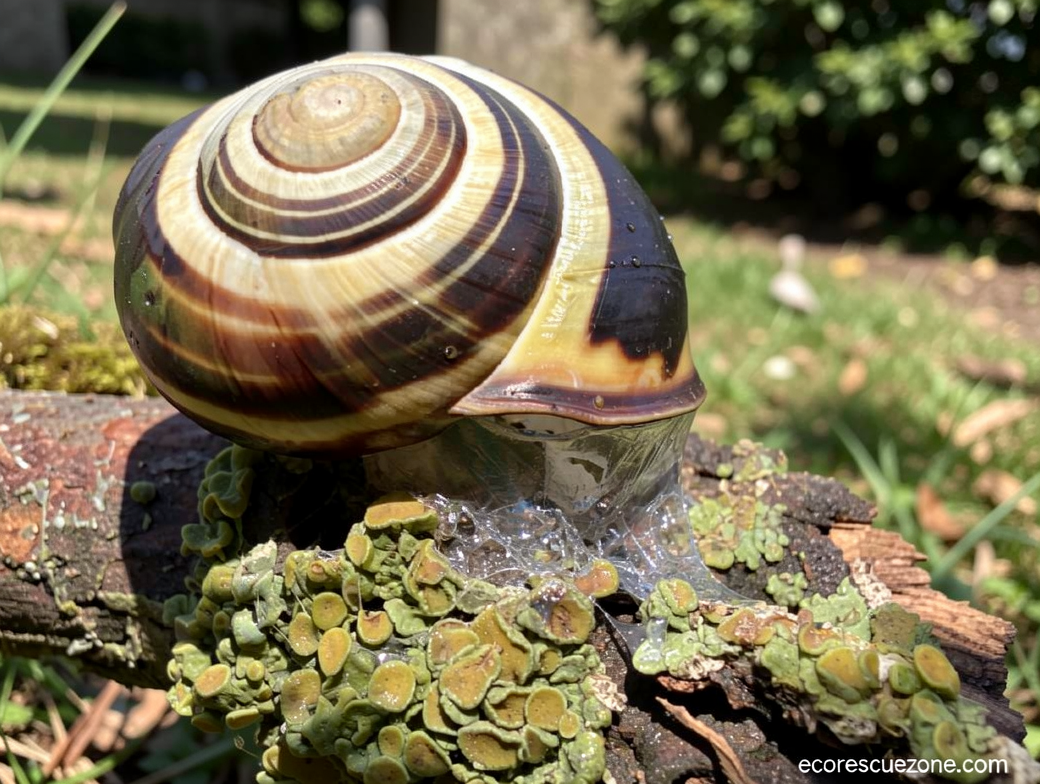
Sticky or slippery? Snails can change their slime to meet the moment

Daftar Isi
Nature’s Masterpiece: How Snail Slime Could Revolutionize Materials Science
Ecorescuezone.com – Within the animal kingdom, few substances capture scientific imagination quite like mucus. From the bioluminescent secretions of tubeworms to the voluminous slime produced by hagfish, these biological fluids serve remarkable purposes. Yet among all mucous-producing creatures, one particular invertebrate stands out for its extraordinary versatility: the snail. These seemingly simple mollusks have evolved a sophisticated system for creating multiple types of slime, each tailored to specific environmental demands and survival needs.
Mariella Gabler, a doctoral candidate in physical chemistry at Germany’s Max Planck Institute of Colloids and Interfaces, describes snail slime as “a natural work of art.” She notes that “the complexity and functionality are mesmerizing.” This fascination has driven Gabler and her research team to investigate the brown-lipped snail, scientifically known as Cepaea nemoralis, a species native to central Europe that exhibits remarkable color variations across yellow, white, brown, and pink hues.
Five Types of Slime, One Brilliant System
According to research published in the journal Science, these snails possess the ability to adjust the relative proportions of specific proteins and ions within their bodies to generate five distinct types of mucus. Each variety serves a unique purpose while sharing fundamental chemical building blocks.
The first type functions as a lubricant for movement. This particular slime combines stickiness with slipperiness, enabling snails to adhere firmly to surfaces while gliding across them with minimal resistance. The second category encompasses two forms of defensive mucus. When sensing danger or stress, snails can produce either a foamy substance designed to flush away small predators or a highly adhesive glue that immobilizes threats.
Two additional mucus types complete the repertoire. A protective variant allows snails to seal themselves securely within their shells during winter hibernation. Meanwhile, an adhesive mucus enables these creatures to cling to diverse surfaces ranging from wooden structures to glass panels and aluminum surfaces.
“The versatility makes it a perfect model system to understand how it can tune these different types of mucus according to its needs,” Gabler explains.
Decoding the Chemical Architecture
The research team gathered their subjects on rainy days near their institute, providing them with a diet of cucumbers, salad greens, and lichen. Gabler then employed various techniques to collect each mucus type. She used thin tweezers to harvest adhesive and protective varieties, collected lubricant mucus as snails moved through a wet glass bowl, and employed a specialized spatula equipped with a tiny spoon to capture defensive secretions after tickling the creatures.
Chemical analysis revealed that all five mucus types contain similar proteins, though their concentrations vary significantly. Distinct amounts of calcium and other ions, combined with differences in secretion mechanisms, produce the five distinct varieties. Gabler notes that “the more collagen and calcium were present, the stiffer, more cohesive and sticky mucus became.”
The protective mucus demonstrates particularly sophisticated engineering. It contains tiny calcite crystals that simultaneously introduce hardness and brittleness to the material, creating an ideal mechanical barrier during the snail’s winter dormancy period.
Bridging Nature and Innovation
Kausik Mukhopadhyay, a materials scientist at the University of Central Florida who did not participate in the research, emphasizes the broad applicability of these findings. “There are immense potential applications,” he states, listing cancer research, drug delivery systems, and cosmetics among the possibilities.
Mukhopadhyay suggests that the lubricant mucus could be modified for use with medical catheters, enabling smoother insertion into the body with reduced friction. The adhesive variant might eventually be developed into wound-closing materials. Gabler echoes these sentiments, noting that engineers could benefit from a biological system capable of producing multiple materials from the same fundamental components.
“Nature is always smarter than us,” says Mukhopadhyay. “We are just maybe 0.1% to what nature has synthesized — that is where we are right now.”
For those interested in exploring everyday scientific mysteries and the research behind current headlines, NPR’s Short Wave podcast offers regular coverage of such discoveries.
While human innovation continues to advance rapidly, the brown-lipped snail demonstrates that nature has already solved many material challenges through millions of years of evolution. These slimy creatures may indeed have a head start, offering blueprints for future technological breakthroughs that could transform medicine, industry, and everyday life.
Related Reading
Frequently Asked Questions
What is Sticky or slippery Snails can change?
Sticky or slippery Snails can change is the main topic of this guide. The article explains the context, practical details, and next steps readers should understand.
Why does Sticky or slippery Snails can change matter?
Sticky or slippery Snails can change matters because readers are looking for a useful answer, not just a short summary. Good content should match search intent and help them decide what to do next.